2026 Georgia Crossover Day Casualties
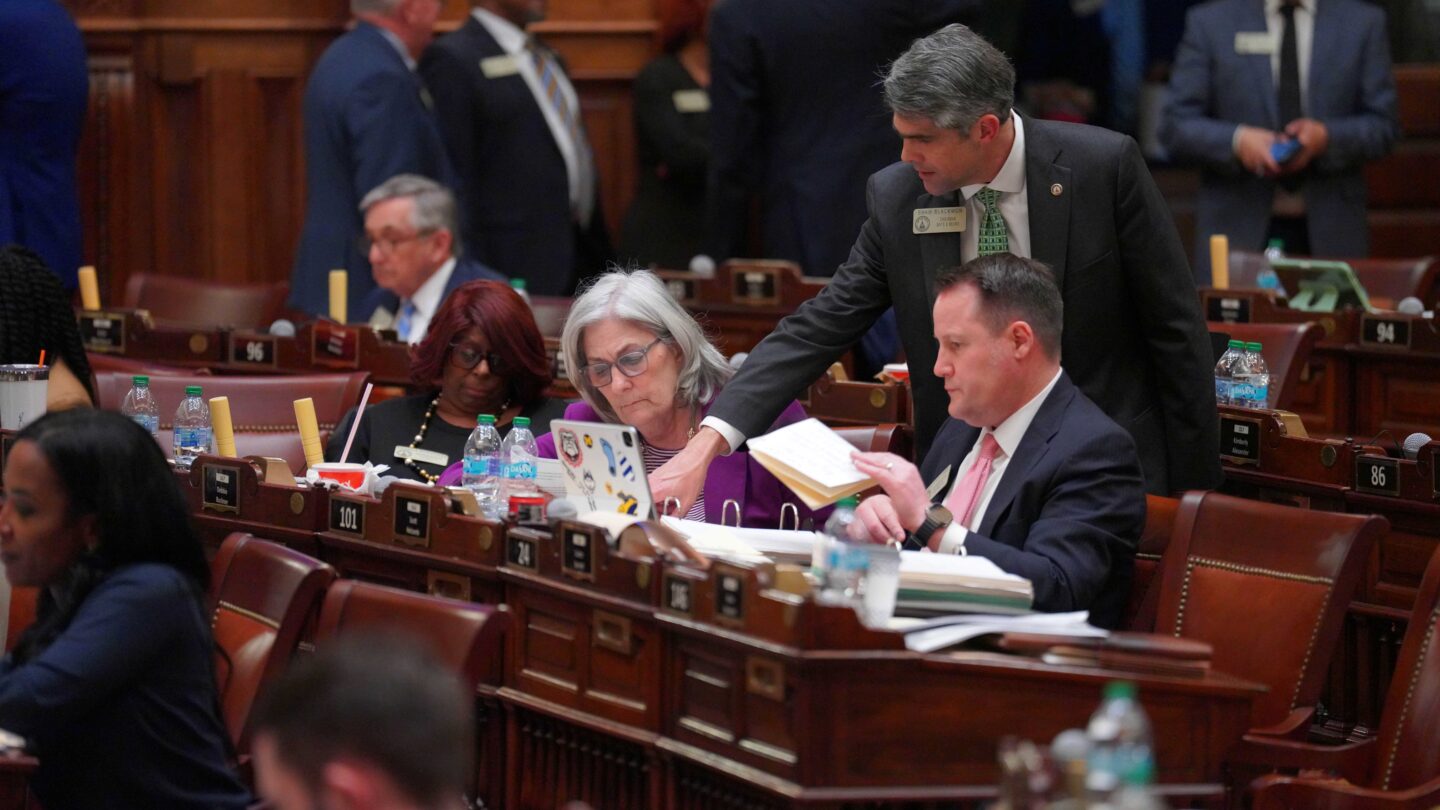
The Georgia General Assembly’s 40-day session is underway. Lawmakers are weighing hundreds of bills on everything from education and health to criminal justice and housing ahead of “Sine Die” – the final day of the session on April 2.
The WABE newsroom is following many of these bills and providing context on why they matter and where they stand on the 2026 Gold Dome Bill Tracker.
Typically, legislation needed to pass either the House or Senate by Crossover Day on March 6 to have a chance at becoming law this year. But sometimes, the text of one bill can still be glued into another that’s already cleared one chamber, known as a vehicle or a “zombie bill.”
Below are the bills that didn’t pass either chamber by Crossover Day. If the text of any of these bills comes back to life in the form of a zombie bill, we will add it back to the Bill Tracker and give you the latest updates on it through the end of the session.
This page was updated on Thursday, March 12 at 11:24 a.m.
Select a Category
Business & Economy Bills Not Passed
The bills in this section on the bill tracker all crossed over.
Education Bills Not Passed
The bills in this section on the bill tracker all crossed over.
Environment Bills Not Passed
PFAS Forever Chemicals Transparency Act
(HB 611 & SB 538 – Not Passed)
Requires publicly owned water treatment utilities to identify and report the use or discharge of PFAS from their industrial clients.
Learn More Here and Here
PFAS Receivers Shield Act
(HB 211 – Not Passed)
Provides immunity to companies that receive PFAS, also known as “forever chemicals,” from certain types of lawsuits.
Learn More
Bad Actor Bill
(HB 644 – Not Passed)
Allows the state to consider the in- and out-of-state pollution track record of companies applying for permits in Georgia.
Learn More
Utility Consumer Advocate
(SB 94 – Not Passed)
Reestablishes the consumer utility counsel, an advocate to represent consumers in consumer utility issues before the Public Service Commission and with other agencies.
Learn More
– Jump to Category –
Business-Economy | Education | Environment | Health | Justice, Law & Safety | State Budget & Taxes
– Environment (Full Descriptions below) –
PFAS Forever Chemicals Transparency Act (HB 611 and SB 538)
What the bill does: Requires publicly owned water treatment utilities to identify and report the use or discharge of PFAS from their industrial clients.
What supporters say: These bills are important for water quality and public health, and to begin documenting the sources of PFAS contamination.
What opponents say: This could make public utilities vulnerable to criticism or litigation over their handling of PFAS, despite not purchasing or using the products themselves.
Status: The House and Senate versions of the bill have been proposed and have not received a hearing yet.
–Marisa Mecke, WABE Environment Reporter
PFAS Receivers Shield Act (HB 211)
What the bill does: Provides immunity to companies that receive PFAS, also known as “forever chemicals,” from certain types of lawsuits.
What supporters say: This bill is crucial to protect companies that did not know of the human health risks of PFAS nor the extent of their environmental threats, including groups like public wastewater and drinking water utilities that do not use PFAS themselves but are open to liability due to processing PFAS in wastewater from industrial facilities in their regions.
What opponents say: This bill gives Northwest Georgia carpet manufacturers a get-out-of-jail-free-card to avoid litigation even though they purchased, used and profited off PFAS knowing the dangers of the chemicals.
Status: Failed to make it out of the House Judiciary Committee last year, but passed out of committee this year and is headed to the full Georgia House for a vote.
-Marisa Mecke, WABE Environment Reporter
Bad Actor Bill (HB 644)
What this bill does: Allows the state to consider the in- and out-of-state pollution track record of companies applying for permits in Georgia.
What supporters say: This bill gives the Georgia Environmental Protection Division more ability to ensure companies the department issues permits to are capable of adhering to permit requirements. They say this would give the state more tools to prevent incidents like the BioLab fire in Conyers in 2024.
What opponents say: Writing this bill presents challenges because larger corporations may have more incidents of noncompliance than others, yet more experience and examples of permit compliance as well — lawmakers would have to figure out how to write a bill that allows for the Georgia EPD to have discretion, but at the same time an ability to clearly outline what previous violations from a permit applicant would result in a denied permit application.
Status: Proposed in House
-Marisa Mecke, WABE Environment Reporter
Utility Consumer Advocate (SB 94)
What the bill does: Reestablishes the consumer utility counsel, an advocate to represent consumers in consumer utility issues before the Public Service Commission and with other agencies. Georgia long had this role before it was eliminated in sweeping budget cuts after the 2008 financial crisis.
What supporters say: Supporters like Republican state Sen. Chuck Hufstetler, the bill’s sponsor, point to the series of Georgia Power rate hikes approved by the Public Service Commission in recent years as evidence that consumers need someone in their corner. Many states have a similar office, and unlike many existing advocates, this person would have standing to represent consumers in federal proceedings.
What opponents say: Officials with the Public Service Commission have pointed to existing consumer advocates, including the commission’s public interest advocacy staff and the many groups that intervene in commission proceedings to make the case for lower rates and consumer-friendly policies.
Status: Passed out of the Senate Regulated Industries and Utilities Committee and now goes to the full Senate for a vote.
–Emily Jones, WABE and Grist Climate Reporter
Health Bills Not Passed
Right to Contraception
(HB 872 – Not Passed)
Protects access to contraceptives to prevent pregnancy.
Learn More
– Jump to Category –
Business-Economy | Education | Environment | Health | Justice, Law & Safety | State Budget & Taxes
– Health (Full Descriptions below) –
Right to Contraception (HB 872)
What the bill does: Protects access to contraceptives to prevent pregnancy, proposing that the right would extend to “any means of contraception” and “at any stage prior to conception.”
What supporters say: Language in the Republican-sponsored legislation says that “females have the right to the use of any means of contraception.” The bill was first introduced in 2025, with support from some powerful GOP lawmakers, including Marietta Republican Rep. Sharon Cooper, chair of the House Public and Community Health Committee, and Milton Republican Speaker Pro Tem Jan Jones.
What opponents say: No outspoken opposition has yet emerged this year. It remains to be seen whether anti-abortion advocates would fight the bill if it advances through the General Assembly.
Status: In the House Public and Community Health committee
–Jess Mador, WABE Health Reporter
Law, Justice & Safety Bills Not Passed
Statewide Nondiscrimination Protections
(HB 670 – Not Passed)
Protects against discrimination in housing, public accommodations and employment on the basis of race, color, religion, sex, sexual orientation and more.
Learn More
Henry McNeal Turner Voting Act
(SB 536 – Not Passed)
Identifies and stops voter dilution, i.e. when a community’s voting power is weakened depending on its district’s layout.
Learn More
– Jump to Category –
Business-Economy | Education | Environment | Health | Justice, Law & Safety | State Budget & Taxes
– Law, Justice & Safety (Full Descriptions below) –
Statewide Nondiscrimination Protections (HB 670)
What the bill does: Protects against discrimination in housing, public accommodations and employment on the basis of race, color, religion, sex, sexual orientation and more.
What supporters say: Democratic state Rep. Jasmine Clark says Georgia needs to adopt its own civil rights legislation, as she worries that protections from the Civil Rights Act could change under this current administration.
“We as a nation are watching the unraveling of civil rights happen right before our eyes all across the country,” said Clark, the bill’s lead sponsor. She says other southern states, such as Texas, Louisiana and North Carolina, have adopted laws with similar language.
What opponents say: The Georgia Commission on Equal Opportunity handles housing and employment discrimination complaints. Georgia currently enforces anti-discrimination laws in areas such as employment, housing, age and ability-based discrimination.
Status: Proposed in House
–Marlon Hyde, WABE Business Reporter
Henry McNeal Turner Voting Act (SB 536)
What the bill does: Identifies and stops voter dilution, i.e. when a community’s voting power is weakened depending on its district’s layout. The bill would create the Georgia Voting Rights Commission and require public notice of any election changes locally and at the state level.
What supporters say: Grayson Democratic state Rep. Nikki Merritt said the state can have secure elections and stop voter dilution.
“They can do it all at the same time,” she said. “We can protect voters and support people who administer our elections. We can set clear, fair rules and insist on accountability when those rules are abused. We are introducing this bill because it is time to move from the constant fights against and ensure more protections.”
What opponents say: WABE has reached out to opponents of the bill for comment.
Status: Proposed in Senate
–DorMiya Vance, WABE Southside Reporter
State Budget & Taxes Bills Not Passed
The bills in this section on the bill tracker all crossed over.