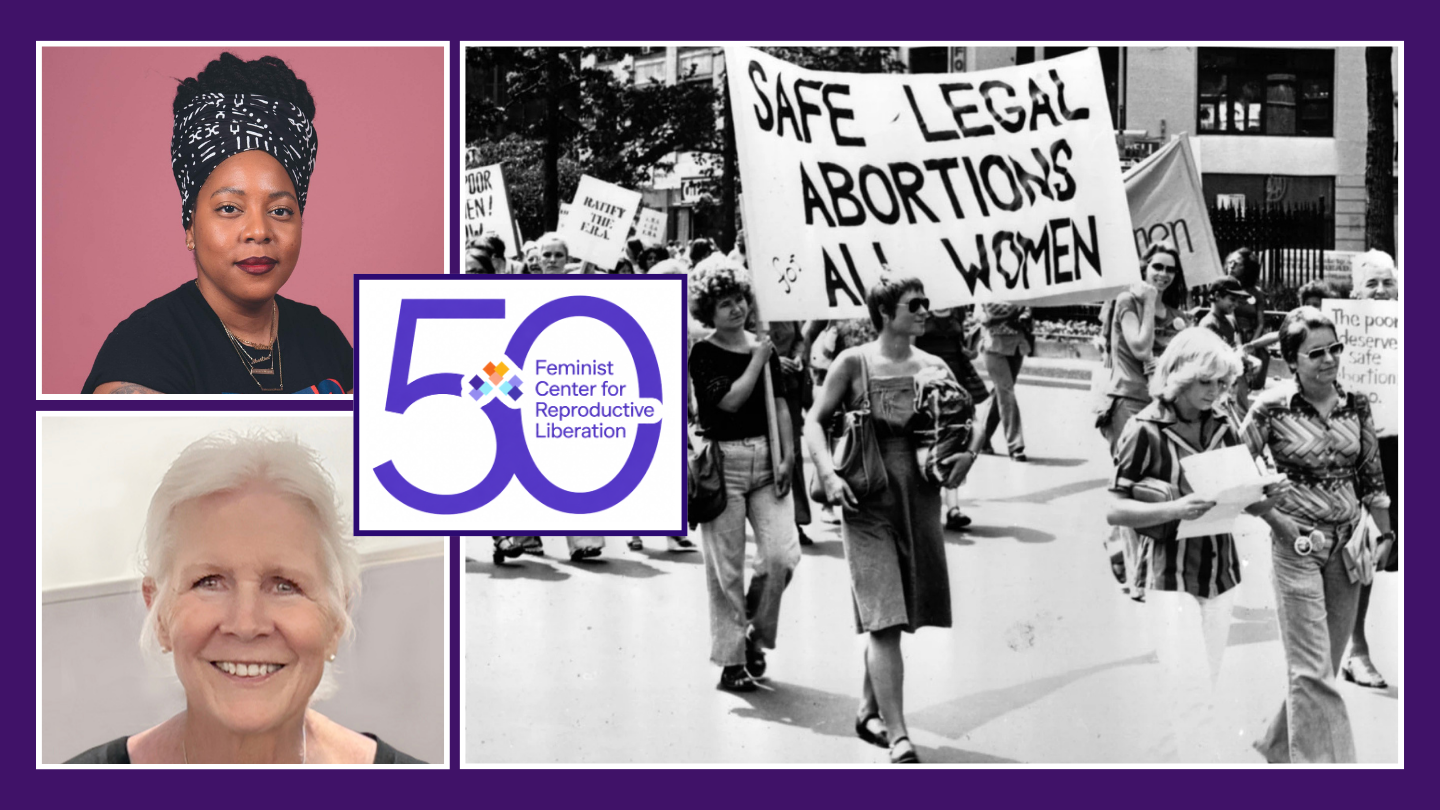
As the country celebrates 250 years, Atlanta’s Feminist Center for Reproductive Liberation is marking its own milestone: 50 years of fighting for women’s bodily autonomy and care.
Lynn Thogersen, one of the organization’s co-founders, remembers being in college when the U.S. Supreme Court issued its decision on Roe v. Wade in 1973. In the decades since, she sees the state of women’s reproductive rights as “distressing.”
“I’m extremely mad and upset about the situation,” said Thogersen. “When we started this clinic 50 years ago, not only did we want to provide abortion services, but we wanted to provide all types of well women health centers services. And it feels like we’re not only going back, we’re almost back to times where women’s lives are going to be in danger again.”
The feminist center’s current Executive Director, Kwajelyn Jackson, reflected on America’s 250th and how its history intersects with the lives of people of color, Indigenous people, LGBTQ+ individuals and their fight for bodily autonomy.
“There have been so many moments in history where access to full freedom, full liberation, has been denied. And I think that looking at reproductive health rights and justice, that’s very clear and apparent,” Jackson told “Closer Look.” “The need to control our decision-making for some greater purpose in direct conflict with people’s right to self-determine.”
Thogersen recalls fearing for the feminist center in its early years as it drew attention and attacks from anti-abortion activists. There were altercations between patients and protestors, and protestors still shout from across the street to this day. She never thought the feminist center would make it 50 years.
“I am so grateful that the clinic is still there,” said Thogersen. “I’m so grateful for the leadership that Kwajelyn and her staff provide, not only on a daily basis with providing services, but the advocacy work that they do down at the legislature. It’s just amazing that this is still happening, and it’s because of really strong women.”
Under Jackson’s leadership, the feminist center changed its name to reflect the full scope of its service to the community.
“ We knew that women were not the only people we cared for, and healthcare was not the only thing we did,” said Jackson. “So we thought about how we could be both reflecting on and building upon the legacy that was built, and also pointing in a direction, a trajectory of what we want to accomplish. So we try to accomplish reproductive liberation in the clinic, in the community, and in the capital.”
Jackson said she wants to see the feminist center continue its mission for another 50 years and ensure that the next generation of reproductive justice leaders have an opportunity to step in and evolve it to the next level.