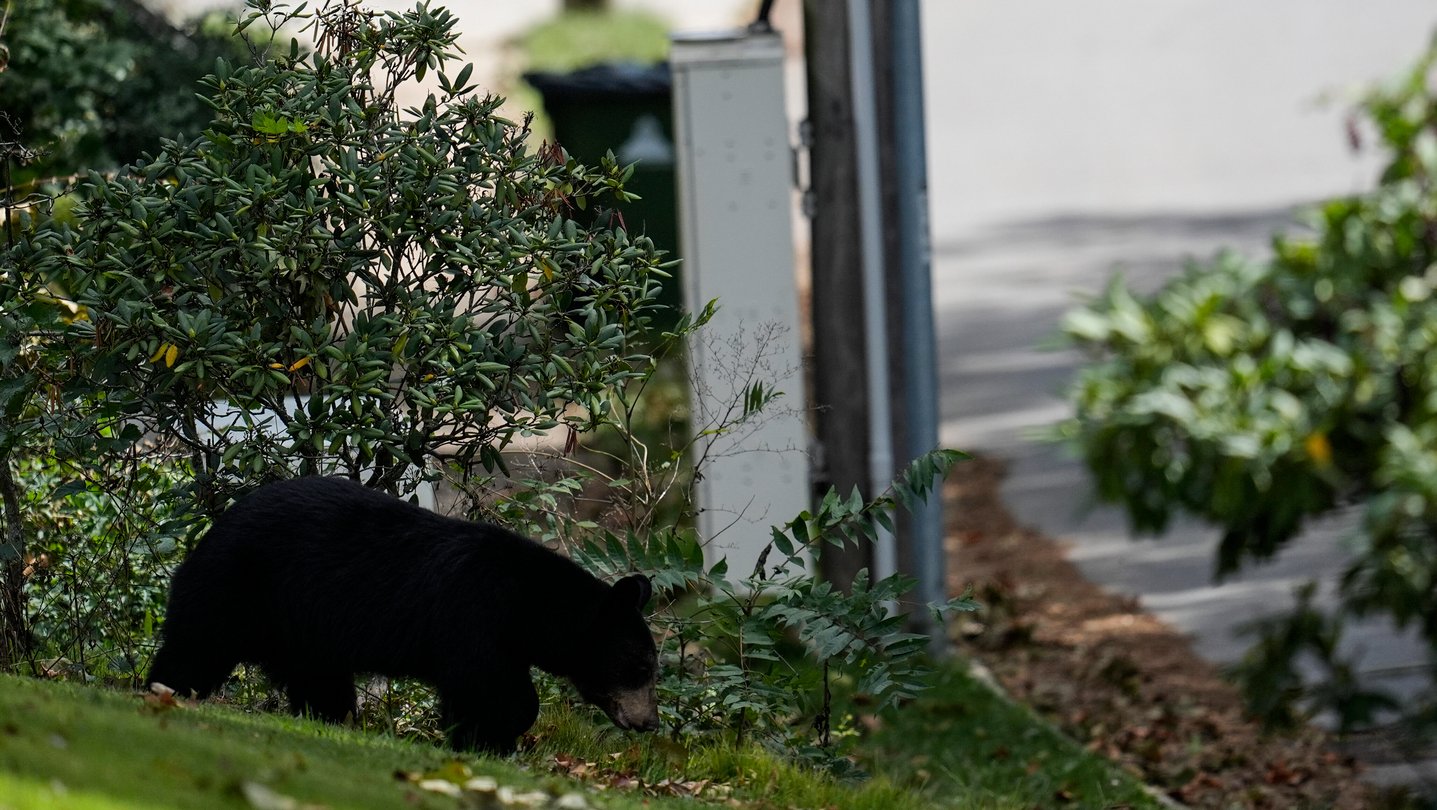
A black bear might be a scary sight, but officials say the animal would rather avoid you than confront you.
Recent local news reports have noted bear sightings in Sandy Springs and Smyrna neighborhoods, a natural occurrence in the summer months for bears wanting to establish habitats, find food or even locate a mate. The animals, according to the North American Bear Center, are timid and will often run away when they encounter humans. A fact sheet from the Georgia Department of Natural Resources notes there are no recorded bear attacks on humans in the state’s history and only two documented fatal attacks in the Southeast.
Black bears were once common in the Peach State, according to the fact sheet, but have been reduced in population by habitat loss, unrestricted hunting and overall degradation of habitat due to human development. There are now about 5,100 black bears throughout the state.
The animals can still be a nuisance, officials note, and game management offices receive numerous calls about them every year. Instead of immediately capturing and relocating bears, staffers evaluate “why the bear is causing problems,” according to the fact sheet.
“Most problems can be resolved through simple actions such as taking down bird feeders, taking in pet food, or storing garbage in an area unavailable to bears like a garage,” the fact sheet notes. “Removing or making attractants unavailable to bears is a critical step in resolving bear/human conflicts. It is equally important for people to be patient. It may take several days for the bear to learn that it is no longer going to be provided with a free meal.”
Campers and those enjoying Georgia’s ample outdoor offerings are also urged to avoid providing easy food offerings for black bears.
“When camping or hiking, store food items in a vehicle or hoist food packs into the air away from the trunks or trees,” the fact sheet advises.
After losing their meal ticket, bears will “simply move on” to “a more traditional range,” officials say, but it might be necessary to install an electrical fence if beehives or gardens are involved.
Game management staffers consider capture and relocation a last resort, only warranted if a bear persists in being a nuisance and warrants a safety threat. Disturbing bears could disorient them, experts warn, ultimately causing them to wander onto roadways and be killed by passing traffic.
So, what should you do if you see a black bear in the wild? Biologist Lynn Rogers, who founded the North American Bear Center, says to “enjoy it” and observe the bear from a safe distance. It will move on, she writes in a blog post. However, if it lingers past your comfort, you can make the bear run away by waving and announcing your presence. The animals tend to “run first and ask questions later,” she adds.
“Most attacks by black bears are defensive reactions to a person who is too close, which is an easy situation to avoid,” Rogers notes.
The biologist says a small can of pepper spray is “a good way to feel self-confident around black bears.” The spray will not hurt the bear but will prompt it to leave the area. Throwing stones at the bear can also scare it away, she mentions.
“Black bears have killed 61 people across North America since 1900,” she says in the post. “This no longer worries me. My chances of being killed by a domestic dog, bees, or lightning are vastly greater.”
This story was provided by WABE media partner Appen Media.