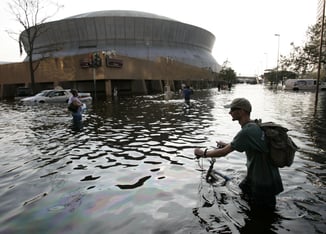
When thousands of people fled New Orleans during Hurricane Katrina 20 years ago, they uprooted their lives and, for many, their businesses as well. As they settled in places like Atlanta, they brought their hometown culture with them.
Inside what looks like a small dance studio with wooden floors, a TV plays a video of people dressed in colorful outfits with “Haters” by Big 6 Brass Band playing. That’s where Brandi Charlot is teaching some New Orleans second line dance steps.
“Now you got a dip and spin. You got to dip and spin,” said Charlot.
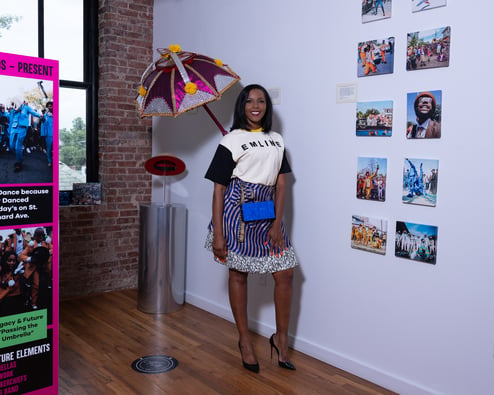
Charlot moved here a few years ago from New Orleans, where she began her career as a florist. Her business, Blucid Floral, has now expanded to a museum honoring second line culture.
“I can bring the culture here and allow people to show the pop and slide and mean mug and spin and get to feel the rhythm, that spiritual feeling that we normally get when we’re in the street,” said Charlot.
This space allows her to honor and mourn her hometown.
Hurricane Katrina evacuation
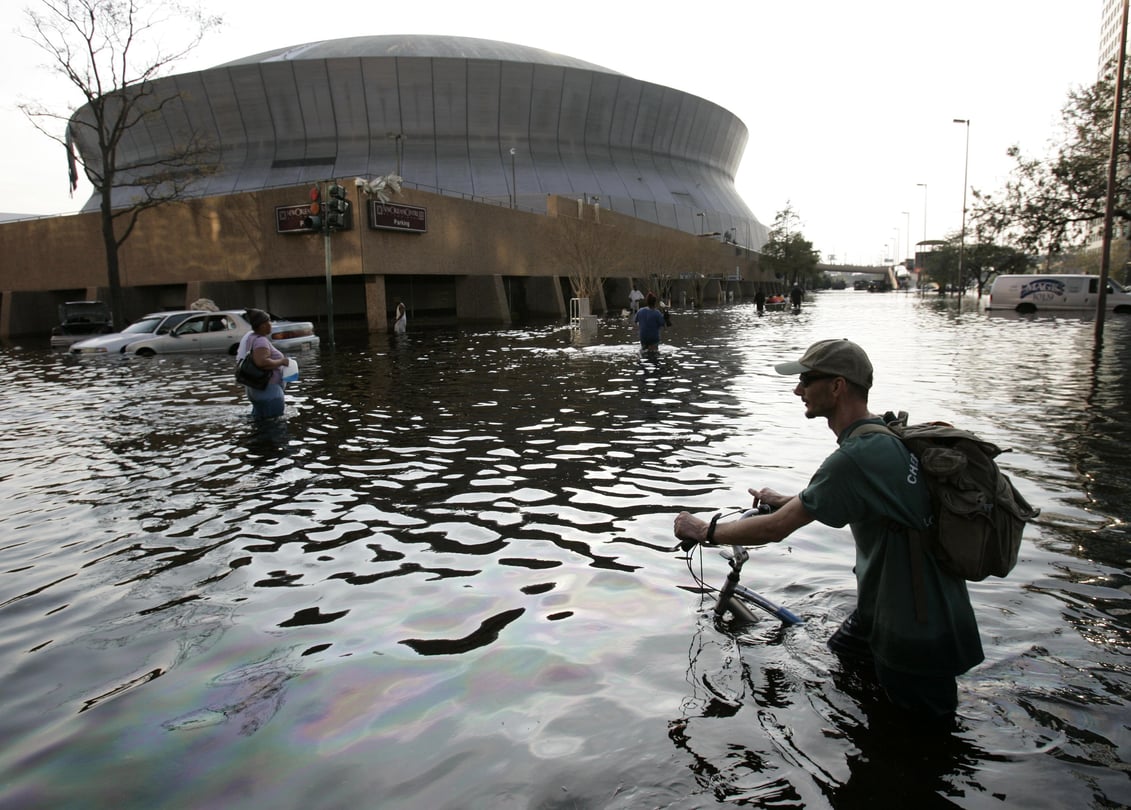
“I think back 20 years, my shop in New Orleans is located in the Lower Nine where the barges hit heavy. That’s where everything, the disaster happened,” said Charlot.
She evacuated only to return to a city she didn’t recognize.
“Everything, you name it, still in the street; bodies were still around.”
Brandi Charlot
“Everything, you name it, still in the street; bodies were still around,” said Charlot.
Her car had drifted blocks from where she parked.
“I went to check on a house. Everything had fallen down and you couldn’t even walk. You had to walk through soft sheetrock,” said Charlot.
Charlot ultimately came about 500 miles east to Atlanta, where she met Keisha Marie Mackie, who was also from the Ninth Ward. They are both stakeholders at the Russell Innovation Center for Entrepreneurs, an Atlanta-based business generator supporting Black entrepreneurs.
At the time of Katrina, a 30-year-old Mackie was working at a hotel where she would usually ride out a heavy storm.
“You used to have to sleep at the hotel,” said Mackie.
But for good reason, she decided to evacuate.
“I was seven months pregnant. I was like, I didn’t want to go to the hotel,” said Mackie.
Mackie says she jumped on the interstate before it was closed. She packed one outfit because she thought she would be returning home.
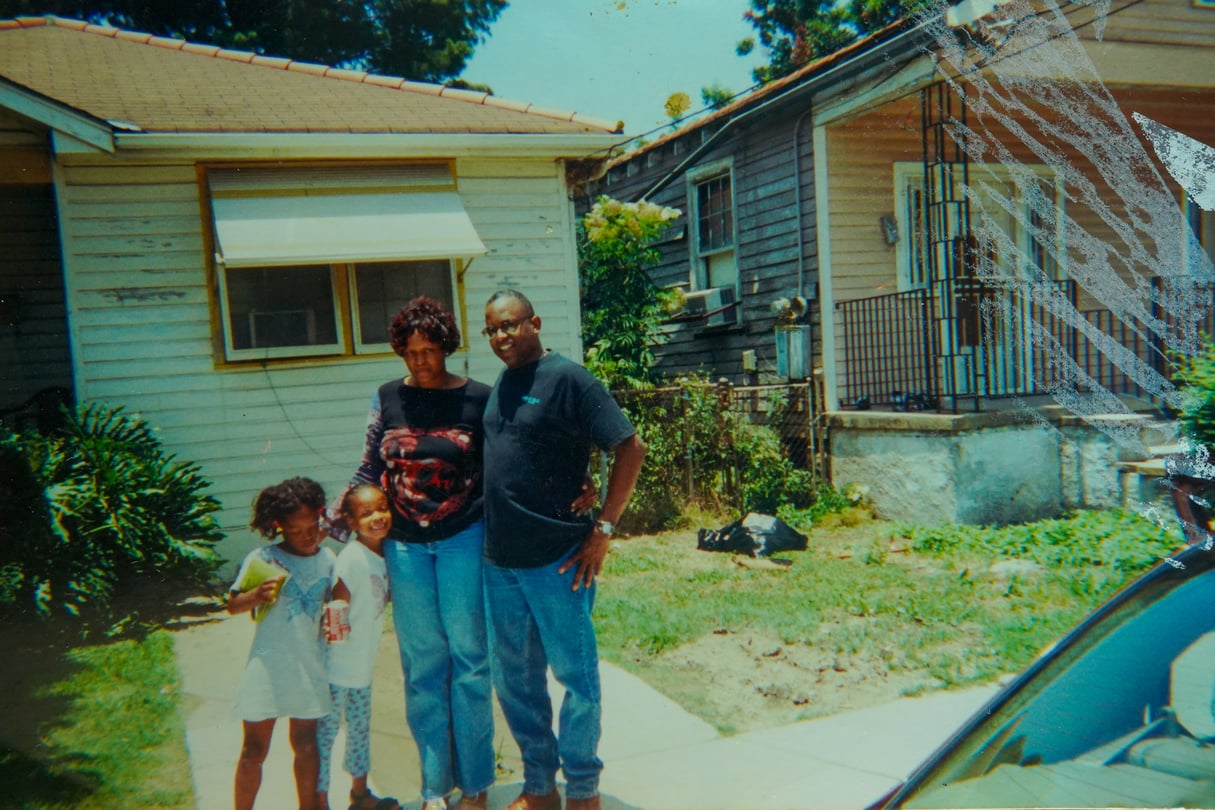
“And once the levee broke, we had to watch that on TV, and we knew we weren’t going back home,” said Mackie.
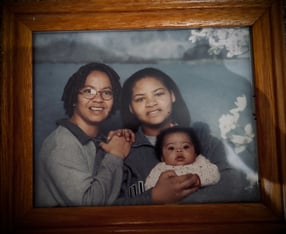
Mackie looks down at a photo of her with her daughters and her father. It’s the only family picture she now has. All of her belongings were destroyed, and she lost her great aunt in the flooding.
“And once the levee broke, we had to watch that on TV, and we knew we weren’t going back home.”
Keisha Marie Mackie
So she started making Atlanta her home. And thanks to some generous former hotel customers, she got a car, a job, and somewhere to stay that was not a hotel.
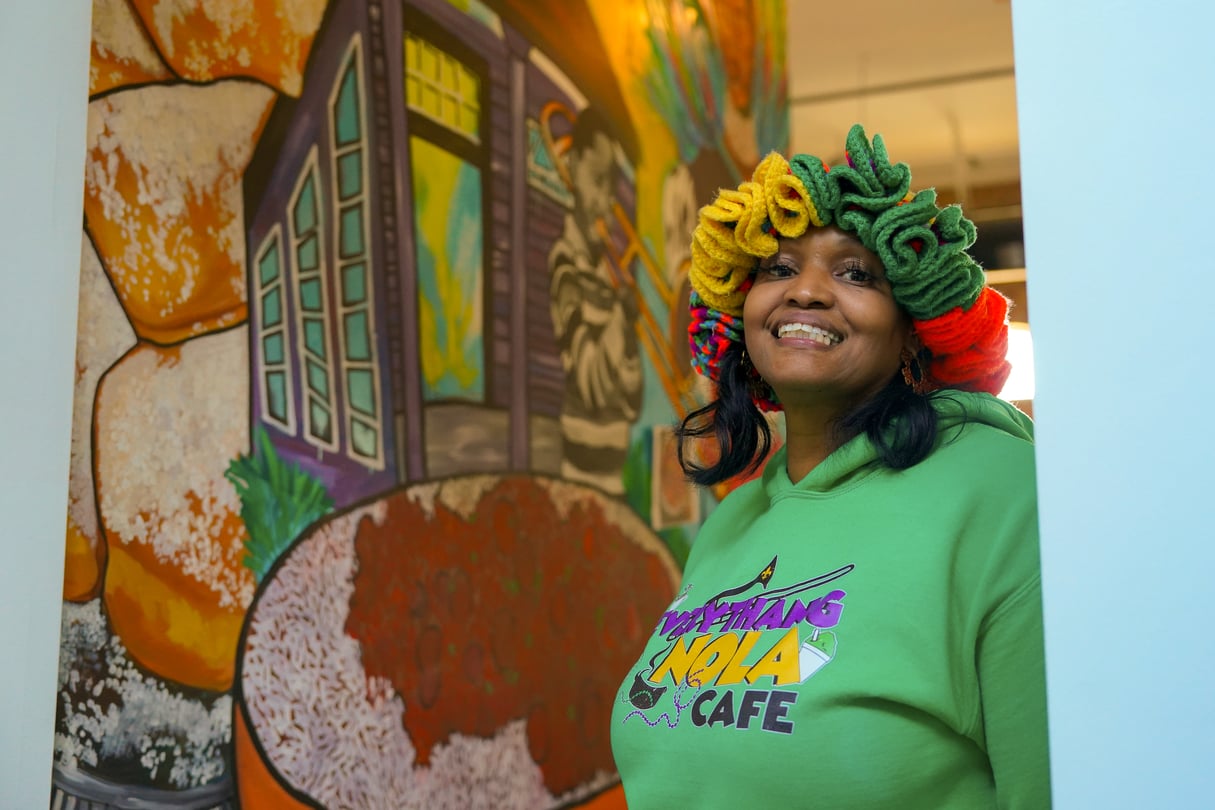
A few years later, Mackie had saved enough money to start her business, Everythang NOLA Cafe. The original location is in Sylvan Hills.
Cultural oasis in a desert
“It was a food desert when we first got here,” said Mackie. “It was only supposed to be snowballs, but everybody wanted food.”
Mackie’s Cafe gradually added coffee, cakes, desserts, sandwiches, salads, and nachos.
“We’re gonna bring New Orleans here to allow the people that have not decided to come back to experience New Orleans.”
Brandi Charlot
She also served up New Orleans classics, like snowballs, crawfish and King Cakes, often to other evacuees who are now residents in Atlanta.
“We all used to kind of like hang out in front of our building. We had music, we had DJs, used to bring the Indians out. So it felt so good to bring a culture of our city to a place that we now have to call home,” said Mackie.
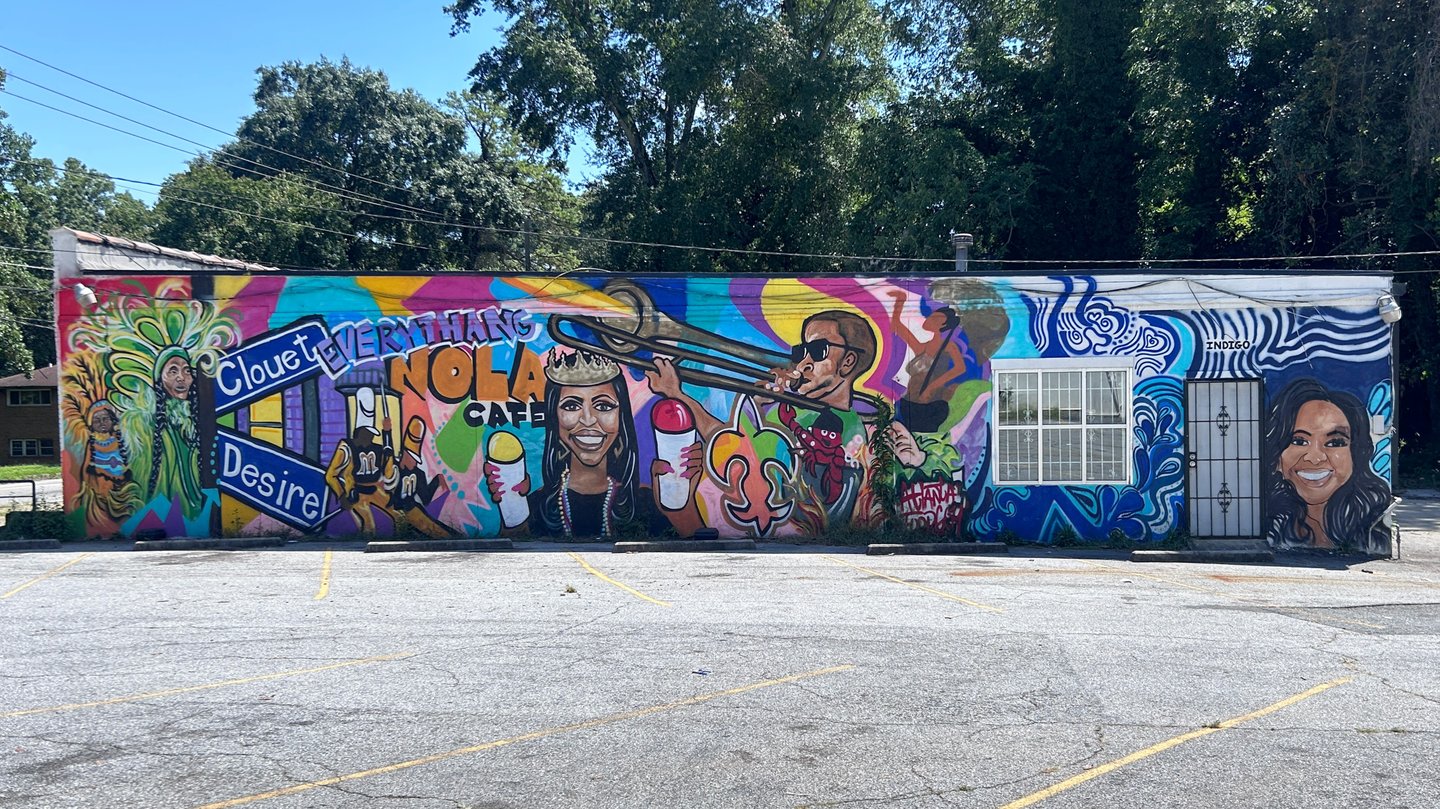
She says Atlanta has a lot of people from New Orleans here.
Shatakshee Dhongde is an economics professor at Georgia Tech.
“So we had 100,000 evacuees come to Atlanta right after the hurricane,” said Dhongde.
She says the influx of evacuees reshaped Georgia’s demographics, schools, labor market and economy.
“Even after 10 years or so, out of those 100,000, 70,000 had settled down in the region,” said Dhongde.
These changes continue to ripple through communities today.
“They merged into the city’s fabric, they became almost local Atlantans and got into permanent jobs, they have their children graduating from Atlanta high schools and … that’s why many of them decided to stay here for a longer term,” said Dhongde.
Mackie would buy over 100 boxes of king cakes, driving seven hours down to New Orleans and back, just so her customers felt right at home.
“it felt so good to bring a culture of our city to a place that we now have to call home.”
Keisha Marie Mackie
“People was ecstatic, like they really be waiting on me, literally, to get off of 85 to come down the highway to pull in with these boxes and boxes of king cakes,” said Mackie.
But earlier this year, the owners gave her two months to leave the building.
“I don’t wanna say as tragic as Hurricane Katrina, but it was like ironically 20 years later, here I’m displaced again.”
Keisha Marie Mackie
“I don’t wanna say as tragic as Hurricane Katrina, but it was like ironically 20 years later, here I’m displaced again,” said Mackie.
And the area is down a critical source of food.
“Now it’s back to being a food desert because they’re not doing nothing with the property yet. It’s taken a very long time for them to do whatever it is, the plans that they have,” said Mackie.
Mackie has done smaller events and pop-ups, but has missed out on five months of her regular business.
Another new beginning in Atlanta
A grant from Invest Atlanta, the city’s economic development arm, is helping Mackie reopen.
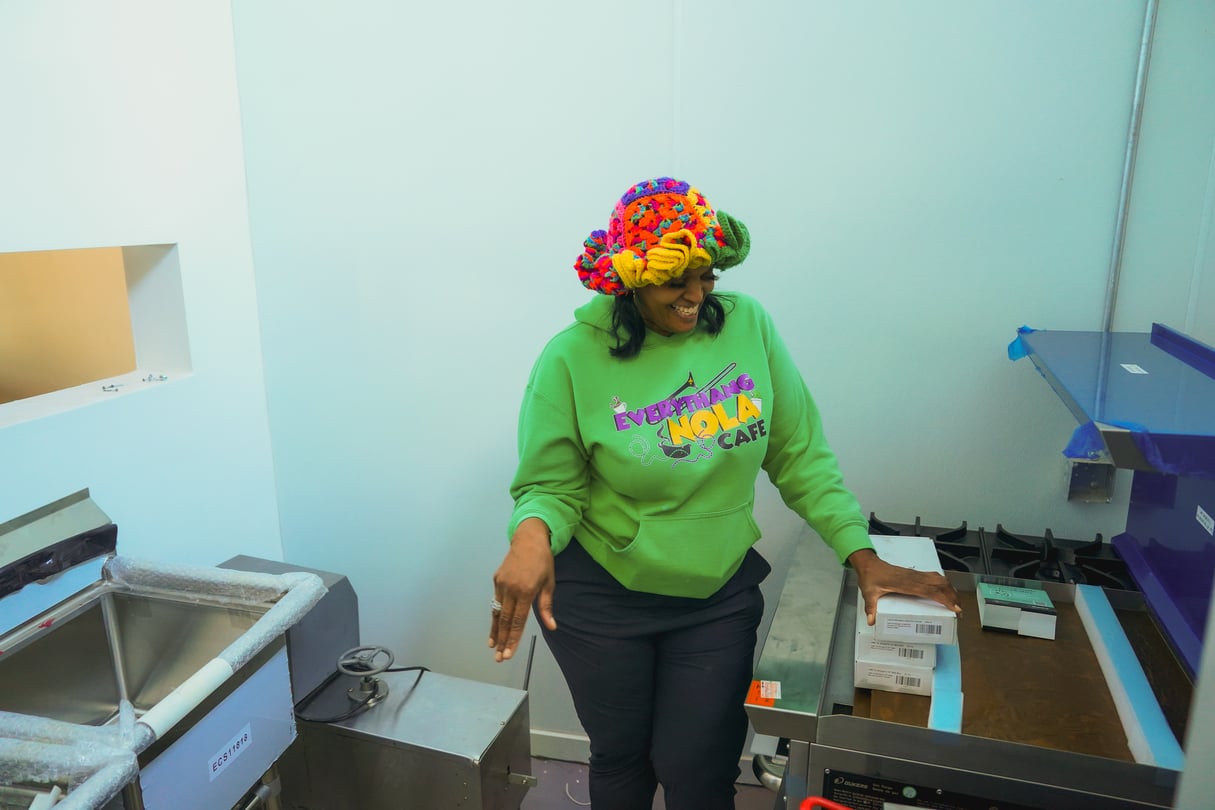
Now, she’s going to be part of a Black-owned food hall down the street from her first location. It’s smaller than her last building, but it comes with other perks, like her friend Brandi Charlot.
“She has the spot downstairs, and I’m up here, and we’re gonna bring New Orleans here to allow the people that have not decided to come back to experience New Orleans,” said Charlot.
Mackie is marking the 20th year since Katrina with another new beginning, opening her Everythang NOLA cafe in its new Capital View location this weekend.