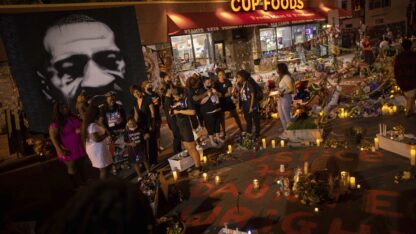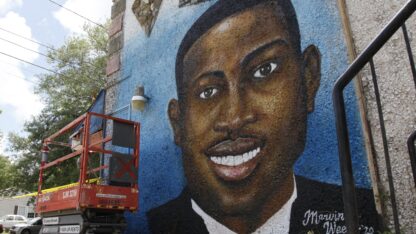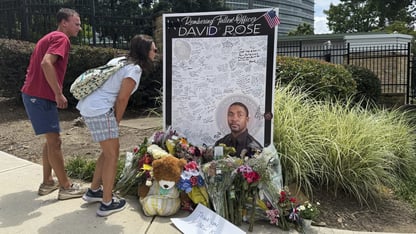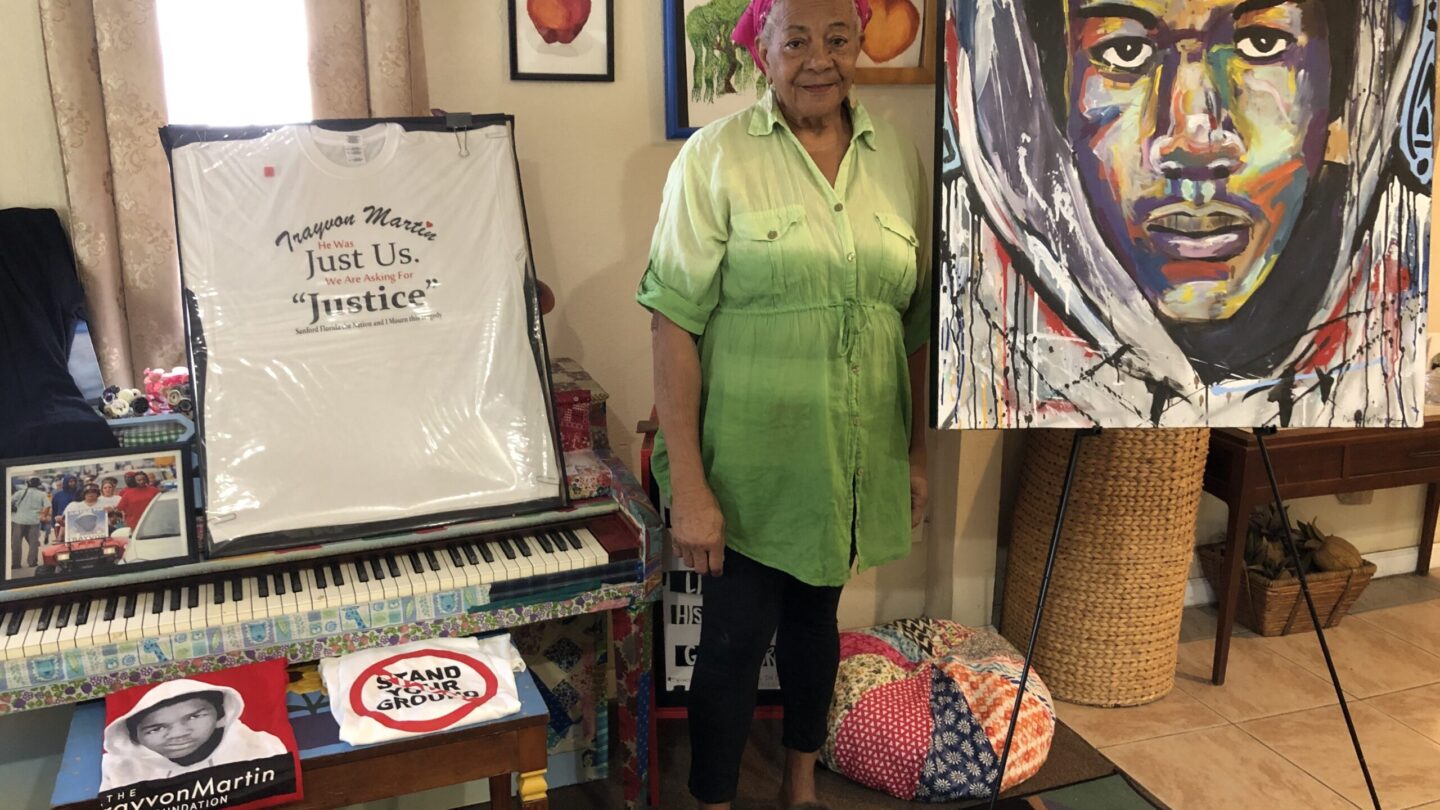
The signs and footballs and handwritten notes that adorned the roadside memorial to Trayvon Martin could very well have ended up in the garbage.
It was March of 2012, the early days after the Black teenager’s shooting by a neighborhood watch volunteer named George Zimmerman. The protests had begun small, and then ballooned. So had the roadside memorial that a local historian named Francis Oliver started with just a couple of flower wreaths placed outside the walls of the gated community in Sanford, Fla., where Martin had been killed.
Within hours, flowers, teddy bears, sneakers and drawings of Trayvon Martin lined the sidewalk, as did bags of Skittles and cans of iced tea, the only things Martin was carrying during the fatal confrontation on Feb. 26, 2012. But then, Oliver recalled recently, the residents of the Retreat at Twin Lakes began to complain.
Read this story now for free
To continue reading, sign up for our newsletter and get unlimited access to WABE.org
You can select your preferences for news and local content. We will never share your email address. Learn how your newsletter sign-up will support WABE and Public Media