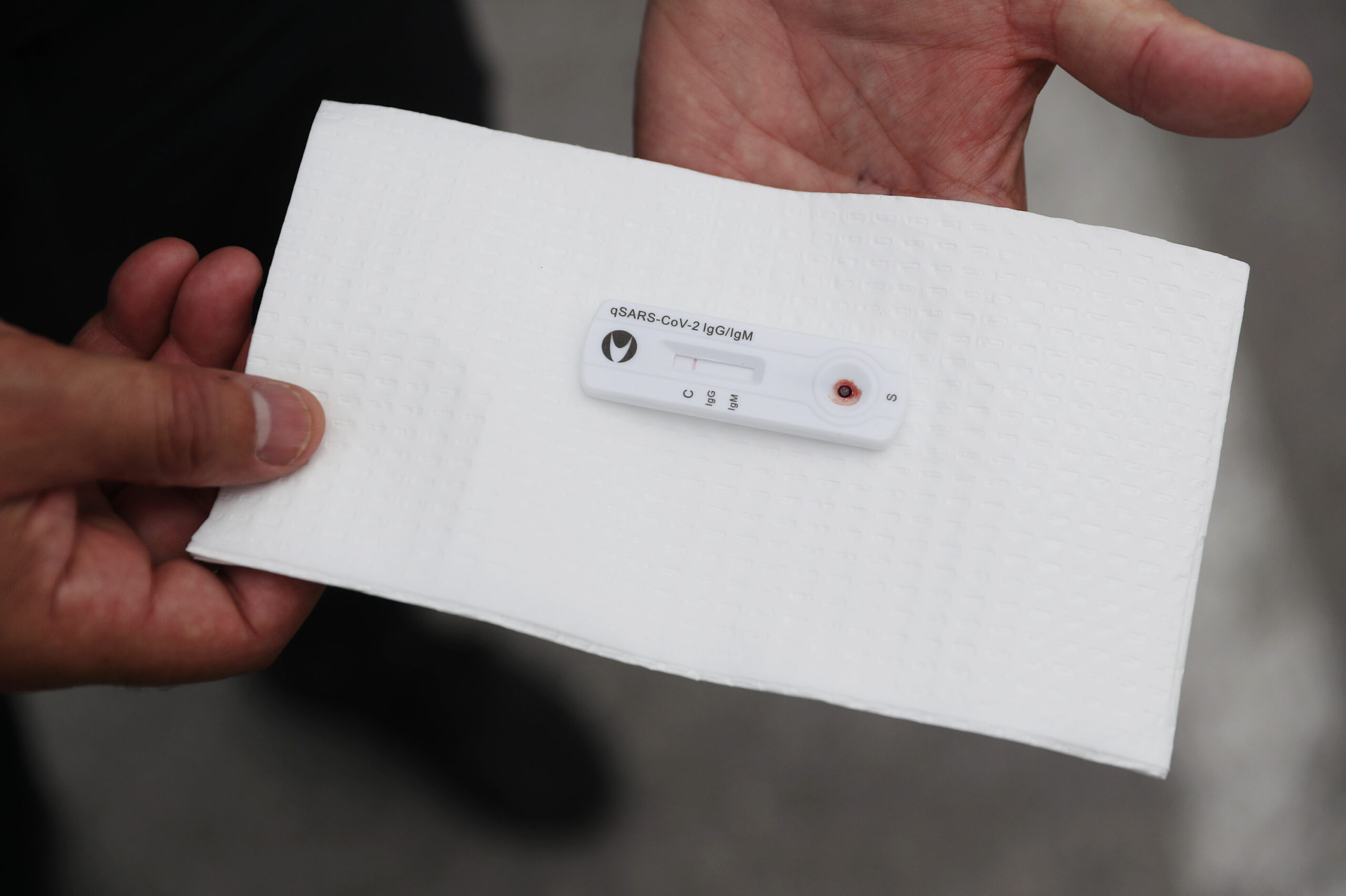
Last month the White House issued guidelines suggesting a way to reduce the number of false positive results in antibody tests: Run two tests. But that strategy has not yet been validated for coronavirus testing. And the details matter.
Antibody tests identify people who have been previously exposed to the coronavirus. But false positives are a big concern. A test that has a 99% sensitivity is still wrong 1% of the time. And if it’s being used to test a population where 1% of people are infected, half the time a positive result will be a false positive.
This phenomenon may help explain why researchers from Stanford University reported a high rate of coronavirus infection in California’s Santa Clara County – vastly more than would be expected based on known diagnoses.
Read this story now for free
To continue reading, sign up for our newsletter and get unlimited access to WABE.org
You can select your preferences for news and local content. We will never share your email address. Learn how your newsletter sign-up will support WABE and Public Media