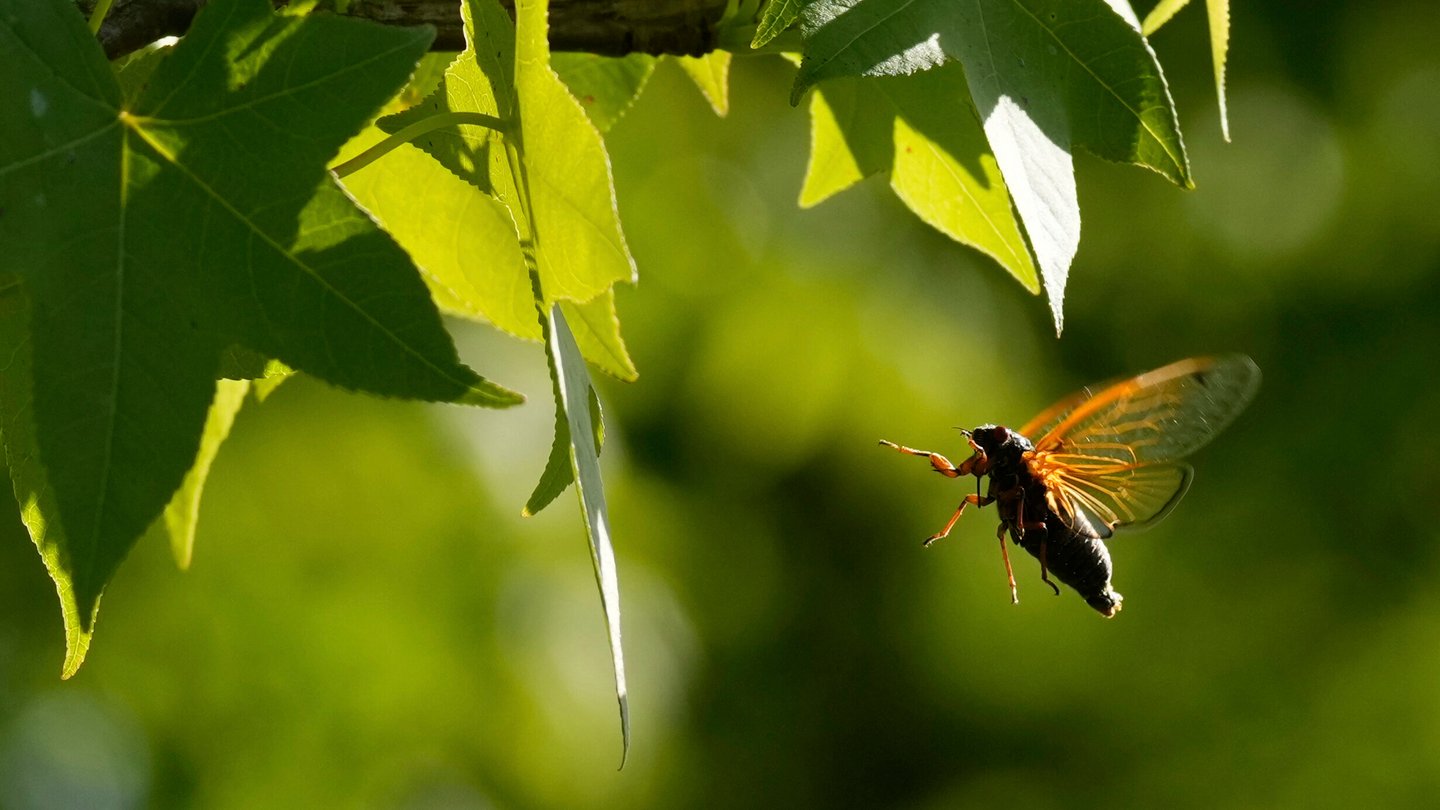
Another cicada invasion is here. The large Brood XIV, which emerges every 17 years, is making for a spectacular natural event as billions of periodical cicadas emerge across parts of the Eastern U.S., including in Georgia, southern Ohio, Kentucky, Cape Cod in Massachusetts, and Long Island, New York.
When spring warms the soil to 64 degrees Fahrenheit (about 18 degrees Celsius), these cicada nymphs dig their way up to the surface after their long development period.
On the right night, usually after a warm spring rain, near trees showing cicada pilot holes and chimneys, they will emerge — so many that they can be heard crunching through the grass to climb up trees, plants, people or any vertical surface. There is a forceful quality about it.
Read this story now for free
To continue reading, sign up for our newsletter and get unlimited access to WABE.org
You can select your preferences for news and local content. We will never share your email address. Learn how your newsletter sign-up will support WABE and Public Media