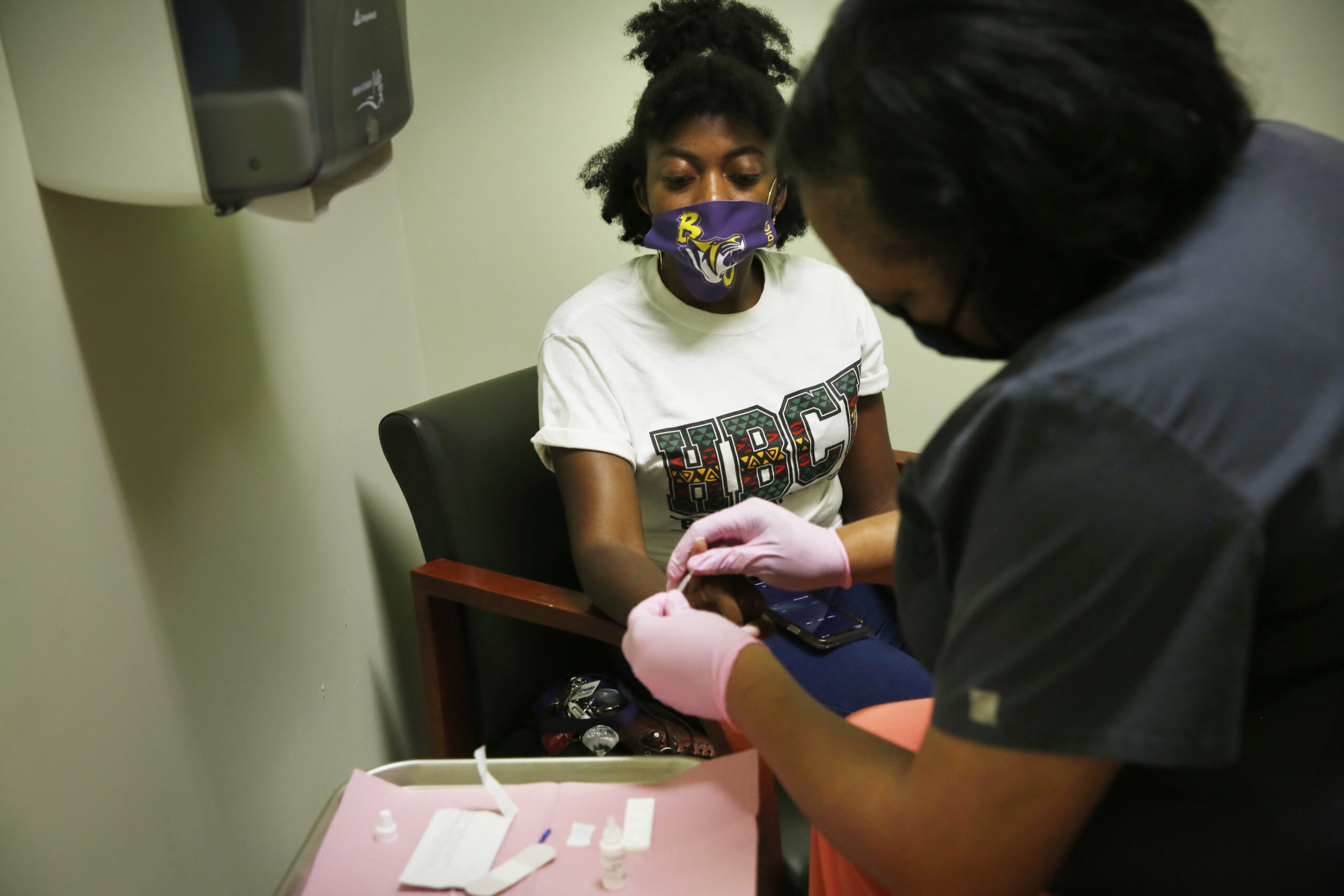
Of the colleges and universities that have chosen to hold classes in person this fall, most are not conducting widespread testing of their students for the coronavirus, an NPR analysis has found. With only weeks remaining before many of those schools plan to send students home for the end of the semester, the findings raise concerns that communities around the U.S. could be exposed to new outbreaks.
The data from more than 1,400 colleges were compiled by the College Crisis Initiative at Davidson College and analyzed by NPR. They show that more than 2 out of 3 colleges with in-person classes either have no clear testing plan or are testing only students who are at risk — mostly when they feel sick or have had contact with someone who has tested positive for the coronavirus.
Of colleges with in-person classes and more than 5,000 undergraduates, only 25% are conducting mass screening or random “surveillance” testing of students. Only 6% are routinely testing all of their students. Most, instead, are relying on only diagnostic testing of symptomatic students, which many experts say comes too late to control outbreaks and understates the true number of cases.
Read this story now for free
To continue reading, sign up for our newsletter and get unlimited access to WABE.org
You can select your preferences for news and local content. We will never share your email address. Learn how your newsletter sign-up will support WABE and Public Media