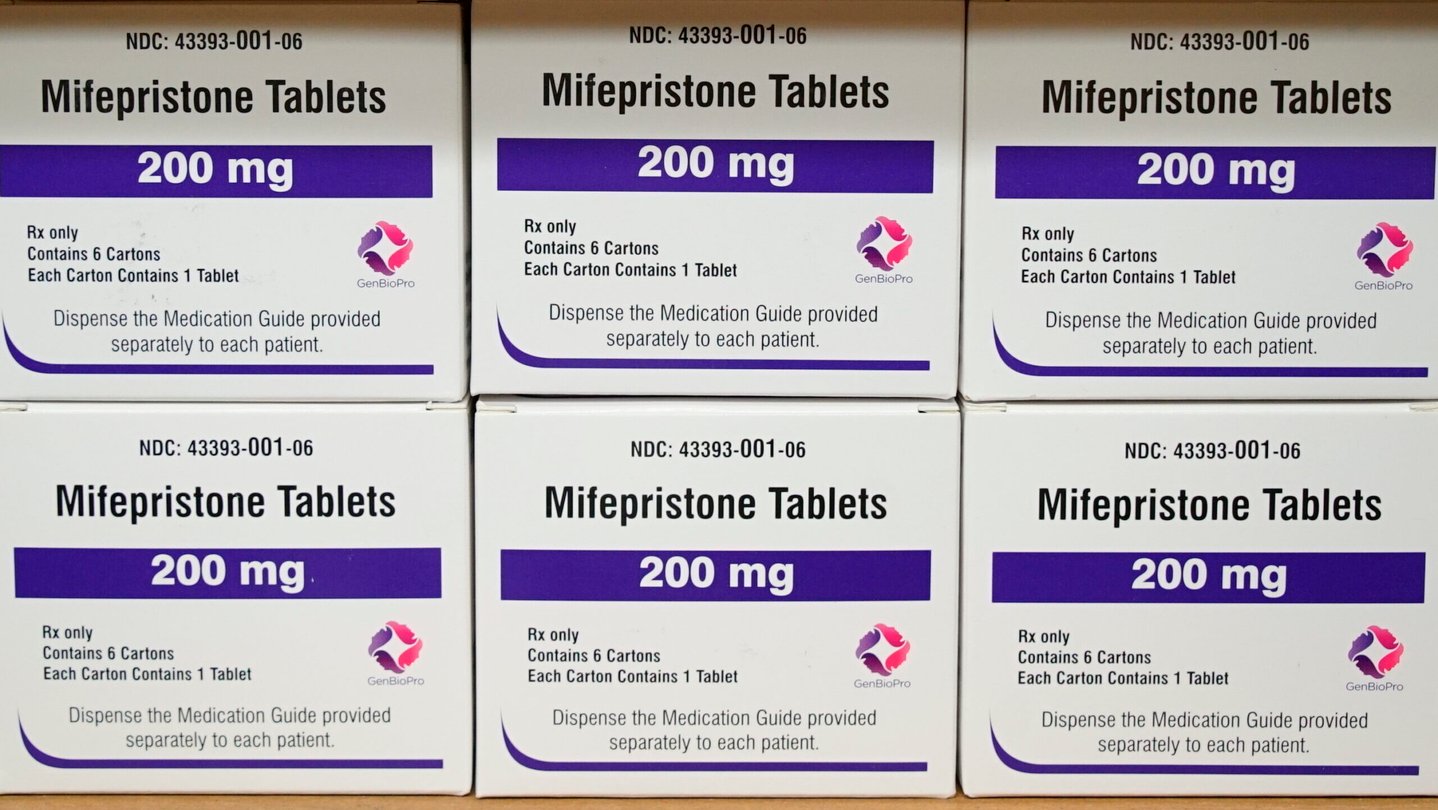
FILE - Boxes of the drug mifepristone sit on a shelf at the West Alabama Women's Center in Tuscaloosa, Ala., on March 16, 2022.
Allen G. Breed / Allen G. Breed
Georgia advocates for abortion rights are among a chorus of national reproductive rights groups urging the United States Supreme Court to preserve access to abortion medication by mail after a flurry of back and forth court rulings.
The high court on Monday temporarily restored access by mail or pharmacy to the abortion medication mifepristone, blocking a lower court ruling that earlier reinstated a national requirement that patients secure an in-person doctor visit to fill their prescriptions.
Louisiana had sued to restrict mifepristone access, asserting its availability undermined the state’s total abortion ban. Friday’s Louisiana v. U.S. Food and Drug Administration (FDA) ruling by the 5th U.S. Circuit Court of Appeals restricted mifepristone access to in-person visits to health facilities.
Two manufacturers of mifepristone filed emergency appeals asking the U.S. Supreme Court to step in.
Now, Justice Samuel Alito’s signed order is expected to remain in effect for a week as the court considers both sides’ arguments.
“While this is a positive short-term development, no one can rest easy when our ability to get this safe, effective medication for abortion and miscarriage care still hangs in the balance,” said Julia Kaye, senior staff attorney for the Reproductive Freedom Project of the ACLU, in a written statement. “The Supreme Court needs to put an end to this baseless attack on our reproductive freedom, once and for all.”
Restricting access to mifepristone via telemedicine would lead to unnecessary delays in health care and increase the risk for potential pregnancy complications, said Monica Simpson, executive director of the SisterSong: Women of Color Reproductive Justice Collective, a plaintiff in an ongoing lawsuit against Georgia’s six week abortion restrictions, in a statement.
“Mifepristone is one of two medications commonly used in medication abortion. It is also used in miscarriage care, helping people safely manage pregnancy loss without unnecessary delays. Restricting access to this medication is not just about mifepristone. It is about power and control over who gets to make decisions about their own body,” Simpson said.
The U.S. Food and Drug Administration approved mifepristone in 2000 as a safe and effective way to terminate early pregnancies, typically along with a second medication, misoprostol.
And since 2021, patients have been able to access the medication by mail, which anti-abortion groups have sought to restrict.
“Pill pushers receive every benefit of the doubt, including today, as Justice Alito allows pill traffickers and big pharma to operate temporarily while arguments are sent to the Court,” Kristan Hawkins, president of the anti-abortion group Students for Life, said in a statement to the Associated Press.
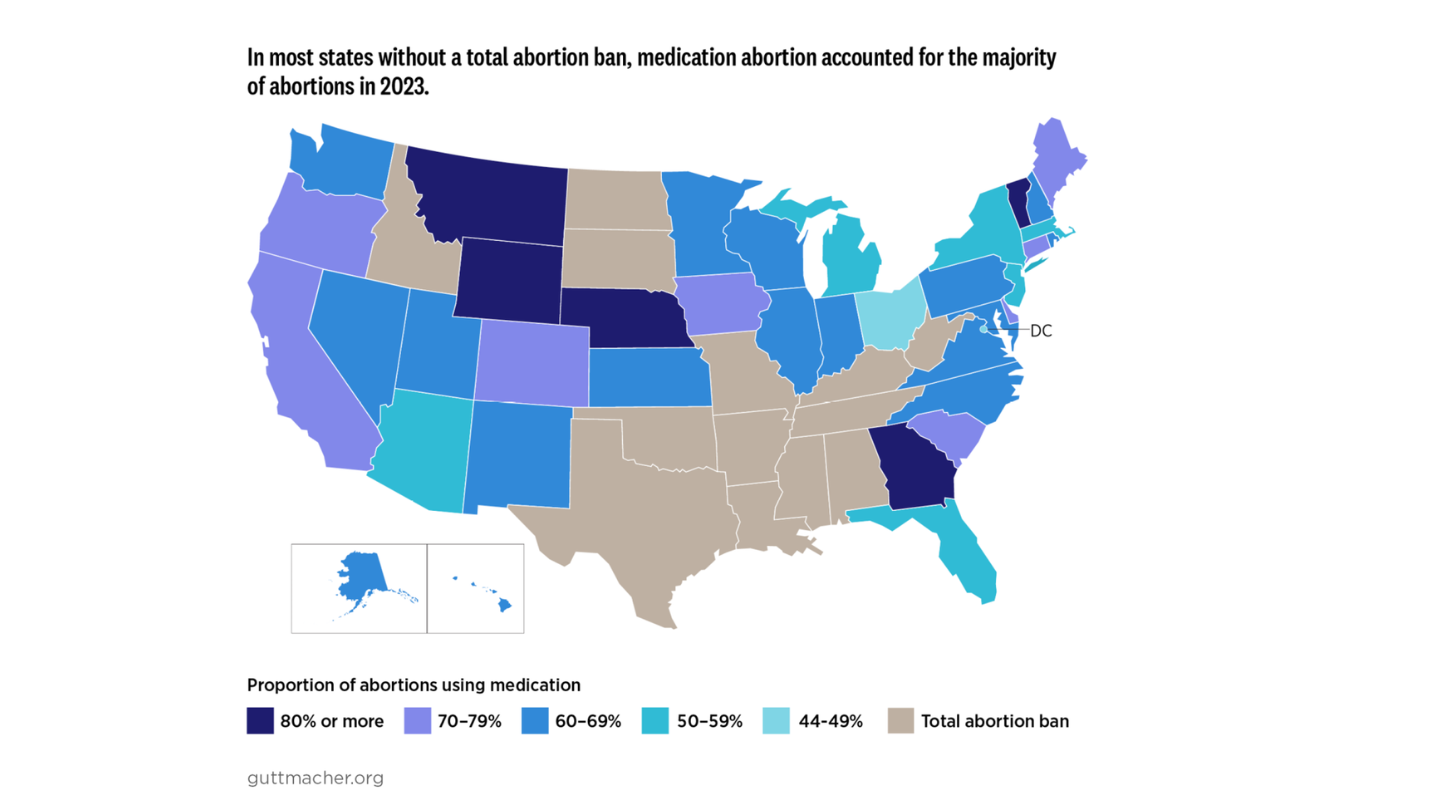
Data show about 1 in 4 abortions in the U.S. are prescribed via telehealth. And 83% of abortions in Georgia are medication abortions, according to the Guttmacher Institute policy group, which supports abortion rights. (Guttmacher Institute)
National data from the Guttmacher Institute policy group, which supports abortion rights, show medication abortion is by far the most common method for ending a pregnancy in the U.S. In Georgia, 83% of abortions are provided via medication. And about 1 in 4 abortions nationally are prescribed via telehealth.
Since the 2022 Supreme Court ruling in “Dobbs v. Jackson Women’s Health Organization” overturned Roe v. Wade abortion protections, 13 states have total abortion bans.
Six other states, including Georgia, enforce bans between six and 12 weeks of pregnancy.