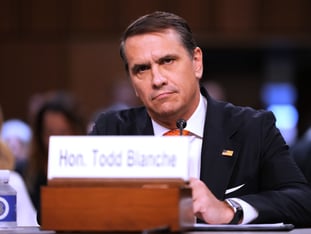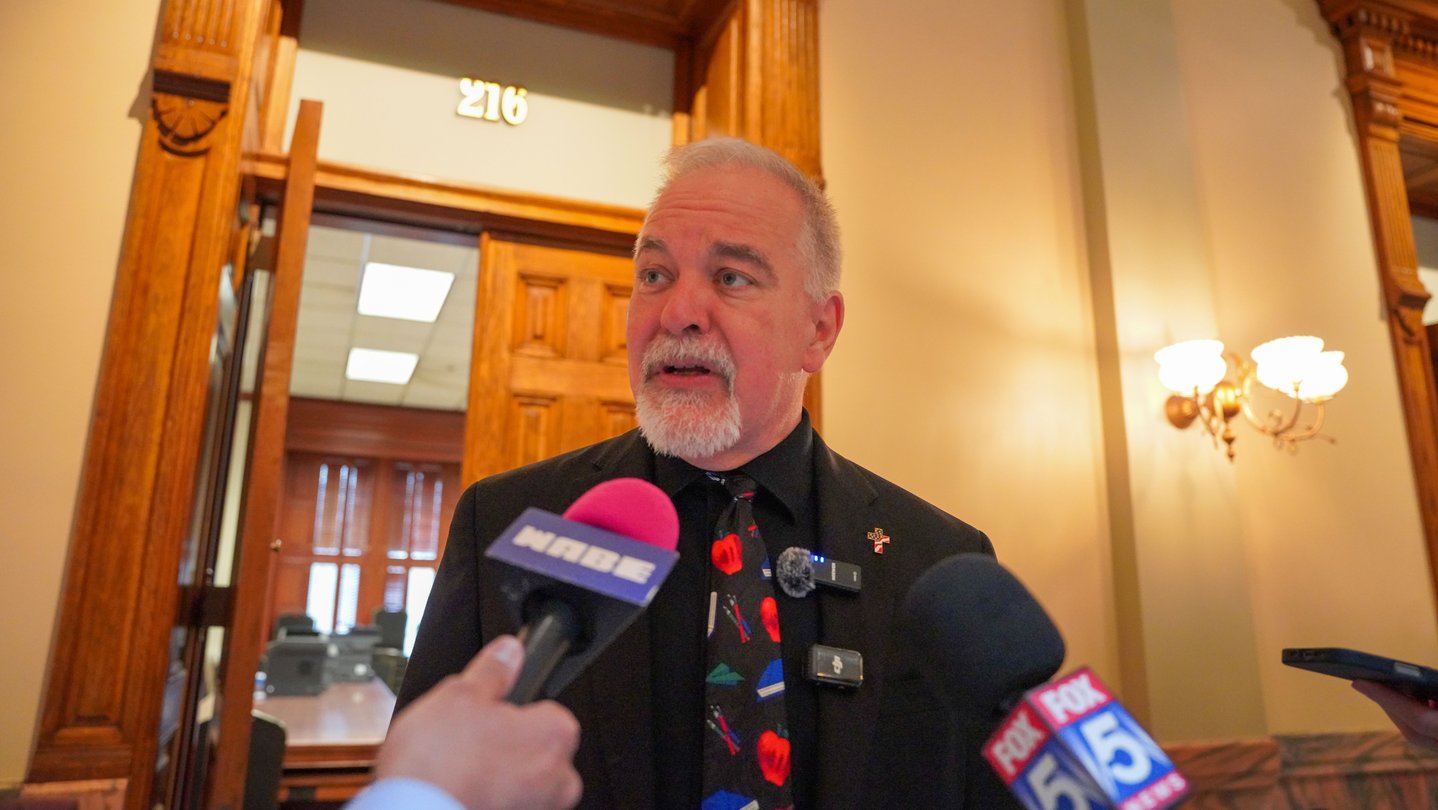
The race for the next Georgia state school superintendent is packed full of candidates vying to challenge the incumbent, Richard Woods, as the state faces low literacy rates.
Woods has held the position for three terms since he took office in 2015.
A total of eight candidates are on May 19 primary ballots, with five Republicans and three Democrats.
Republican candidates for Georgia state school superintendent
Woods, the incumbent, and Georgia Gov. Brian Kemp have worked together to overhaul Common Core testing standards and instate standards developed by Georgia teachers with input from residents.
Woods has touted an increase to the state’s graduation rate since he took office. For the 2014-15 school year, that rate was 79%. For the 2024-25 school year, that was 87.2%.
2026 Georgia Midterm Elections
Stay in the know with WABE’s 2026 Georgia Midterm Election page, where you can find the latest election news, important dates, voting locations, candidate info, results and more.
Under his tenure, state lawmakers passed the Georgia Promise Scholarship, also known as the school voucher program, which allows students in K-12 apply for up to $6,500 to cover in private school tuition and expenses.
Woods has supported increasing campus security funding, as well as funding one school resource officer in every school. He’s also supported property tax cuts, increasing teacher pay and modernizing the formula that funds public education, otherwise known as the Quality Basic Education (QBE) formula.
Woods declined to speak with WABE for an interview about his campaign.
“Richard is focused on meeting with and earning the votes of Georgians,” a spokesperson from his reelection campaign said in a statement to WABE. “In the last two elections, Richard was honored to receive more votes than any other statewide official, which is a testament to his track record and the faith that voters have in his experience and vision for our state. On Primary election night, results will show who Georgians endorse to keep education, moving forward in our state — that endorsement is the one that matters the most.”
Nevertheless, Woods has received criticism from state lawmakers from both parties, with some Republicans saying that Woods and the state department of education have had little involvement in legislation at the State Capitol as literacy rates remain low.
Several Republican leaders in the state — like state House Speaker Jon Burns, House Education Committee Chair Chris Erwin and Senate Education Committee Chair Billy Hickman — are backing a different candidate.
Fred “Bubba” Longgrear is president of the Georgia School Superintendents Association and the superintendent of the Candler County School District, located in the southeastern part of the state, around 70 miles west of Savannah. He said the current state department of education is not working in tandem with legislators, state agencies and local districts.
“It is more of a compliance organization that strictly holds people accountable but doesn’t provide the support, doesn’t provide the cohesive relationships, and people are working in isolation,” Longgrear said in an interview with WABE.
Longgrear refers to himself as a “relationship leader,” someone who can bridge those communication gaps.
“That’s why I’m compelled to run — to try to benefit families and students in Georgia with a leader that’s going to pull people together and have a clear vision and everybody working in the same vein,” he said.
A spokesperson from Woods’ campaign said Woods’ 2025 legislative priorities were all accomplished during this year’s session.
“Woods called for distraction-free legislation, school finance reform, property tax relief, investing in afterschool programs, supporting school-level literacy coaches, increasing teacher pay, increasing the number of personal days for teachers to 5, and extending Return to Work legislation — all of these priorities were accomplished during the legislative session and signed into law by Governor Kemp,” the spokesperson said.
Longgrear supports firmer policies around and implementation of discipline, increasing accessibility to department of education staff and updating assessments to better serve literacy goals. He also wants to transform school choice into “student choice.”
“It truly is at this point ‘school choice.’ The receiving school, the private school that would be eligible to take a voucher on a child has the autonomy to pick and choose the child that they want,” he said. “I don’t feel very favorable towards that.”
Instead, he said private schools that accept students with vouchers from a certain area should accept any student with vouchers from that same area.
Also on the Republican ballot is Nelva Lee, who has experience in health care administration at Grady Health System and teaching as adjunct professor. She’s currently the CEO of Concrete Build Financing, which helps real estate investors use cryptocurrency, and also founded an organization that trained medical interpreters.
“All that experience informs me to be the next superintendent of schools in that I have budget experience as a CEO,” Lee said.
She said the QBE formula needs an update. “It’s antiquated, it’s complicated and it lends itself to corruption,” she said.
She also wants to require trade certifications for all high school students upon graduation to make them more career-ready. “A lot of students right now are very concerned about AI encroaching on their aspirations. A lot of these trade certificates are AI-proof. I don’t see AI taking over plumbing, electrician, welding anytime soon,” she said.
Lee also wants to expand private school vouchers to everyone regardless of income and raise the amount to $8,000.
Mesha Mainor is a former state representative who switched from the Democratic Party to the Republican Party in 2023 and served on the House Education Committee.
“What the state school superintendent’s position is, a lot of it, is to implement the laws that the Georgia lawmakers create, and so I’m the only candidate that has actually created education laws,” she said.
She said she decided to switch parties over disagreements about Democrats’ stances on police funding and school choice.
“During my local election for state rep. as a new Republican, there were some people that took a Republican ballot for me for the first time, Democrats,” she said. “And so on both sides, I have a record already, but also there are a lot of Democrats that school choice is very important to them and they really want someone that can support their family’s needs when it comes to education.”
She named her superintendent campaign platform the PASS framework, which stands for Parents and Children First, Accountability, Student Success, and Safety and Transportation. That means she supports greater parental involvement in school, greater financial oversight and auditing of local districts and improving school and transportation safety.
Finally, Randell Trammell is CEO of the Georgia Center for Civic Engagement and has served as the chair of the Georgia Commission for Civic Education, Reinhardt University’s Board of Trustees and the Board of Trustees for Southern Association of Colleges and Schools Commission on Colleges.
Trammell calls himself a “parent choice candidate” and also advocates for expanding vouchers to everyone regardless of income level and increasing the amount of scholarship families receive to attend private education.
“My job and my goal and my desire and my vision is to make sure that every public school is so excellent that it is the choice that you wouldn’t think about going anywhere else. But until I can look every Georgian in the eye, shake their hand and know within my heart, honestly, that they have that option in their community, then I’m gonna fight to make sure that they have a choice,” he said.
Like other candidates, he wants to improve literacy rates, and he wants the state department of education to improve academic standards rather than seeking only to graduate a greater number of students.
A big priority for Trammell is also improving the livelihoods of teachers in the state, which means providing support like giving every teacher a planning period and enforcing stricter disciplinary standards to reduce distractions.
“Our teachers are our most important person in the classroom besides the students. And I believe this as a person who runs a nonprofit organization. If I take care of my employees, if I take care of my people, they will take care of my clients, the students that we serve,” he said.
Democratic candidates for state school superintendent
Lydia Powell is the assistant principal at Hampton High School in Henry County and has worked in education administration, teaching and special education roles for 26 years in different school systems in the state.
She said she joined the race because she feels the state superintendent should have public education experience.
“It is important to be an educator because you understand what it is firsthand to have to work in a public K-12 school and understand the budgetary needs, understand the legislation that comes through and how it is going to be implemented, actually implemented, in a school,” she said.
As superintendent, Powell said she would expand pre-kindergarten access by adding pre-k classrooms and strongly advocate for changes to the QBE formula that would add extra funding for students that experience poverty.
Moreover, she said she wants to improve school safety by improving culture. That happens, she said, through collaboration with anti-bullying organizations and state and local agencies, bolstering mental health, and training administrators and educators to help improve safety.
“What stops weapons is culture and climate. When I have found a weapon in my building, it’s because a student has reported it or a parent has reported it because a student called home and said, ‘Hey, grandma or mom, I don’t feel safe because this is what I saw or this is what I heard,’” she said.
She also wants the state to have statewide bullying protocols that the districts adopt in addition to their own bullying procedures.
The state should also have oversight over multi-tiered systems of support practices, she said, which is a broad term referring to an intervention framework used by teachers and administrators when students are falling behind academically or behaviorally.
In addition, she advocates for support for teachers beyond salary increases, such as working to lower insurance premiums and providing tuition reimbursements for teachers who want to pursue a certificate or degree program.
Also on the Democratic ballot is Otha Thornton, who was in the military for 21 years, where he was involved with parent teacher association and education committees before becoming the national Parent Teacher Association president from 2013 to 2015. He currently works as a consultant and advocate.
Thornton, who has endorsements from the Georgia Federation of Teachers and the Georgia AFL-CIO, said he has “the most executive experience amongst the candidates” due to his advocacy on the state and national levels.
“I’m more of a proactive leader. I look at the problems, look at data and trends and get with people to come to solutions and get them implemented,” he said. “I have almost two decades of working with the U.S. Congress and the Georgia Assembly. So, you know, I’m no stranger when it comes to the state school superintendent going down to the Capitol, knowing people, and having the respect of the legislators.”
In 2018, Thornton lost against Woods for state school superintendent. But he said he can win this year.
“The name recognition is there, and just my work. The work speaks for itself. So that’s the difference now,” he said.
He also supports updating the QBE formula to add a poverty weight, improving literacy and giving parents more opportunities to be engaged with schools.
“When we have challenges in school where a child is disruptive or violent, we have to get the parents to the school to address the matter, not as a punitive, but as a corrective so we can help the child and the overall system,” Thornton said.
He’s also opposed to the current private school voucher system.
“The vouchers are draining our public funds,” he said. “If we fund the schools properly, we’ll get the results that people want.”
The third Democratic candidate, Anton Anthony, did not respond to WABE’s request for an interview. He is a pastor and the current superintendent of Hancock County Schools. His platform includes prioritizing early literacy investment, starting career exposure in middle school and supporting teachers and districts.