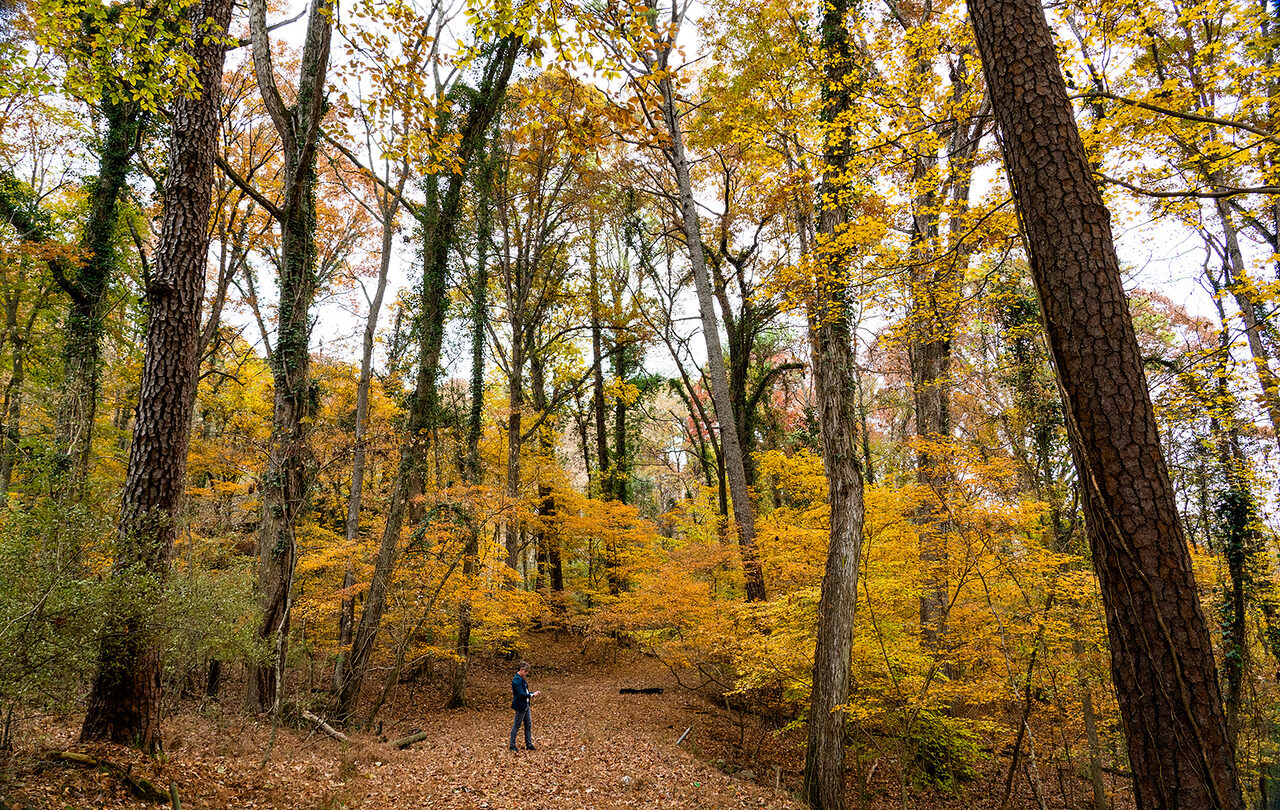
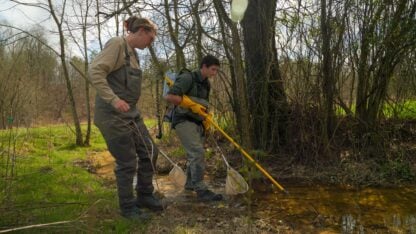
Lake Charlotte Nature Preserve was purchased by The Conservation Fund from Waste Management in 2019. In April of 2020 the City of Atlanta agreed to purchase the land for permanent conservation. It is one of the City's largest conservation acquisitions, consisting of one of the largest old growth forests left in Atlanta's borders.
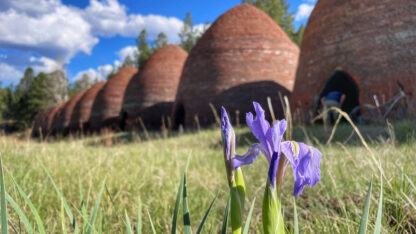
Photo courtesy of / The Conservation Fund
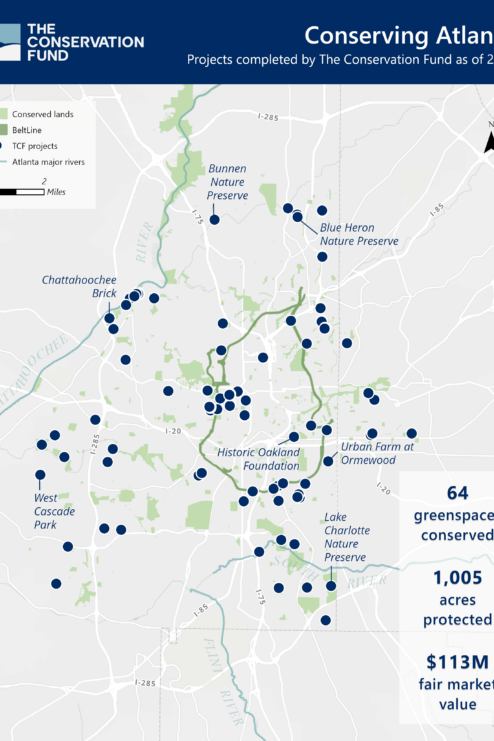
The Conservation Fund is celebrating conserving 1,000 acres of park land within Atlanta city limits.
Driving past the mansions off West Paces Ferry, after taking a few winding turns, the tree canopy slowly envelops the sky.
“So the property we’re on will become the Lucinda Bunnen Nature Preserve, it is 30 acres in the northwest corner of Atlanta, and it is protecting 20 plus acres of forest, as well as an iconic mid-century modern home designed by Cecil Alexander,” said Roberta Moore, Senior Field Representative with The Conservation Fund. Bunnen, known as the “godmother of southern photography,” deeded her property to become a park and arts center, and will be one of the only public parks in its neighborhood.
Moore said the organization started partnering with the City of Atlanta about 20 years ago when leaders in the city and at The Conservation Fund saw the city was developing rapidly — and the park system was not keeping up. They came up with a goal: for every Atlantan to live within a ten minute walk of a public park.
“The Conservation Fund has worked in partnership with the city to create and expand over 60 parks across the entire city through the acquis acquisition of over 1000 acres of land that’s roughly the same size as the entirety of downtown or if you combined five Piedmont parks all together,” Moore said.
She said the Lucinda Bunnen property is important because while most people think of Buckhead as one of the greener, preserved areas of town, the north side of town is highly developed, and mostly privately owned land.
“Across the entire city, I think we lose half an acre of forest every day,” Moore said.
Moore said this property is key to reducing the heat island effect, flooding from places like Nancy Creek going to the Chattahoochee, and providing public park access in a part of town that’s mostly privately owned and lacking in public parks.
Moore said conserving land from development is important now because development has been ramping up.
“And that’s what makes it especially hard to do conservation on the north side of the city, because we’re in competition with developers for the same land, and there’s a lot more funding that they have available to buy those properties that might still be left, still might have that forest or other green space that’s valuable to the community, but it’s being sold at an incredibly high price,” Moore said.
A map of conservation projects completed by The Conservation Fund and City of Atlanta. (Graphic courtesy of The Conservation Fund)
How does the partnership work?
The Conservation Fund is a national land conservation nonprofit, and outside the City of Atlanta, Moore said the organization works with local, city and county governments all the way up to the federal government and private land trusts. They help with real estate dealings to acquire land for conservation.
“We have bridge capital that we can provide, and also step in as a bridge owner of land to remove the immediate threat of development, or whatever else exists from that property that is of interest for conservation on behalf of our partners, and then we can hold it as a temporary owner until our partner is able to acquire it from us, and we use that,” Moore said.
It’s an efficient way to be flexible: Moore said The Conservation Fund can step in quickly if the threat of development is imminent, but sometimes holds land for months or years until partners, like The City of Atlanta, can take full ownership of the property.
Moore notes The Conservation Fund only works with willing landowners — there’s no eminent domain involved — in their projects, meaning they and the City of Atlanta worked closely with landowners across town to facilitate making new parks in areas without public land.
New parks across the city
Moore said the South River Gardens neighborhood is a key example of their partnership with the City in the last 20 years.
She said ten years ago, this neighborhood had no parks.
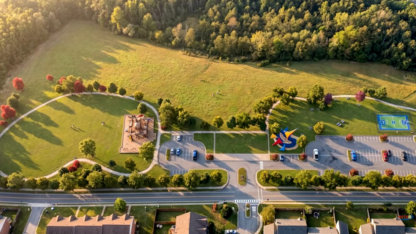
“Now they have three, and two of them are more programmed areas will have playgrounds and places to play, places for people to gather, and then one really large, really incredible nature preserve, the Lake Charlotte Nature Preserve, that was a big milestone in getting us to this 1,000 acre goal that we had, and huge accomplishment that we’ve achieved with the city,” Moore said.
Moore said they’ve also closed on a 50-acre new nature preserve off of Boulder Park Drive that has a few lakes the community already uses, and is close to Herbert Green Nature Preserve.
Another site Moore said they’ve recently acquired capped off their goal of 1000 acres conserved in the city — a 12-acre site off Hamilton E. Holmes Drive in Collier Heights.
“That will be a mix of some nature preserve and some active park space with programmed amenities for the community there, and so all of it comes together, though, to make sure that everybody has access to nature, to a safe place to play, for families to gather, trails to get you to all these different places, and it knits that whole system together, so everyone can have a high quality of life wherever they are in the city,” Moore said.
She said 1,000 acres conserved is a huge milestone — but that doesn’t mean The Conservation Fund is slowing or stopping its efforts. As development grows, Moore said they’re looking even more critically at green spaces to protect as development continues to increase.
Meanwhile, another non-profit, Trust for Public Land, recently announced 85 percent of Atlanta residents now live within a ten-minute walk of a park, putting Atlanta above the national average of 76%.
Meanwhile, the City of Atlanta is considering cutting its Parks department budget by 5%.