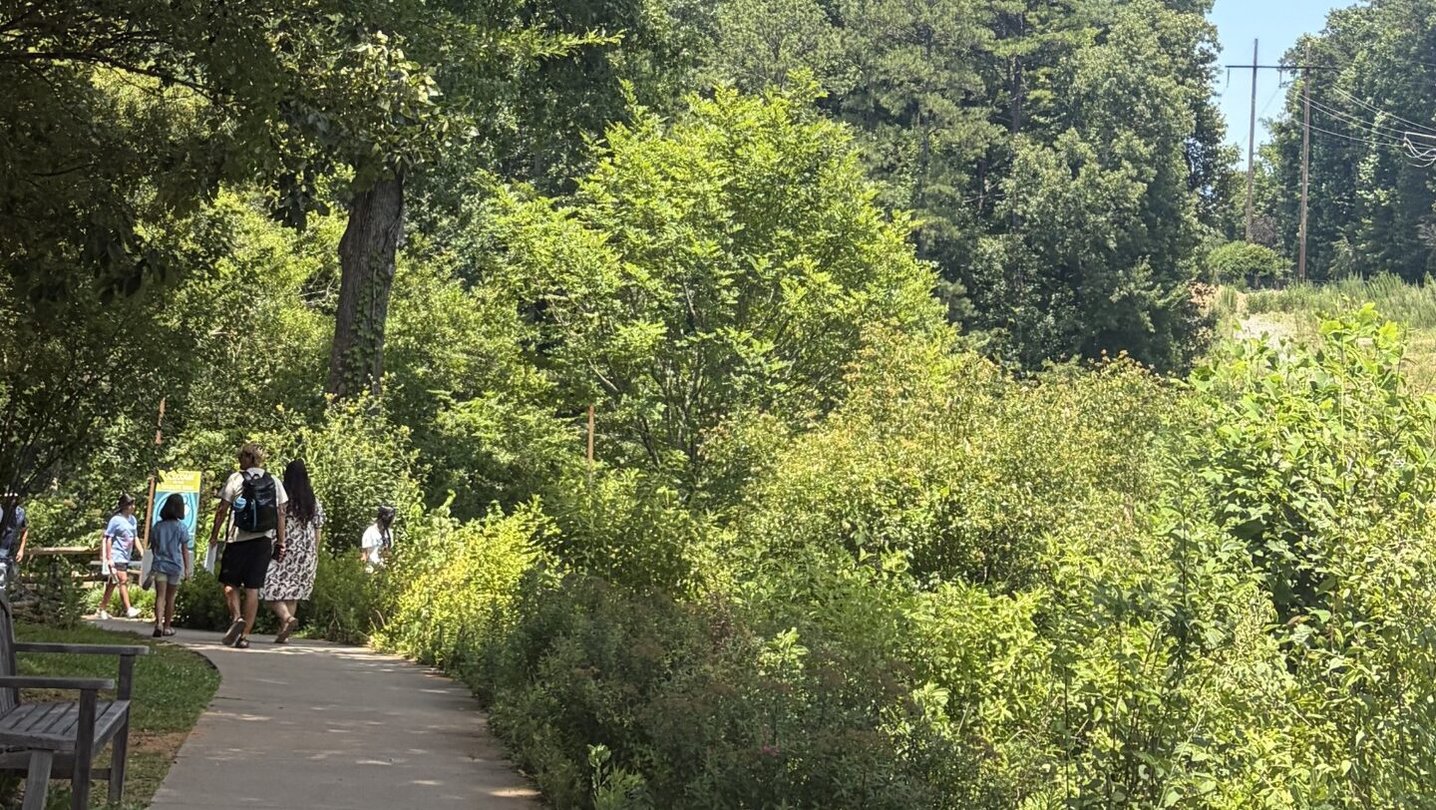
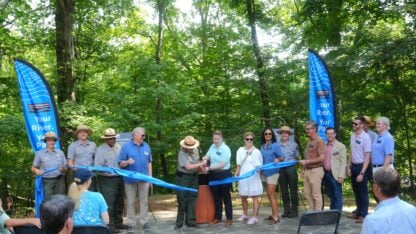
Visitors at the Chattahoochee Nature Center head toward the forested walking trails. (Marisa Mecke/WABE)
The Chattahoochee Nature Center is 127 acres on the river in Roswell, and one of the few wildlife rehabilitation centers in the region.
This year, it’s turning 50 years old.
For some visitors, the CNC’s 50th anniversary family fun day was their very first visit. Luke Momon is a rising sophomore at Georgia Military College studying environmental science.
“It’s a lot more than I expected,” Momon said. “The butterfly exhibit’s really nice, and we’ll go into the beaver exhibit next, and it’s just, yeah, it’s just a lot more than I anticipated.”
He said he loves hiking, and has recently gotten into birding. He said he and his family accidentally came a day before the 50th anniversary event, so they also had the opportunity to explore the Roswell Riverwalk connected to the nature center.
For others, like Stas Samarin, the nature center is a regular spot for family outings to sit by the pond and hike the trails.
“That’s amazing local protected area, and you can see nature, and kids can learn about animals and flora, and just learn about this beautiful world,” Samarin said.
“I used to get the calls about people mad because they thought we were working to start a nudist colony on the Chattahoochee River, so we had a lot of educating to do.”
Dotty Etris, one of the Chattahoochee Nature Center’s first-ever employees
Lots of Atlantans came here as kids, for school field trips or volunteer days, or as campers at Camp Kingfisher, CNC’s environmental education day camp that runs seasonally during summer, winter and spring breaks.
For others, it’s a spot to see butterflies during the summer, canoeing date nights or volunteer afternoons at the unity garden, which donates fresh produce to local food banks.
But as many Atlantans also remember, this place was a lot smaller — and scrappier — decades ago.
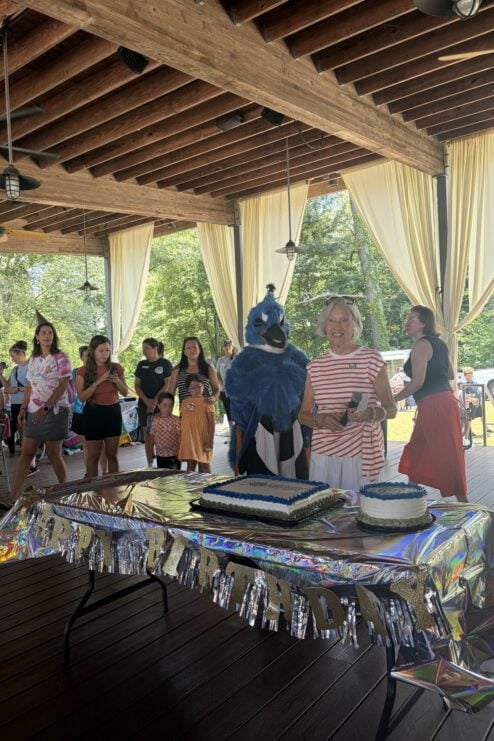
Dotty Etris cuts a cake at the CNC 50th Anniversary celebration. (Marisa Mecke/WABE)
Early days at the Chattahoochee Nature Center
Dotty Etris was one of the nature center’s first-ever employees.
“It was probably the worst job offer anyone could ever get,” Etris said with a laugh.
She gave Roy Wood and John Forbes, two of the people working to establish CNC, six months to see if things panned out.
“I started as a receptionist in the early days because we had no staff, basically, and then I became secretary, then eventually I became accounting and payroll and director of operations,” Etris said.
“It just catapulted me to that next level, and I will forever be grateful that for my time here at the Nature Center; it literally taught me so much about native wildlife, native plants, and I continue to this day to annoy everyone in my neighborhood.”
Former Chattahoochee Nature Center employee Lauren Galluzzo
And at the time, she said nobody really knew what a nature center was.
“You know, I tell the story about how I used to get the calls about people mad because they thought we were working to start a nudist colony on the Chattahoochee River, so we had a lot of educating to do,” Etris said.
The river and its surroundings were a very different place back then — a lot more polluted, and Etris said, the river was more known for the Ramblin’ Raft Race.
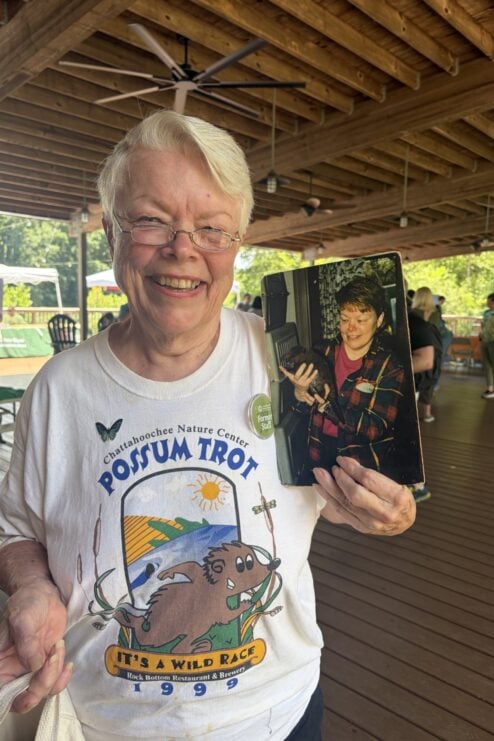
She said those early days weren’t easy. The nature center’s annual fundraising race — the Possum Trot — wasn’t just community engagement, it was really started in 1978 to make payroll.
But over the years, Etris said the Chattahoochee Nature Center started to steadily grow thanks to a dedicated — and fiscally responsible — board, combined with passionate staff and volunteers.
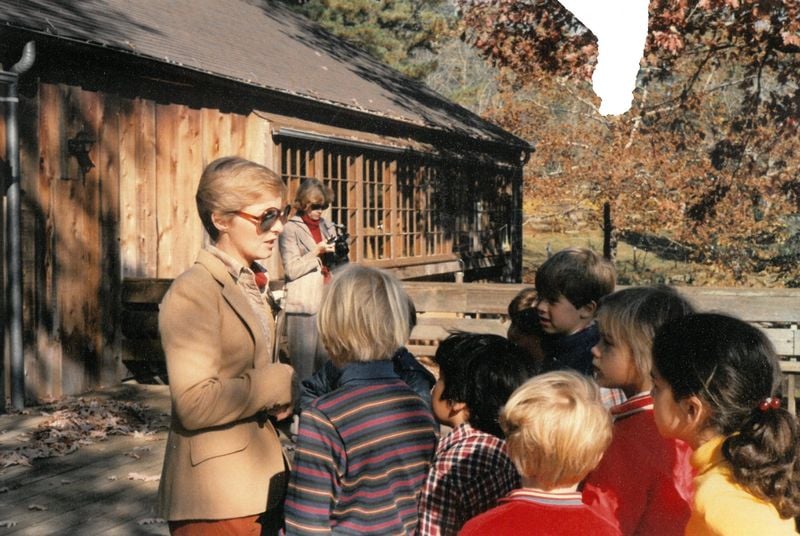
Westminster Elementary School students visit the Chattahoochee Nature Center in 1980. (Photo courtesy of Chattahoochee Nature Center)
Generations of environmental professionals
“This is exactly what I wanted to do — I would have worked here whether they paid me or not,” said Marsha Hammin, who worked at CNC from 1989 to 1999.
The nature center was small and everyone had more than one job — Hammin was a naturalist and worked in the wildlife clinic too. These days, that wildlife clinic treats about 750 birds of prey, reptiles and amphibians each year.
“I could spread the word about something that I was intensely interested in, and wanted to help people understand, and maybe bring them a little more over to not killing every insect or anything like that,” Hammin said.
She worked alongside — and celebrated the 50th anniversary with — Lauren Galluzzo, who had just graduated from Georgia State University at the time.
“There was a job opening here at the Nature Center and the Education Department, so I interviewed for that. I would have preferred to have been with the wildlife directly, but it got my foot in the door,” Galluzzo said.
She said she scheduled everything that happened at the nature center— school programs, “like 250,000 kids a year,” birthday parties, canoe floats, events.
“And then I got to know the girls and the clinic, so on my lunch break I’d sneak over there and do anything that I could do — feed baby birds,” Galluzzo said.
She said ultimately, this job was a huge building block for her career.
“I would never have gotten a position at Zoo Atlanta if I had not worked here,” Galluzzo said. “It just catapulted me to that next level, and I will forever be grateful that for my time here at the Nature Center; it literally taught me so much about native wildlife, native plants, and I continue to this day to annoy everyone in my neighborhood.”
A new look after half a century
But after 50 years, the Chattahoochee Nature Center is also due for some change.
Helen Brose, communications manager with the Chattahoochee Nature Center said they’re conducting a capital campaign now.
“Because we wanted to improve our guest and visitor experience when they come to Chattahoochee Nature Center,” she said.
Brose said they’re refreshing old infrastructure — like bathrooms and buildings — and opening up the view from the entrance to the trails and ponds.
She said the goal is to make the entrance more welcoming to visitors, but also to make sure the facilities better support staff, volunteers and all the programming happening on site. That includes renovations like bathrooms at the Unity Garden and improving the building and rooms for the education programs, conferences and camp, among other upgrades.
“Our community has placed incredible trust in us as an environmental educator, as a space where people can come and enjoy nature,” Brose said. “We’ve seen that trust continue through generations, we’ve had people who came here as kids themselves or adults, and now their kids are coming here, and their grandkids are coming here.”
Brose said the goal headed forward isn’t to be bigger or fancier, but for next generations of Atlantans to explore and learn about the nature around us, and, as they say in the Camp Kingfisher song — that I am of nature, and she is of me.