Federal rule change could reduce chances of Georgia asylum seekers getting relief

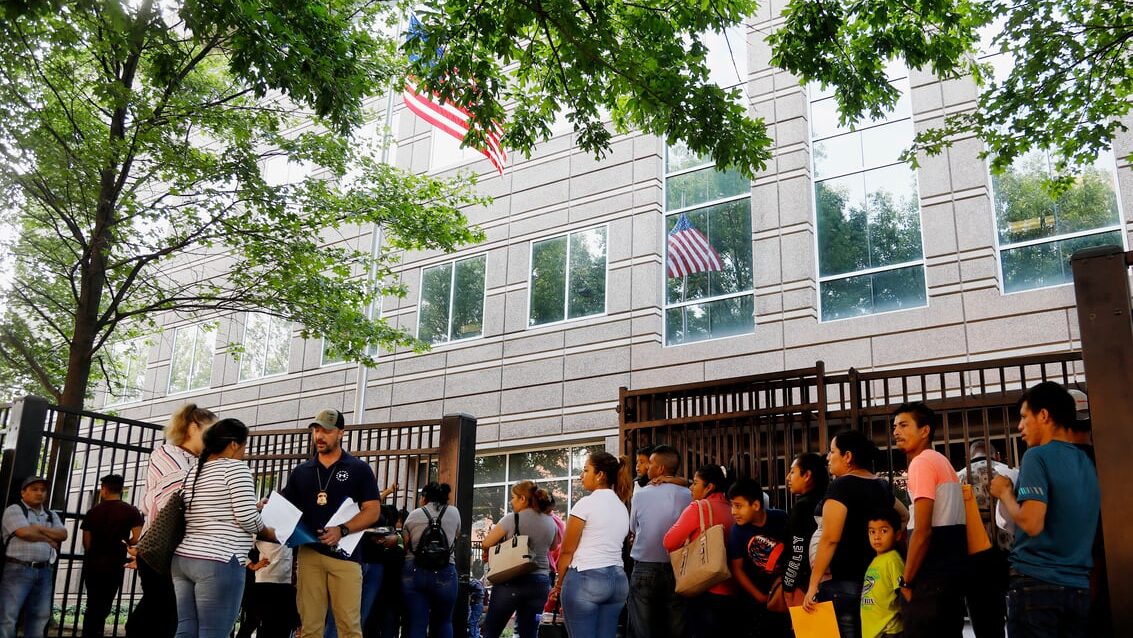
An ICE official assists people waiting for immigration court in Atlanta. A recent rule change by the Trump administration allows the government to send asylum applications directly to immigration courts instead of trauma-informed immigration officers to conduct interviews.

Andrea Smith / AP Photo

The Trump Administration plans to send some asylum cases directly to immigration courts instead of processing them through U.S. Citizenship and Immigration Services interviews. 

In Georgia, attorneys warn fewer people will get asylum. Georgia’s immigration courts have some of the lowest asylum grant rates in the country. Data from the nonprofit Transactional Records Access Clearinghouse shows courts in Georgia for fiscal year 2025 had about an 87% asylum denial rate. 

“Instead of resolving asylum backlogs, this change will simply haul the backlog from one system to another, creating more administrative burden that we’ll pay for with our tax dollars,” said Adriana Heffley, legal director at the nonprofit Georgia Asylum and Immigration Network. GAIN tracks immigration court outcomes in Georgia.


Heffley said there are two ways to win asylum in the U.S. One is the affirmative pathway, where a person fearing persecution due to things like race, religion or political opinion applies for asylum and interviews with a trauma-informed officer in USCIS. 

The other is considered a defensive pathway, where a person is in deportation proceedings and must argue in front of an immigration judge and against a government prosecutor that they have a claim to asylum. 

The rule change last week allowed the government to send asylum applications directly to immigration courts. 

“This change means that suddenly, countless asylum seekers who’ve been following lawful pathways for years, complying with dizzying waves of new fees and requirements, who were guaranteed the opportunity to make their case in front of a neutral factfinder will be dumped into a system where they will almost certainly lose their cases,” Heffley said.

Immigration judges are appointed by the U.S. attorney general, not elected, and the Trump administration has fired nearly a quarter of judges since 2025. In a statement to NPR, the Department of Justice said the firings were designed to eliminate Biden-era appointed immigration judges who were too lenient with granting asylum. 

Data from TRAC showed 20 out of 24 judges in Georgia from 2020 to 2025 denied more than 75% of asylum cases they heard annually.