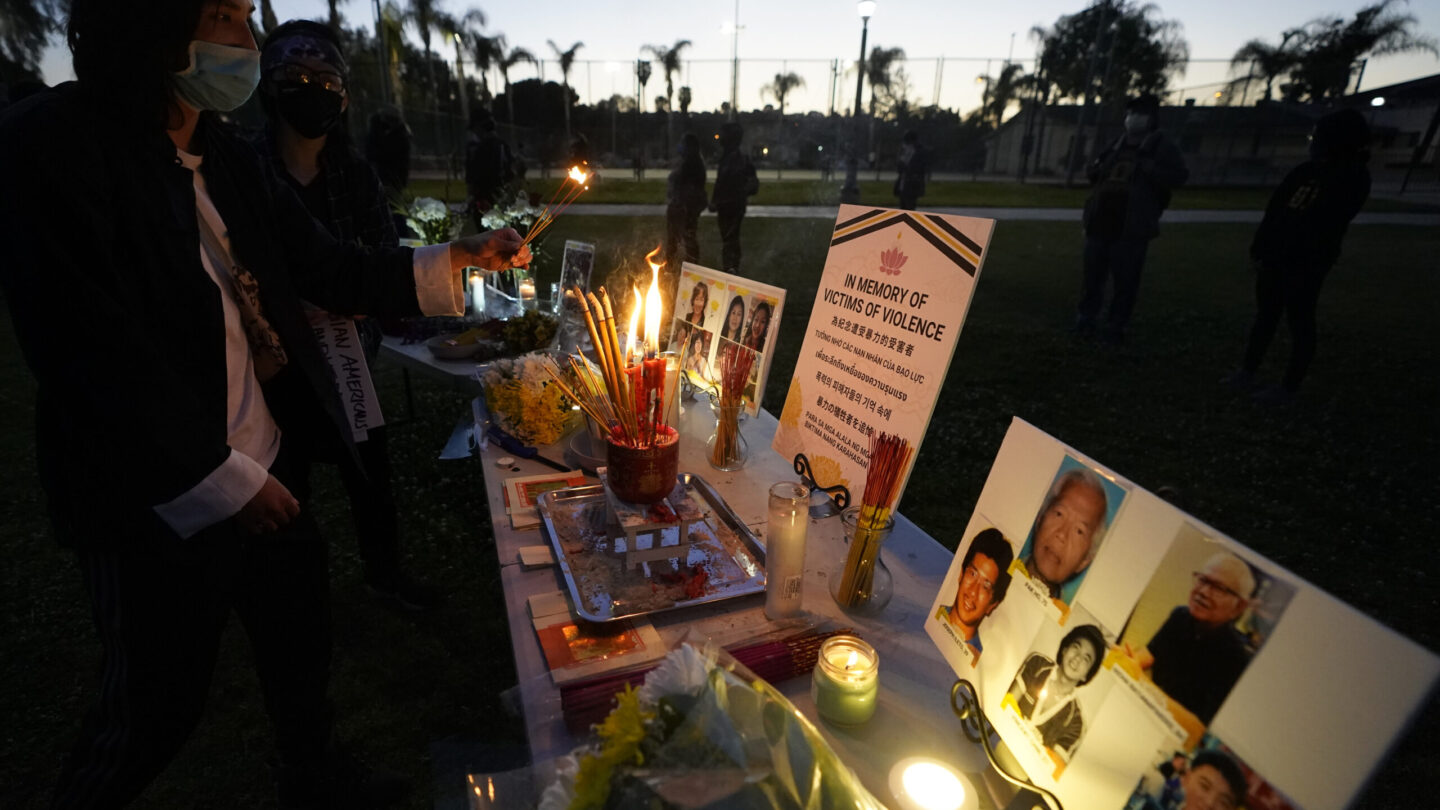
People pay theirs respects at a memorial in honor of the victims of the shootings in Atlanta, during a candle vigil. A man already sentenced to life in prison after pleading guilty to fatally shooting four people at a massage business outside Atlanta pleaded not guilty to shooting four others on the same day at two spas inside the city.
Damian Dovarganes / AP Photo
A shakeup in the defense team for Robert Aaron Long, the man accused of carrying out the 2021 Atlanta spa shootings, could lead to further delays in his Fulton County trial.
Long is already serving life in prison after pleading guilty to fatally shooting four people at a massage business in Cherokee County, but still faces the death penalty and hate crime enhancements for the four he pleaded not guilty to killing on the same day at spas in Fulton County.
Most of the eight people killed were Asian women.
Now, after half a decade, Long’s death penalty case was close to being sent to the Georgia Supreme Court for a review of pre-trial issues. But during Monday’s status hearing, Fulton County Chief Superior Court Judge Ural Glanville said the recent changes to his defense team could cause potential speedy trial issues.
“The timing is horrible, and your client is shaking his head, so, I mean, it’s just, I have a lot of questions,” Glanville said. “Ordinarily, I don’t get involved in any of that, but given that your client has been in custody five years at this point in time is troubling to the court.”
Back to ‘square one’
Earlier this month, Long’s public defender, Jerilyn Bell, announced that her co-counsel, Christian Lamar, had left the Georgia Capital Defender’s Office, allegedly leaving them without anyone qualified enough to replace him.
The office’s director, Nathanial Studelska, stepped in as counsel days after that hearing, and then on Monday, he told the judge that Bell had also been replaced by another attorney for reasons that are not yet clear.
“In this particular circumstance, I’m troubled about that because you all kind of came in, made these changes, and then here we are,” Glanville said. “We’re nine to 12 months behind.”
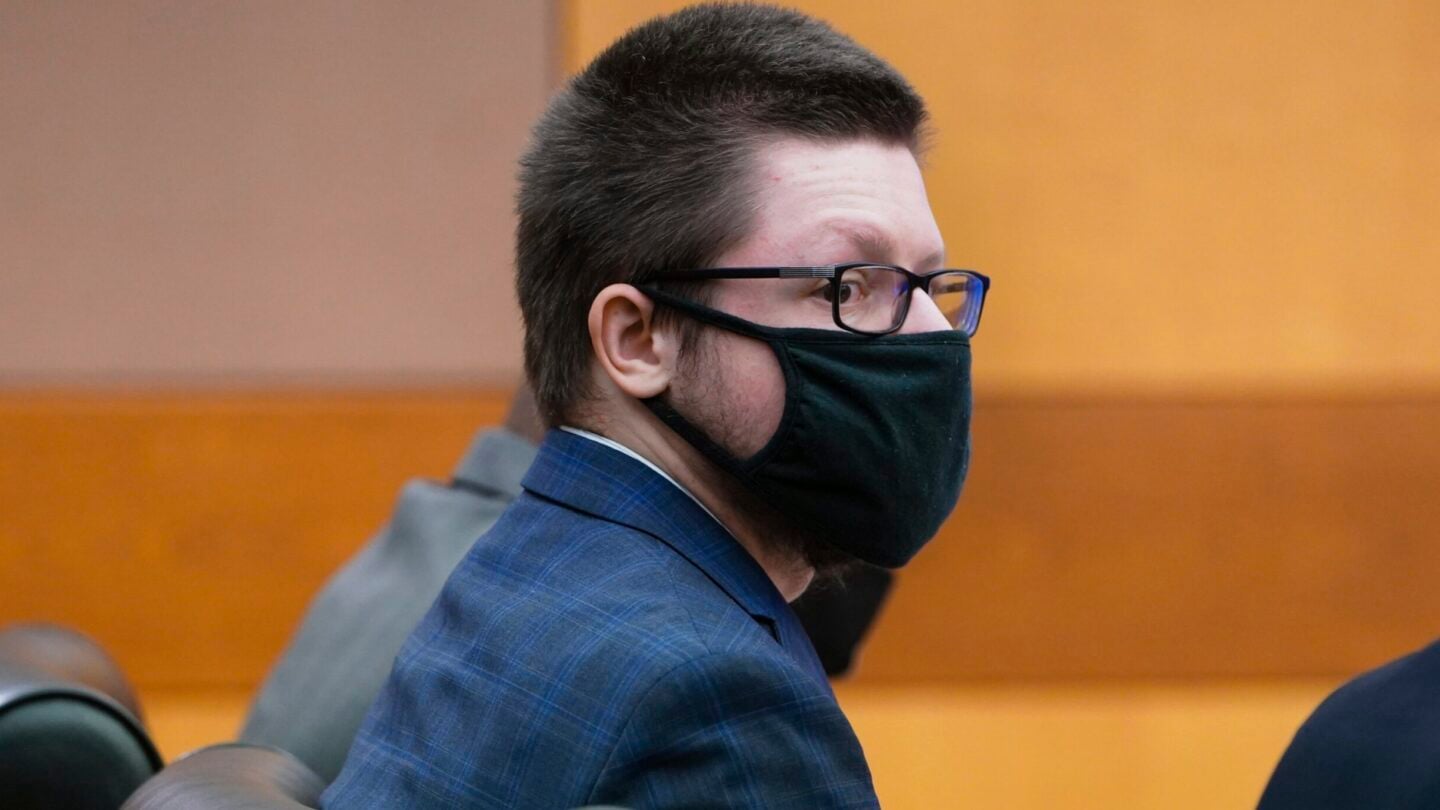
Robert Aaron Long is seen during his arraignment in Fulton County Superior Court on Tuesday, Sept. 28, 2021, in Atlanta. (Elijah Nouvelage/Atlanta Journal-Constitution via AP, Pool)
Long’s new attorneys, who said they “have to go back and basically start from square one,” want up to a year to prepare for his defense, despite his previous team having already filed approximately 60 motions to try to keep him off death row.
Glanville said the appellate courts have been “very clear” about moving cases forward as quickly as possible.
“Most of the heavy lifting is done,” Glanville said. “I mean, unless you were going to unearth some more things that Ms. Bell didn’t do, and she was pretty thorough, I don’t know if I want to give you nine to 12 months.”
Potential public defender shortage could be to blame
In an emailed statement, Don Plummer, a spokesperson for the Georgia Public Defender Council, told WABE that while there have been some staffing changes this year, their capital defender division remains fully operational.
“GPDC does not comment on the specifics of pending litigation,” Plummer said, referring to Long’s case. “More broadly, however, Georgia’s capital defense system remains strong and capable of meeting the needs of these cases.”
Still, he said, there are 18 active cases statewide in which a death notice has been filed, along with one in the appeals process, and the capital defender division has only 11 attorneys dedicated to handling them.
More than a dozen assistant public defenders from circuit offices across Georgia have been brought to serve as co-counsel and receive specialized capital-case training, which Plummer said has “significantly increased the number of attorneys with capital-case experience.”
“Our goal is not simply to fill positions,” Plummer said. “Our goal is to ensure that qualified, well-trained counsel are available wherever a capital case arises in Georgia.”
For now, though, Long and the shooting victims’ families will have to wait until his next status hearing in October to find out whether another year will pass before they can even begin to think about a potential start date for his trial.