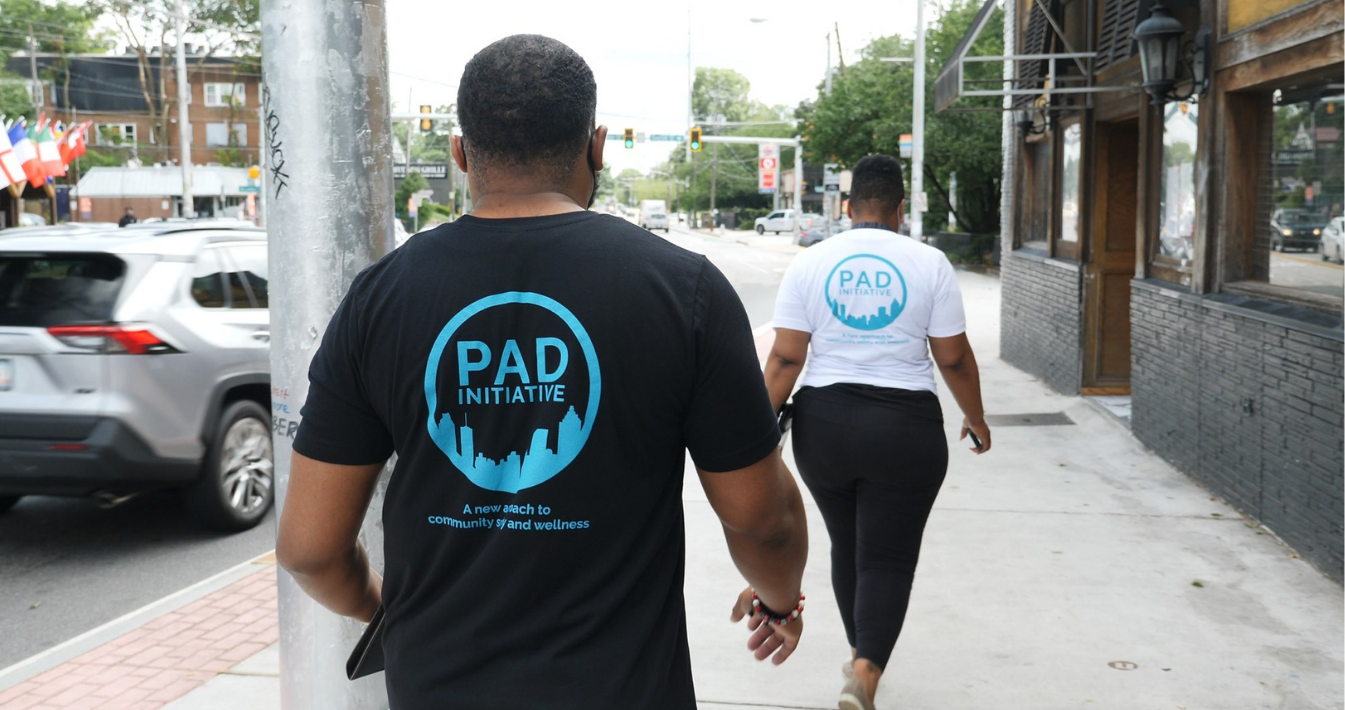
Amid growing questions over whether local cities are adequately addressing mental illness following a series of apparently random knife attacks, another contract dispute involving Atlanta’s Policing Alternatives and Diversion Initiative has once again hampered its response.
For nearly a decade, PAD has offered an alternative to arrest in cases where police officers determine that a law violation is related to mental health, substance use, homelessness or extreme poverty. Since 2024, PAD has also provided immediate and long-term support at the Center for Diversion and Services, which is a joint venture between the city of Atlanta and Fulton County.
That work is now in jeopardy, as PAD’s contract expired in December, and Executive Director Moki Macias told WABE that its renewal hinges on them agreeing to a slew of changes made by Grady Hospital, the center’s operator, that she said “gutted our case management services” at the request of the Atlanta Mayor’s Office.
What do the contract changes mean for PAD’s clients?
PAD typically receives nearly $1 million, or a fifth of the budget, from Grady for case management services at the center. Macias said the dispute has already led them to decide not to continue staffing the center.
“Because we did not have a contract as of the end of March, we were sort of forced to not receive any more referrals from the Diversion Center,” Macias said. “We continue to provide case management services to the entire caseload of people that were referred to us before that, but without any assurances about a contract in place, we felt like it was not prudent or responsible for us to continue accepting referrals from the Diversion Center until this was resolved.”
Macias said the contract changes impose a 12-month limit on case management services and require case managers to max out at 20 clients. Meanwhile, she said a separate contract with the Georgia Justice Project for legal services at the center required no changes.
In an emailed statement, a city spokesperson said PAD had “abandoned” its role in the Diversion Center partnership, and said that thanks to Grady, “there have been zero interruptions to services or operations.” The city also said PAD was recently paid about $218,000 for community response services, which are provided when someone dials 311 for non-emergency issues.
The ongoing contract dispute has not affected those — this time. But two years ago, PAD’s future with the city also came to a head when the mayor’s office held an invite-only bidding process for diversion services after the city had already granted PAD the contract.
Devin Franklin, senior movement policy counsel at the Southern Center for Human Rights, who has attended recent meetings with the Justice Policy Board that governs the Diversion Center, described it all as “personal petty politics.”
“The things that we could speculate about have certainly borne true over the past few years in terms of PAD is forever in a posture of having to fight for their seat at the table,” Franklin said. “I think what it boils down to is that PAD is part of this growing mindset of how to attack criminal issues in a city where people understand that we’ve been jailing and jailing and jailing people for decades and, you know, not much has changed.”
“The mayor’s administration and those on that side of the line,” he continued, “I think that when you have a hammer, every problem looks like a nail, and they wholeheartedly believe in carceral solutions. They believe in policing, they believe in jailing, and they don’t believe in the idea that people can change.”
What now?
Starting in July, people arrested for most misdemeanor offenses will no longer be booked into the notoriously dangerous Fulton County Jail.
It’s a measure that local organizers and advocates have long said could help keep the most vulnerable from getting stuck in the criminal justice system, but to be more effective, local law enforcement will need to increase their use of the Diversion Center.
Still, Macias said, with PAD being gone, just diverting people from jail is not enough.
“If we want to actually address the root causes of whatever law violation they committed, we have to actually work with people to help them stabilize their lives,” she said. “That is the role that PAD plays in diversion in the City of Atlanta and Fulton County. So, if the Diversion Center is being watered down to basically become a triage facility, we are going backwards towards the status quo.”
Macias said right now, when somebody needs medical care, staff are calling 911 for Grady EMS. And when somebody is getting ready to leave the Diversion Center, she said that “they are being handed the address for 10 Park Place — the outpatient behavioral health clinic at Grady.”
“What we have found in the work that we do is that many of the people who are referred to us are people who have already been through our social service systems,” Macias said. “They have been to the shelters, they have been to Grady over and over again. The difference is that when PAD is involved, we work alongside them for as long as they need it, and through that, we actually get people housed, we get people reconnected to family, we get people consistent on medication or other recovery communities that allow them to stabilize their lives. That is ultimately the goal of diversion.”
A Justice Policy Board meeting is scheduled for June 11, where Macias said she hopes the issue can be resolved. A Grady spokesperson did not respond to a request for comment.