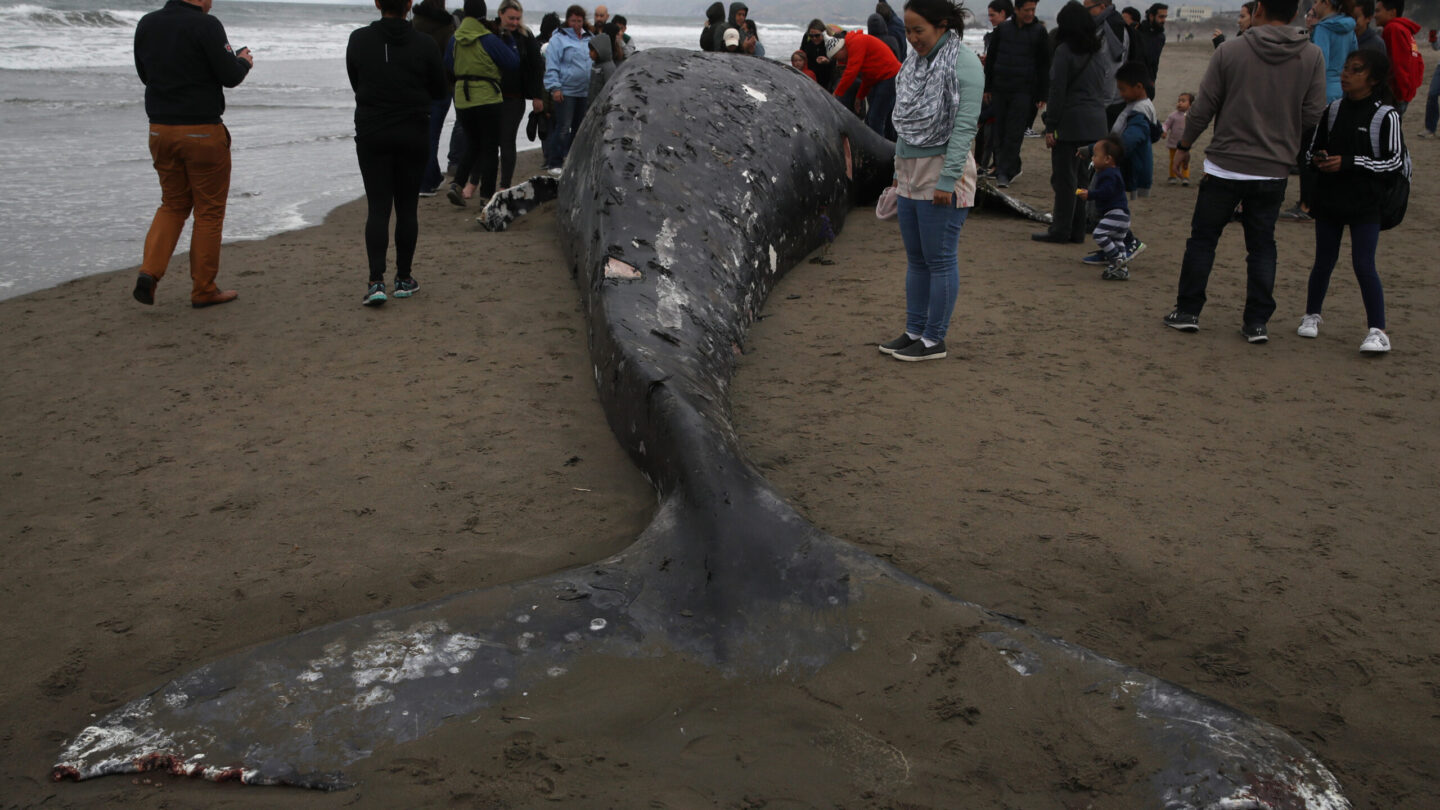
Researchers are trying to figure out a mystery: Why are so many humpback whales, right whales, and other large mammals dying along the U.S. East Coast? One possible explanation is a shift in food habits. And while theories are circulating that blame the growing offshore wind industry, scientists say there’s no proof to support that idea.
Since Dec. 1, at least 18 reports have come in about large whales being washed ashore along the Atlantic Coast, according to the Marine Mammal Stranding Network. The losses are hitting populations that were already under watch, due to ongoing rises in unexpected deaths.
“Unfortunately, it’s been a period of several years where we have had elevated strandings of large whales, but we are still concerned about this pulse” in deaths that’s now been going on for weeks, as Sarah Wilkin, the coordinator for the Marine Mammal Health and Stranding Response Program, said on a recent call with journalists.
Read this story now for free
To continue reading, sign up for our newsletter and get unlimited access to WABE.org
You can select your preferences for news and local content. We will never share your email address. Learn how your newsletter sign-up will support WABE and Public Media