Last fall, representatives of Georgia’s largest utility company assumed the role of matchmaker. They contacted Effingham County officials with a proposal: One of the largest tech companies in the world was looking for a location to build a data center.
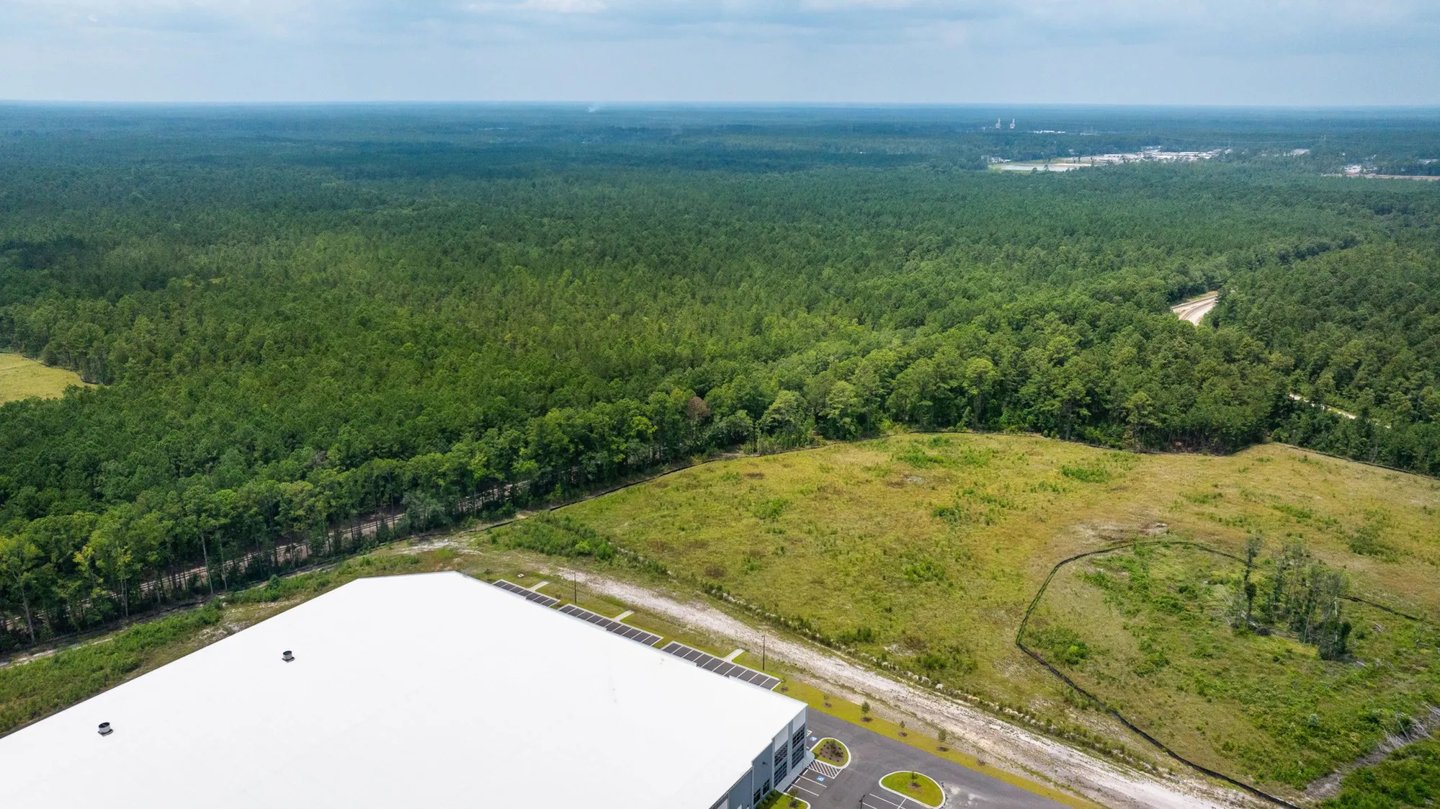
The ensuing courtship, brokered by Georgia Power and conducted in secret, culminated some nine months later, when OpenAI and Effingham County’s development authority signed a $20 billion deal to construct a data center on a 1,400-acre tract of land near Rincon. Separately, the power company also forged a new contract with OpenAI.
OpenAI’s mammoth investment, county leaders say, will allow Effingham to eliminate residential property taxes, improve services and put the county at the vanguard of the nation’s 21st-century digital economy.
Many of Effingham’s 75,000 citizens aren’t so sure. Like other Georgia communities where data centers have already sprouted, the artificial intelligence revolution has roused skepticism and profound unease across the political spectrum — whether about rising utility prices, environmental pollution, AI disruptions to the economy or the impact of tech companies on American democracy.
More than two weeks after the deal was approved, basic questions remain unanswered about the impact it will have. What’s more, questions continue to swirl about the vague and contradictory statements county officials gave in public about their intent to woo a data center, even as they held private discussions with OpenAI.
The head of the Effingham County Industrial Development Authority said that the approximately $870 million in tax revenue that OpenAI will pay over 15 years proves why the project is good for the county. Still, the days leading up to the agency’s formal approval illustrate the lack of transparency and mistrust over whether the county is calling the shots, or the California-based tech firm is.
Meetings and the public
Although Georgia law allows government agencies to conduct confidential business meetings, approval for deals that affect public revenue must occur in public. According to two people familiar with the planning, the date on which the development authority met to vote on the deal — a Tuesday — was chosen by the company, although the agency’s routine schedule would have had them meet two days later.
To announce the changed date, the development authority sent an email three business days prior to the meeting, although Georgia statute requires a seven-day notice for regular public meetings. The missive, sent to seven people, included the meeting time and the agenda, which referred to discussion and a vote on “Project Gateway,” the codename given to the data center during negotiations.
Under Georgia’s Open Meetings Act, a government agency must post notice on its website, at the place it conducts business and “in a conspicuous place available to the public.” The development authority posted notice on its own building, but didn’t post information about the meeting on its website or its Facebook page.
Recipients of the email included the past and current head of the Chamber of Commerce, the county manager, the head of the development authority and the editor of the Effingham Herald, the weekly paper that runs legal notices. However, the paper had published July 15, and wasn’t scheduled to publish again until the day after the vote.
Three delegates from OpenAI attended the July 21 meeting, but no one from the general public did.
Development authority CEO Brandt Herndon, who was subject to a non-disclosure agreement with OpenAI until a week before the vote, said that all his board’s meetings are open in keeping with state law. He added that few people attend any of his agency’s meetings, which — as The Current has previously reported — are rarely posted or published online. “We have made sure that this transformational project is in the best interests of the county,” Herndon said.
Other county officials, including District 2 County Commissioner Roger Burdette, who were privy to the pending deal but not subject to non-disclosure agreements, said they kept silent ahead of the vote because they didn’t want to scare OpenAI away or scuttle a potential deal. Still, Burdette said he was not prepared for the public backlash, nor what he called deeply held but erroneous views among residents. “I didn’t anticipate the misinformation,” he told The Current.
The 26-page memorandum of understanding signed by the Effingham County Industrial Development Authority with Octans GA LLC, a Delaware-based affiliate of OpenAI, commits the company to investing $4 billion and creating 80 jobs during each of the five phases of construction from 2028 to 2034.
In reporting how the deal took root and evolved, The Current reviewed more than 150 pages of legal agreements, meeting minutes, property-tax data and other records obtained through 12 requests under Georgia’s Open Records law, some of which have yet to be answered.
Data centers ‘their new business model’
In the months leading up to the July 21 vote, county officials repeatedly told residents that they weren’t actively seeking a data center development. Georgia Power, however, was.
Georgia’s largest utility company set out a business strategy to attract data center customers as a way to boost its earnings.
Since at least February 2025, Georgia Power has been providing counties with information about data centers as a crucial evolution in America’s economy. Last October, a company representative attended the Effingham county commissioners annual retreat at the King and Prince Beach & Golf Resort on St. Simons Island. As the only non-elected official at the meeting, the utility executive gave a more customized presentation about economic benefits for the county, as well as hypothetical revenue predictions.
On Oct. 30, Georgia Power brokered the first meeting between OpenAI and Effingham’s development authority. “They were meeting with all the hyperscalers,” a person familiar with the situation said of Georgia Power, referring to the handful of companies providing the critical infrastructure powering the AI boom. “Data centers are their new business model.”
Six weeks later, Georgia Power’s facilitating efforts received another helping hand, as Georgia’s Republican-dominated Public Service Commission approved the company’s expansion plans aimed at serving the enormous energy needs of data centers.
Eleven days after the vote, the two newly elected Democrats to the commission were sworn in. They had won election largely on a wave of public anger over Georgia Power’s cost overruns for the construction of nuclear power plants and the passing on of costs to residential customers, even as it shielded businesses from rising prices.
In the new year, the push for the data center accelerated.
Herndon was talking to OpenAI multiple times a week, via video meetings, and officials took care not to commit many details of the discussions to paper.
At the same time, OpenAI was conducting separate talks with Georgia Power and Broe Real Estate, which controlled the parcels of land in Effingham where OpenAI wanted to build its data center. Each of the three parallel negotiations had to be successful for any deal to emerge.
County officials were not privy to those separate negotiations, two officials familiar with the proceedings said. However Herndon repeatedly sought assurances they were on track.
Crunching the numbers
Across Effingham, key officials were told about the talks in February, including the school district superintendent, who was skeptical at first about a data center project.
The authority planned to use its power to give property tax abatements to make Effingham a more attractive destination for OpenAI. County manager Tim Callanan and the development authority started crunching numbers to find a balance between offering tax breaks for the trillion-dollar tech firm and addressing two other county priorities: lowering or eliminating property taxes and maintaining or increasing funding for schools.
“We had spreadsheet upon spreadsheet upon spreadsheet. We plugged estimates here and there,” a person familiar with the negotiations said. “We got the math to math.”
County officials eventually settled on a streamlined formula: OpenAI would be charged an annual bill equivalent to a discounted property tax rate of 50 percent on its building and equipment at fixed 2026 millage rates for 15 years. According to Herndon, that formula would apply to all county agencies that charge property taxes, including the school system, the Effingham Health System and the development authority itself.
Through this formula, the proposed data center wouldn’t appear on the county official list of taxable property, which helped sway School Superintendent Yancy Ford. Georgia grants additional funds to school systems like Effingham’s that have a relatively small tax base compared to their number of students. Keeping the $20 billion dollar data-center development out of the calculation protects that annual grant. “The answers we received were thorough and reassuring,” said Tiffany Altman, the communications director for the school district.
Making the plan even more attractive to the school leaders was the prospect of gradually receiving more funding from taxes paid by OpenAI.
Under the MOU, the value of OpenAI’s property will be routinely reassessed as the firm builds out its facility, though the company will be permitted to hire its own appraiser to gauge a fair-market value, subject to the county’s approval, according to the contract between the company and the development authority.
‘Private meeting’
In March, one necessary step for an eventual deal had moved forward: the agreement covering the 1,400 acres where the company wants to build the data center at Savannah Gateway Industrial Hub.
Still, the cloak of secrecy about the talks remained intact, even though county officials such as Ford and some of the elected county commissioners had been brought into the loop and were not subject to non-disclosure agreements.
At a town hall in Rincon on April 21, the Effingham Herald reported the development authority chief as saying the agency was not actively considering a data center project for Effingham. He added that there were no concrete proposals or confirmed projects from data center companies.
At the same time, political headwinds against data centers were growing in the state.
Rural Republican state lawmakers had introduced more than a dozen bills in the spring legislative session seeking to regulate data centers or to put a moratorium on their development until concerns about water use, noise and other environmental pollution could be assessed and addressed.
House Speaker Jon Burns, an Effingham County native, supported one of the bills designed to protect consumers from paying higher electricity bills due to data center construction. Despite bipartisan support, those bills eventually stalled.
But the growing alarm about data centers didn’t stop efforts in Effingham.
On May 6, representatives of Georgia Power and OpenAI, including site engineers, met with Gov. Brian Kemp in the governor’s office. When The Current first reported the meeting, neither the company nor the governor’s office would comment about the discussion, saying it was a “private meeting.”
The same month, county officials who supported the data center recommended that the leadership team take field trips to educate themselves about existing facilities. One of their destinations was OpenAI’s campus in Abilene, Texas.
Effingham officials paid for their own airfare, while the development authority paid for the group’s hotels, a person familiar with the situation said.
The Current requested records confirming those expenditures, but they were not produced by the time of publication. The Current previously cited Commissioner Burdette telling groups of constituents that the company paid for the trip.
After the company-led tour, Effingham’s commissioners, the school superintendent and members of the development authority reported that noise levels were less than expected. Local municipal leaders, meanwhile, provided them with a glowing report about the company.
Finalizing the data center deal
By early summer, the outlines of the county’s contract were largely in place. Even though officials said nothing had yet been put in writing, the development authority was confident of getting something to the finish line. For the county, the timing was in the hands of OpenAI.
Finalizing the agreement meant that three pieces needed to be in place: the land-use agreement with Broe Real Estate; the contract with Georgia Power to lock in prices for the power necessary to run the computing facility; and the MOU with the county’s development authority that included the tax abatements from the county and capital investment by the company.
The tech firm had signaled to the county that they thought they would be ready to sign the deal, dubbed “Project Camellia,” either in July or October. OpenAI and county officials agreed on July 21, according to a person familiar with the situation. The pace towards an agreement quickened from there.
On July 13, the company released Herndon from their NDA, according to public records obtained by The Current.
Two days later, Georgia Power and OpenAI sent their 100-page draft contract to the PSC, according to Peter Hubbard, one of the five elected commissioners. The terms aren’t public, and the commission has the authority to review — but not veto — the document.
In Effingham, last-minute details were still being discussed, according to the person. OpenAI, which had promised $20 million in community grants as a sweetener to the deal, suddenly increased that amount to $80 million, the person said. That detail was not included in the MOU, but an OpenAI Vice President of Communications Aaron McLear said such funds would be forthcoming.
The day before the development authority convened at the behest of OpenAI representatives to vote on the MOU, county officials told the Effingham Herald that a deal was ready to be announced but demanded that the news be embargoed until the day after the public meeting.
In the Tuesday evening meeting the authority voted unanimously to approve the deal.
The officials say the agreement will make OpenAI the top taxpayer in Effingham, displacing Georgia Power, which in 2025 made $7 million in property tax payments.
The development authority released its revenue estimate spreadsheets in response to a request from The Current GA. The county hasn’t, however, made public estimates of future sales taxes from the electricity purchased by OpenAI, and the draft terms agreed to by the tech company and Georgia Power aren’t public.
This story was provided by WABE media partner The Current.