As Georgia politicians rush to raise money for 2026, some bulk up their campaign accounts with personal loans

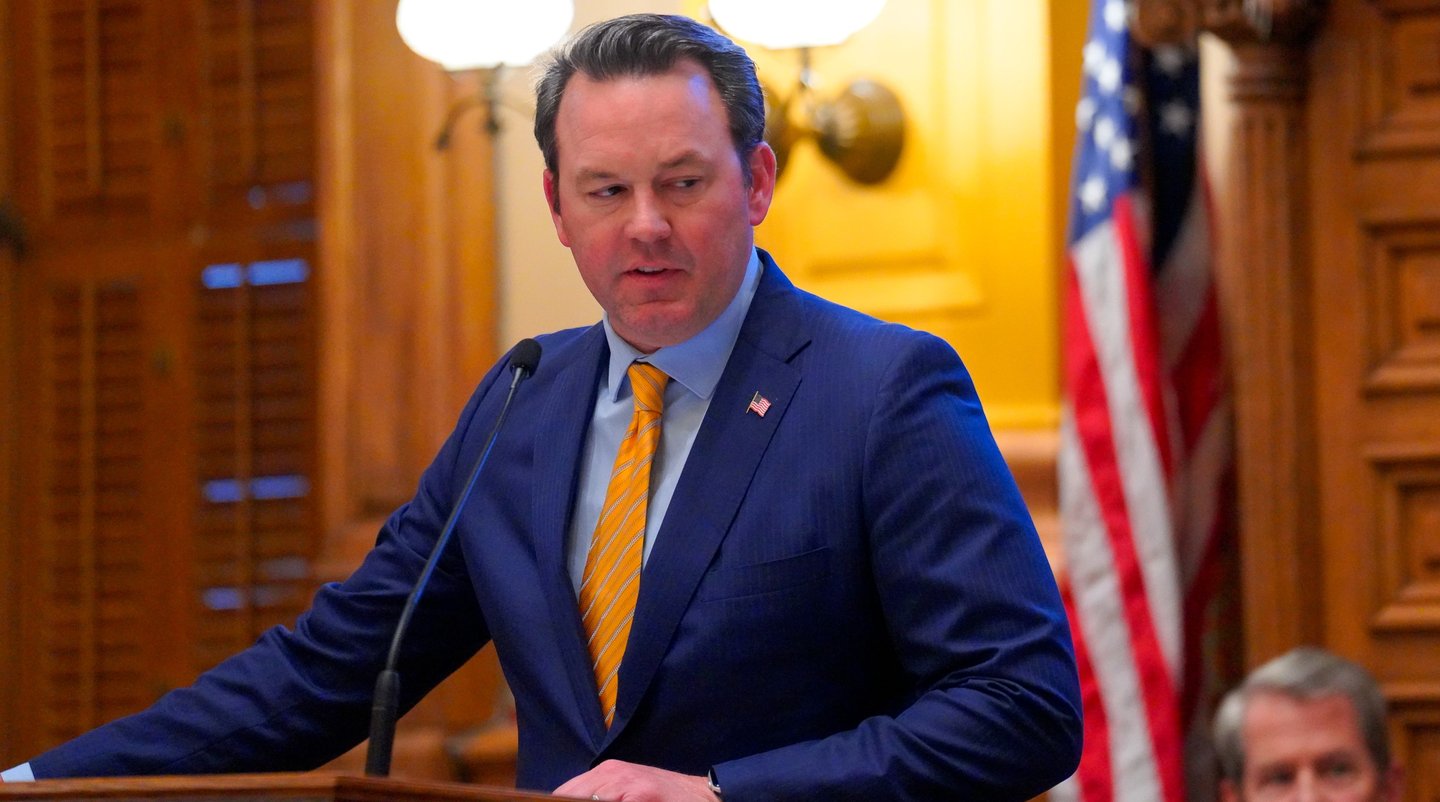
Georgia Lt. Gov. Burt Jones in the Senate chamber.
Georgia Lt. Gov. Burt Jones in the Senate chamber at the Georgia State Capitol on Sine Die on Friday, April 5, 2025. (Matthew Pearson/WABE)

Update: This story was updated on July 22, 2025, to include new details about an ethics complaint filed against Lt. Gov. Burt Jones.

When Lt. Gov. Burt Jones announced a run for governor this week, his campaign reported an eye-popping nearly $14.3 million on hand. But $10 million of that haul did not come from donors.

That money came from Jones himself — as a personal loan to the campaign.


With the race to raise campaign cash for 2026 already underway, Jones is not the only Georgia politician vying for higher office leaning on their personal reserves to bulk up their campaign coffers.

Jones founded an insurance company and is heir to a petroleum distribution business. The eight-figure loan allowed his campaign to far outpace his chief primary opponent, Attorney General Chris Carr, who has reported $3.5 million in contributions and $2.7 million in the bank.

Brendan Glavin, director of insights at OpenSecrets, a nonpartisan nonprofit that tracks money in politics, says Georgia campaign finance law allows unlimited personal loans or contributions.

“Limiting the amount an individual can spend on themselves, you’re going to run into constitutional issues,” Glavin says.

Which other candidates are loaning their campaigns money

Former Atlanta Mayor Keisha Lance Bottoms loaned her campaign for governor $200,000, allowing her to match competitor Jason Esteves, a Democratic state senator. Both reported raising about $1.1 million.

Democratic state Rep. Derrick Jackson, who is also running for governor, raised about $9,000 and loaned himself $77,000.

“A lot of reporting is always, ‘This person raised this much, and this person raised the most.’ Most people may not see that a lot of that money came from the individual themselves,” Glavin says.

Republican Congressman Buddy Carter, who is running for U.S. Senate, reporting raising roughly $1.1 million over the last three months. The Atlanta Journal-Constitution reports he loaned his campaign an additional $2 million, bringing his cash on hand to roughly $4.1 million.

The federal reporting deadline is next week. Democratic Senator Jon Ossoff raised over $10 million during this time, reporting $15.5 million on hand.

Why early fundraising matters

Early fundraising is like seed money for nascent campaigns. Glavin says a big haul also sends a message to potential opponents.

“When you get out there early, there still may be people thinking of getting in,” Glavin says. “And they’ve got to ask themselves, ‘Can I raise that kind of money quickly?”

The candidate chipping in sends a signal to donors, too.

“They see, ‘OK, the candidate is putting their own money behind this, they’re serious about this, maybe I will cut that check,” Glavin says.

Unlike other candidates, Jones can also fundraise through a leadership committee under Georgia law that allows the governor, lieutenant governor and legislative leaders to accept unlimited contributions. 

Carr’s campaign filed a complaint the State Ethics Commission to investigate the $10 million loan. The complaint notes that Jones reported a net worth of $12 million – but only $700,000 in liquid assets in his last personal financial disclosure, which was filed in 2022.

“This $10 million loan raises serious ethical concerns about Burt Jones’s willingness to play by the rules,” campaign spokeswoman Julia Mazzone wrote in a statement. “Public office requires public trust. If Burt Jones isn’t honest about his own finances, how can Georgians trust him to be honest about other important matters?”

The Ethics Commission rejected the complaint on July 22. State Ethics Commission Director David Emadi wrote that the financial disclosure, “does not form a factual and legal basis to investigate an alleged false or incorrect filing regarding a loan made in a campaign disclosure report more than three years later.”

The campaign is still asking for an advisory opinion on whether Jones’ is inappropriately using his campaign leadership committee.

The Jones campaign did not respond to the substance of the allegations but in a statement, campaign spokesperson Kendyl Parker wrote, “Not surprised by this weak attempt to get attention — it’s exactly what you’d expect from a campaign that’s losing steam with many months to go until election day.”

Campaign spending in Georgia will continue to grow ahead of the General Election next November. The U.S. Senate race in Georgia, the only contest featuring an incumbent Democrat defending their seat in a state President Donald Trump won, is expected to be among the most expensive in the country.