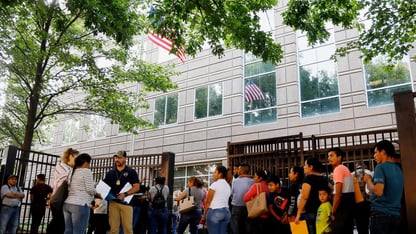
Only U.S. citizens are eligible to vote in this fall’s election for president and other top offices. While that’s nothing new, the potential for noncitizens to register or vote has been receiving a lot of attention lately.
Citing an influx of immigrants in recent years at the U.S.-Mexico border, Republicans have raised concerns about the possibility that noncitizens will be voting — something that has rarely occurred in the past. In Congress, House Speaker Mike Johnson is seeking to link an extension of federal government spending authority to a proposal requiring states to obtain proof of citizenship when registering people to vote.
In various states, GOP officials have launched reviews of voter rolls, issued executive orders and placed constitutional amendments on state ballots as part of an emphasis on thwarting noncitizen voting. Some Democrats contend the measures could create hurdles for legal voters, are unnecessary and lead people to believe the problem of noncitizens voting is bigger than it really is.
Read this story now for free
To continue reading, sign up for our newsletter and get unlimited access to WABE.org
You can select your preferences for news and local content. We will never share your email address. Learn how your newsletter sign-up will support WABE and Public Media