Delta Air Lines plans to use more AI to price tickets, but what data will it use?

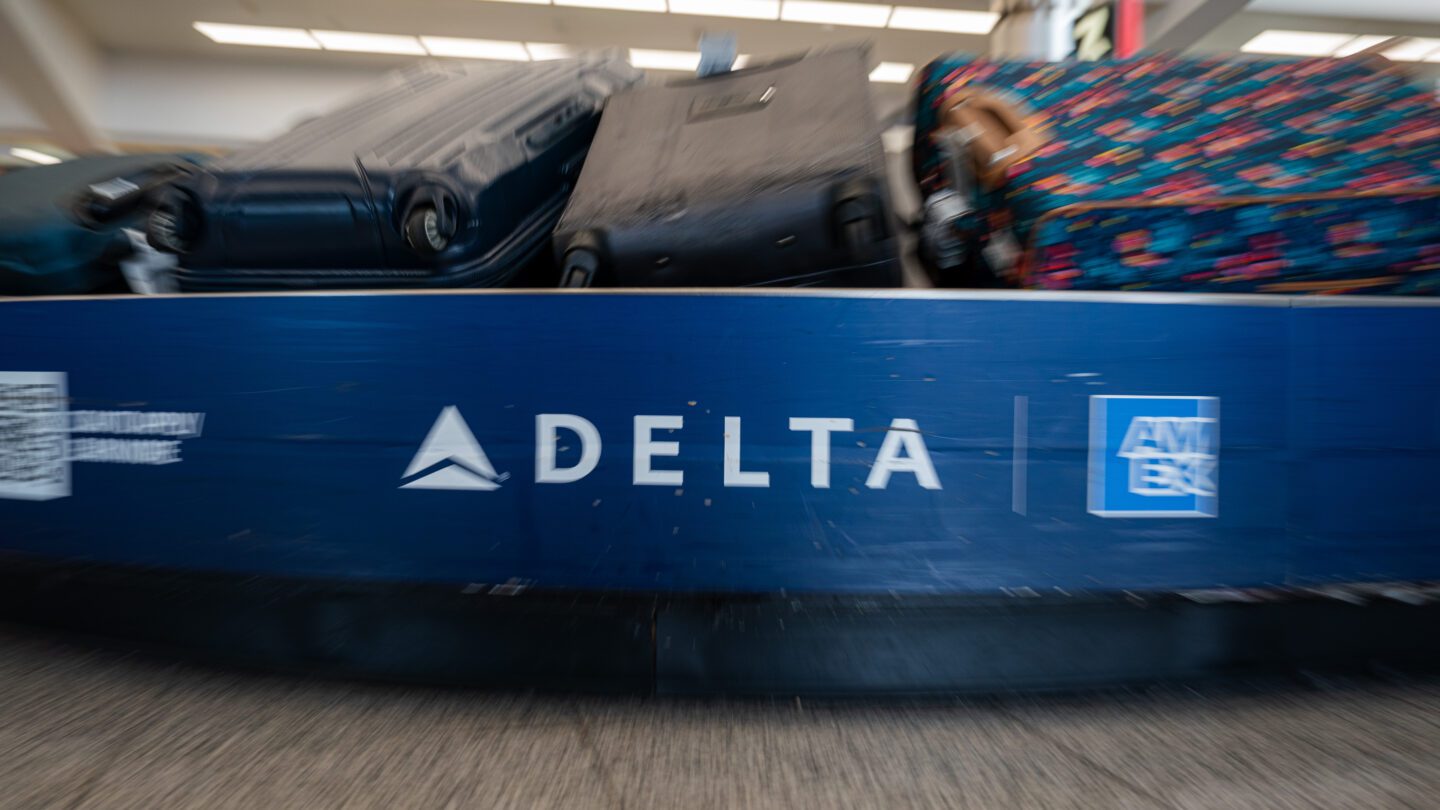
A blue Delta baggage claim carousel

Luggage travels along the baggage claim carousels at Atlanta’s Hartsfield-Jackson International Airport on Tuesday, July 23, 2024. (Matthew Pearson/WABE)

Delta Air Lines plans to use more artificial intelligence to price its domestic tickets to get closer to what people may be willing to pay. 

Delta’s president, Glen Hauenstein, told investors recently that the company currently uses AI to set prices on 3% of its domestic flights. By the end of the year, Delta wants that number to reach 20%. 

“We’re in heavy testing phase. We like what we see. We like it a lot and we’re continuing to roll it out,” said Hauenstein. “But we’re going to take our time and make sure that the rollout is successful, as opposed to trying to rush it and risk that there are unwanted answers in there.”


Areonna Sims, 21, is a student at the University of Kentucky. She’s visiting her home in Atlanta for the weekend. She said she usually flies Delta, but the last time she did, she paid a lot.

“It was for a spring break and it was ranging from like $450 to $500,” said Sims.

She wonders if her hometown airline could use artificial intelligence to offer her a ticket more suitable for a college student.

“I feel like if they was able to detect that, they’d probably be like, okay, like $200, $300 is like more a good price for that,” said Sims.

However, that is not one of the data points Delta’s AI tool will be looking at, according to Laurie Garrow, who leads the air transportation lab at Georgia Tech. Full disclosure: Delta Air Lines is one of the partners at that center.

“If I want to find the cheapest flight because I gotta go immediate somewhere, I shouldn’t be determined by an AI machine to tell me, ‘Oh, you should pay this because you can afford this much.’”

Iann Brown, 21, student

She said that the technology is an evolution of the dynamic pricing model airlines have been using for decades.

“They’re feeding it data like: ‘When did you book in advance? What market are you going to? What is the weather? If you log in, maybe historically, how many bags have I done in the past, checked in the past?’” said Garrow.

One of the other data it might consider is if you often buy first or business class tickets.

“We might, if you’re a premium customer, see higher price increases there,” added Garrow.

That worries 21-year-old student Iann Brown. He loves to travel and flies Delta a lot. He’s unsure if this information will indicate to the AI pricing tool that he’s willing to pay more.

“If I want to find the cheapest flight because I gotta go immediate somewhere, I shouldn’t be determined by an AI machine to tell me, ‘Oh, you should pay this because you can afford this much,’” said Brown.

Delta declined an interview for this story but said in a statement that it never has nor plans to use an AI product that factors in personal information of its customers for individual offers.

Garrow said regulations around the world differ on what data AI tools can use.

In the U.S. she said, “it’s not doing things like feeding it data like: ‘What was my search history or what is the zip code I live in or what is my address? How old am I?’” said Garrow.

Still, some U.S. senators worry that information like social media activity, financial status and biometric data could find their way into the AI pricing tools through third-party channels. They sent a letter to Delta earlier this month asking for more details about the AI expansion.

“Delta’s current and planned individualized pricing practices not only present data privacy
concerns, but will also likely mean fare price increases up to each individual consumer’s
personal ‘pain point’ at a time when American families are already struggling with rising costs,” the July 21 letter reads.

The letter comes as 20 airlines around the world are already using or looking into AI pricing technology, according to Garrow.

“This is viewed as sort of the wave of the future,” said Garrow.

Meanwhile, the senators want answers to their questions from Delta by Aug. 4.