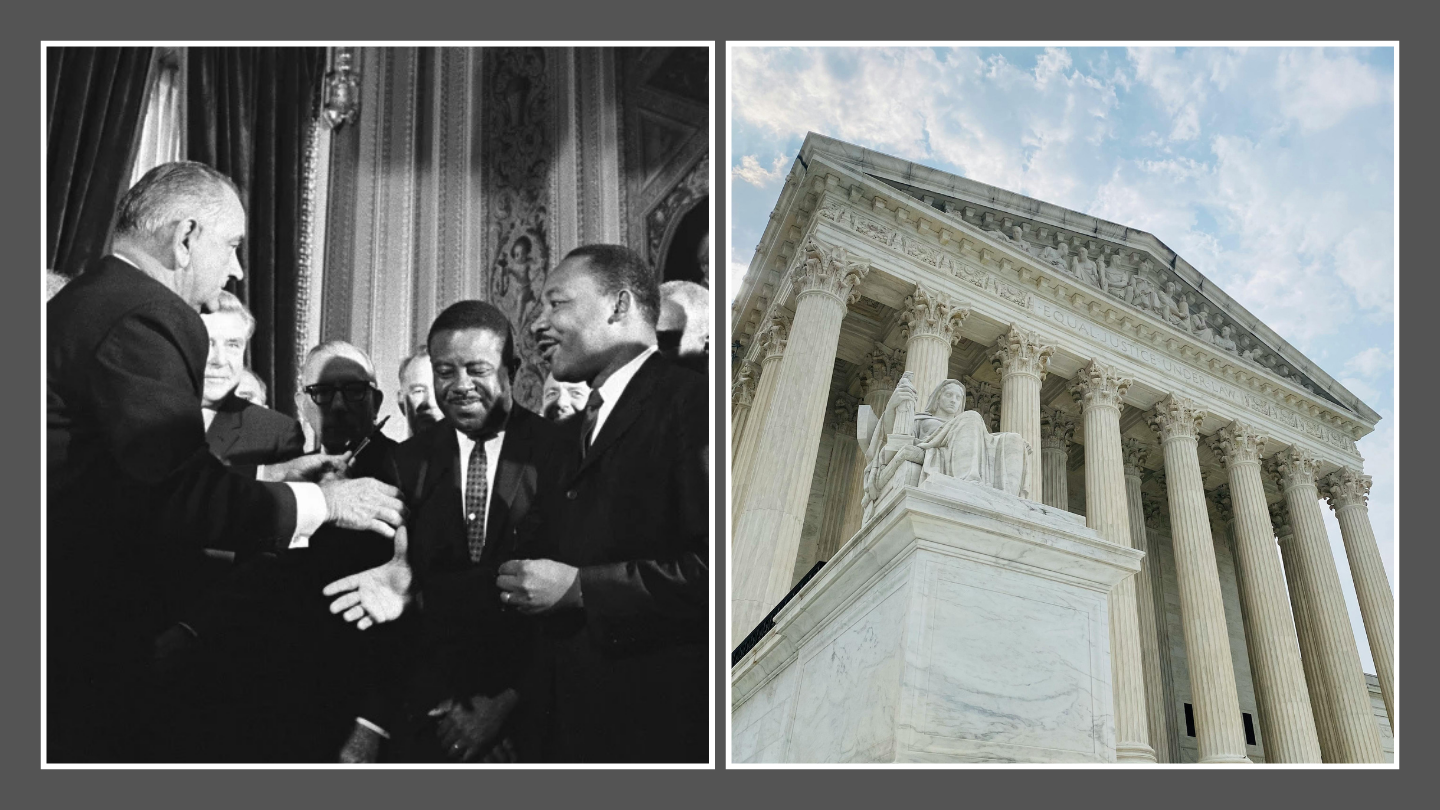
Ahead of the signing of the Voting Rights Act in 1965, President Lyndon B. Johnson told Congress that Black Americans were not fully free until they were fully free to vote. With the passage of the law in August of that year, it banned Jim Crow-era racial discrimination at the ballot box. Civil rights leader Rev. Dr. Martin Luther King, Jr. advocated for the measure and was present for the signing.
Now, more than 60 years later, the United States Supreme Court, in a 6-3 decision of Louisiana v. Callais, has invalidated a section of the Voting Rights Act.
“The central issue here was whether a ruling that allowed the redrawing of maps to ensure that Black voters in Louisiana would be fairly represented and have two districts instead of one voting district,” said Georgia State University constitutional law professor Tanya Washington. “Whether that was constitutional, whether that fell within what is permissible under the Voting Rights Act.”
Read this story now for free
To continue reading, sign up for our newsletter and get unlimited access to WABE.org
You can select your preferences for news and local content. We will never share your email address. Learn how your newsletter sign-up will support WABE and Public Media