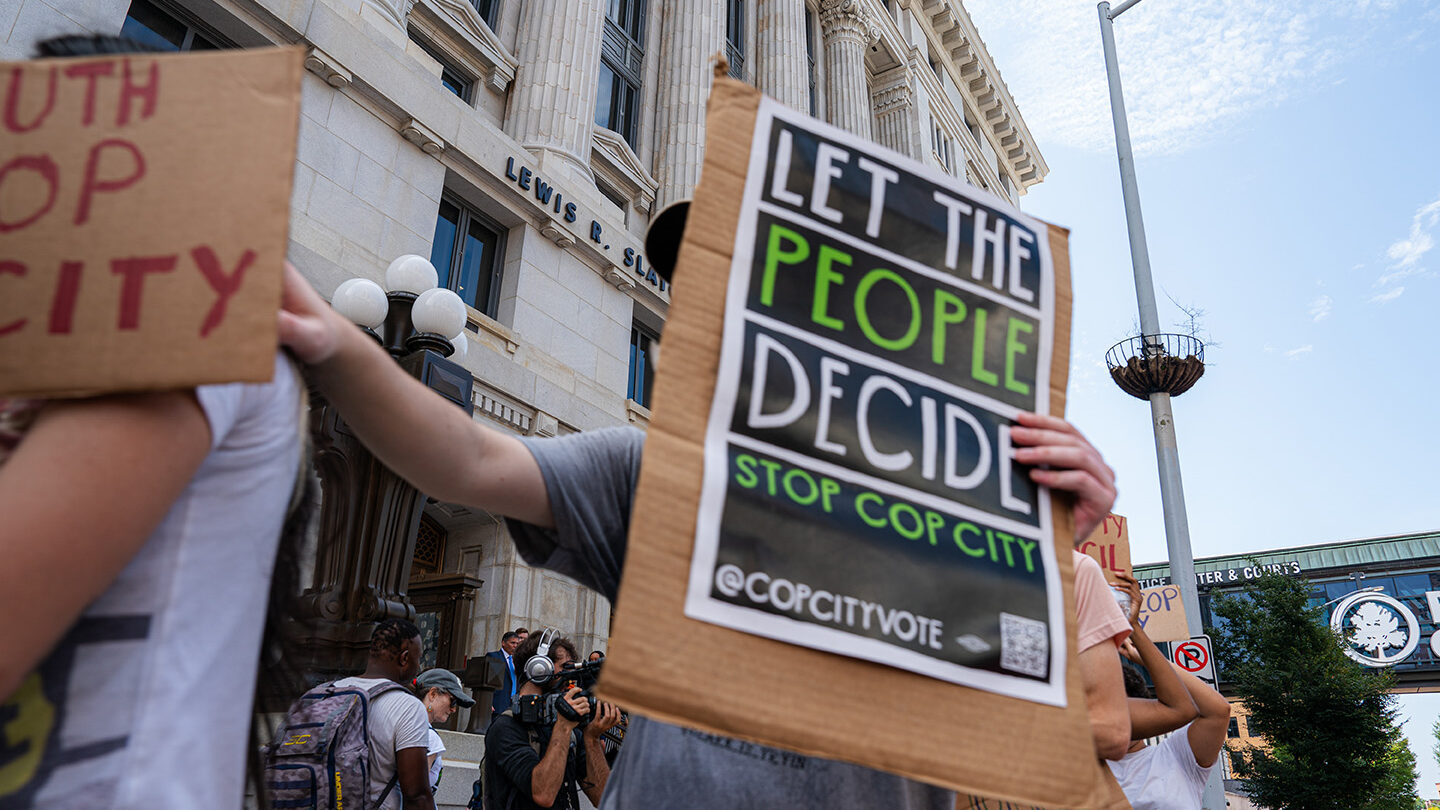
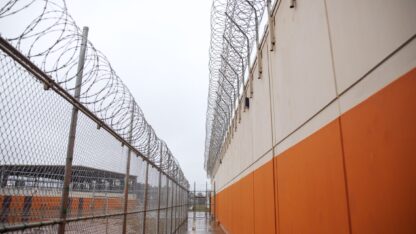
On Friday, a federal appeals court ruled against a grassroots effort that began in 2023 to put the now-open Atlanta Public Safety Training Center, dubbed “Cop City” by opponents, on the ballot.
Four non-Atlanta residents sued the city of Atlanta that year over a local law that prevented them from helping collect signatures for a referendum, arguing that it violated their First Amendment rights, given that they lived near where the facility was eventually built in DeKalb County.
But after a federal district court ruled in the plaintiffs’ favor, the city appealed, and the case remained in legal limbo for years.
Until last week, when a divided three-judge panel ruled that the plaintiffs cannot use the petition and referendum process to repeal the city ordinance that allows Atlanta Mayor Andre Dickens to lease 381 acres to the Atlanta Police Foundation for the new training center, and as a result, the non-residents cannot show they will suffer “irreparable harm” by not being allowed to participate.
U.S. Circuit Judge Elizabeth Branch, who wrote on behalf of the majority, cited Kemp v. City of Claxton, which is a 1998 state case in which the Georgia Supreme Court ruled that the petition process applies only to amendments to city charters, not city ordinances.
The case will now return to the district court for further proceedings.
A spokesperson for the city could not immediately comment on Monday, but Jeff Filipovits, Wingo Smith and Gerry Weber, who represent the plaintiffs, told WABE in a written statement that they believe the ruling only “prolongs the legal battle while continuing to silence the voice of Atlanta voters.”
“Our clients worked hard and faithfully to get the referendum on the ballot despite an ordinance we believe clearly violates their First Amendment rights,” the attorneys wrote. “That fight is not over.”
Organizers claim they collected more than 108,000 signatures, but it’s uncertain if enough of them are valid. The city refused to count the signatures, citing the uncertainty created by the courts.
How did we get here?
The fight over the multi-million-dollar training center drew national attention after state troopers fatally shot an environmental activist near the site in January 2023. Opponents said at the time they worried the facility, which includes classrooms, a shooting range, and a mock city where police can practice conducting raids, would worsen police militarization and harm the environment.
Supporters, including Dickens, said the city needed to replace its outdated facilities and better train officers to avoid improper use of force. A spokesperson for the Atlanta Police Department told WABE last year that it does “not have a visitor log, nor has a rental fee agreement been officially implemented” in response to an open records request, so it’s unclear what outside agencies may be using or touring the massive police and fire training complex.
In a three-page dissent, U.S. Circuit Judge Kevin Newsom wrote that he believes the non-residents have shown a “separate, stand-alone First Amendment interest in participating in the signature-gathering process itself.”
And he pointed out that even if the city rejected their petition, they could appeal the denial through the state court system. After all, Newsom wrote, the Georgia Supreme Court recently expressed skepticism about the Kemp ruling in a 2023 decision on a different referendum.
“Even if the plaintiffs’ campaign is a fool’s errand, it’s a fool’s errand to which the First Amendment entitles them,” Newsom wrote. “Even if their petition is ultimately rejected on Kemp grounds, that is, the plaintiffs may well think: The effort was worth it — we made our voices heard, we got our message out, we planted the seed. That, it seems to me, is wheelhouse First Amendment stuff.”