More women than ever before are signing up to serve in the United States military. And when they come home, they are seeking care through the VA Healthcare System in record numbers.
In 2000, women made up just 4% of the veteran population. By 2020, they were roughly 10%. Federal forecasts project the population to grow to nearly 20% by 2040.
Georgia is at the center of the nation’s demographic shift. Georgia is among the top five states with the most women veterans, along with Texas, Florida, California and Virginia.
It’s a diverse group. Of the roughly 2 million women veterans nationwide, more than a quarter are people of color, according to the U.S. Department of Veterans Affairs. The average age of women on active duty is 28. For women in the reserve forces, it’s 30.
“So, many veterans are of childbearing ages,” says registered nurse Dorothy Johnson, who works at the Atlanta VA and also currently serves as a major in the Air Force.
VA healthcare data reflect the changes. The number of deliveries covered by the VA has spiked 14-fold since 2000, and more women veterans are tapping VA benefits to pay for their pregnancy and postpartum care.
A vulnerable group with complex maternal mental health needs
Women veterans often come into pregnancy with multiple chronic medical conditions or injuries that can increase the risk for complications during and after pregnancy — risks that are further exacerbated by military deployment, according to the VA.
“Being deployed also increases the risk of developing post-traumatic stress disorder (PTSD). Having PTSD can increase the risk of a spontaneous preterm birth as well as preeclampsia and gestational diabetes,” according to the VA, especially for Black veterans.
If untreated, PTSD and other mental health conditions can put moms and babies in danger.
“That could look like difficulty connecting to care if you’re depressed and maybe it’s hard to go to your OB-GYN appointments. So it’s not just the mental health symptoms themselves, it’s how you engage with your healthcare,” says Dr. Emily Collins, a psychiatrist who supervises the Atlanta VA Perinatal Mental Health team. “And there is also substance use, which can lead to unintentional overdoses or suicidal thoughts.”
But maternal and mental healthcare can be tough to access in parts of Georgia, particularly in the state’s rural communities.
More than a third of counties in Georgia lack maternity care, according to the March of Dimes. The state ranks 46th in the nation for access to insurance and mental health care, a State of Mental Health in America report found.
To connect more women veterans with the mental health and maternity care they need, the Atlanta VA has expanded its Women Veterans Program over the last year. The program coordinates care for veterans and their children up to a year following childbirth.
The VA also offers postpartum mental health appointments in person and via telemedicine.
“We have trauma recovery programs, so if a veteran has PTSD, we want to make sure that our care is aligned with those specific exposures,” says program manager Kathleen O’Loughlin. “Having those people with the special training is really important and crucial in delivering that care.”
The program currently serves roughly 30,000 veterans across Atlanta. Several thousand are pregnant or postpartum at any one time.
But it’s also for women veterans throughout their life cycles. In 2023, the average age of women veterans was 52 years old.
Officials say the demand for mental health services through the Women Veterans Program continues to rise in Georgia.
“As the number of women veterans grows, the number of pregnant women veterans that seek care grows, the numbers trend upward for maternal morbidity and mortality issues, especially for our Black veterans. Georgia’s overall maternal mortality crisis also affects them, too. And mental health is very high on the list of negative impacts for our women veterans,” O’Loughlin said.
For some veterans, the effects of PTSD linked to past combat deployments or military sexual trauma are ever-present.
“You wonder if one day you’ll ever be the person you were before you experienced the trauma, and it turns out no, I will never be that person again. I’ve experienced something that has changed my life forever. It is a daily decision that, in spite of the experience, I’m going to keep going. I have to choose to be okay every single day,” says Retired Army Combat Medic Veda Brooks, whose service included the first Gulf War. “Some days I’m angry about it, but if anybody asked me at any point, even when I’m at the lowest, would I have served? Absolutely. It was an honor to serve.”
Growing community support
A statewide network of volunteer veteran advocates is also stepping up efforts to reach women veterans who may be hesitant to consider seeking services at an official VA facility.
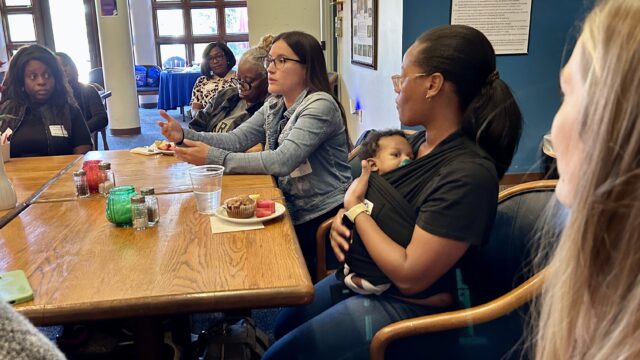
Toward the end of 2025, in partnership with the Atlanta VA, advocates launched a series of support group meetings, held at an American Legion Post a few miles from the main Decatur VA campus.
The gatherings began with a half dozen shy strangers sitting around one folding table and have quickly grown into something much larger. Dozens of women veterans now pack the American Legion meeting hall every month.
They have served in all branches of the U.S. military, from the Vietnam War and Cold War eras through the present post-9/11 period. Some are in their 20s and 30s with babies in their arms. Some are grandmothers or great-grandmothers.
But they share a common language of service and sacrifice. Of motherhood. Of trauma, of healing and recovery.
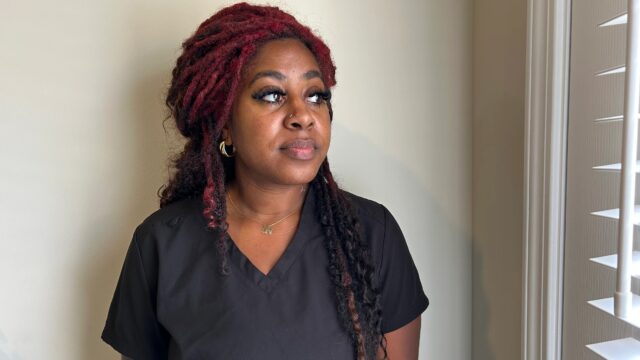
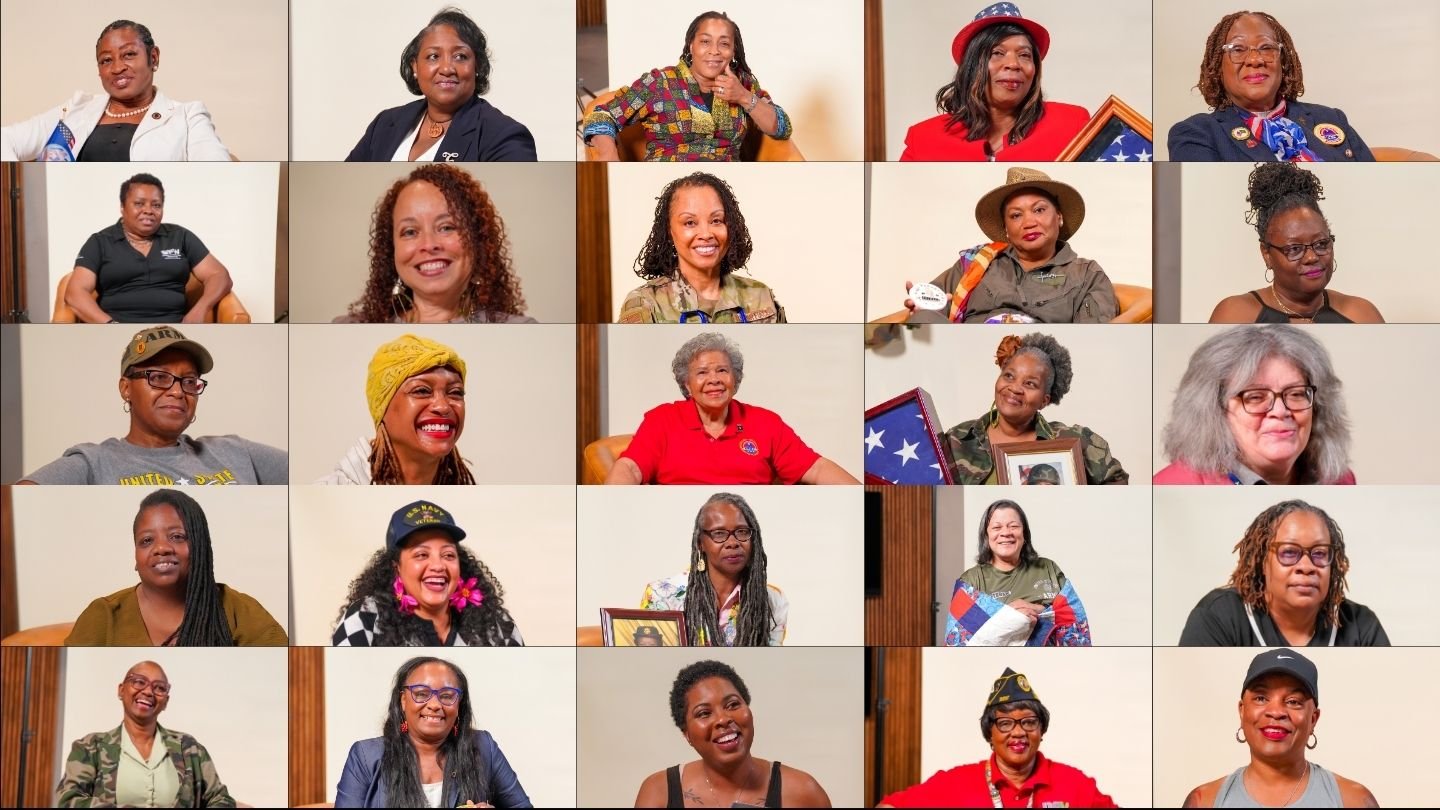
This summer, the Invisible Scars project invited Georgia women veterans to a photoshoot at WABE’s Atlanta studios. Over two days, a few dozen shared their experiences and mental health challenges. Some brought personal items representing their time in the military or their reintegration back into civilian life. These are some of their portraits.
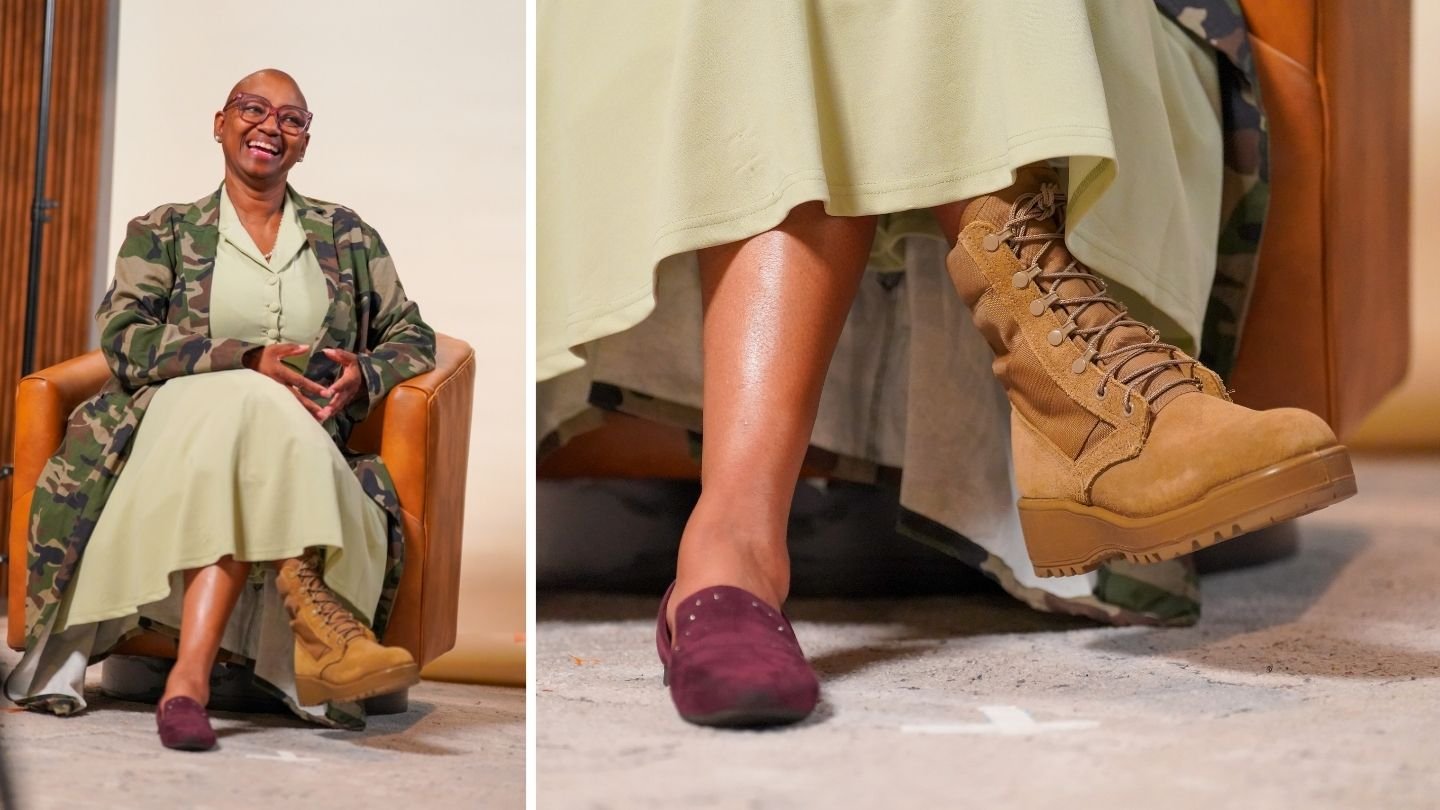
“Sometimes we forget that you don’t leave the service. It comes with you. And so I’m never not going to be a veteran. I wore this boot because I want people to know, yes, I am a lady, but I also served. So, I’m still strong, even if I put on a poofy dress.”
Veda Brooks, U.S. Army
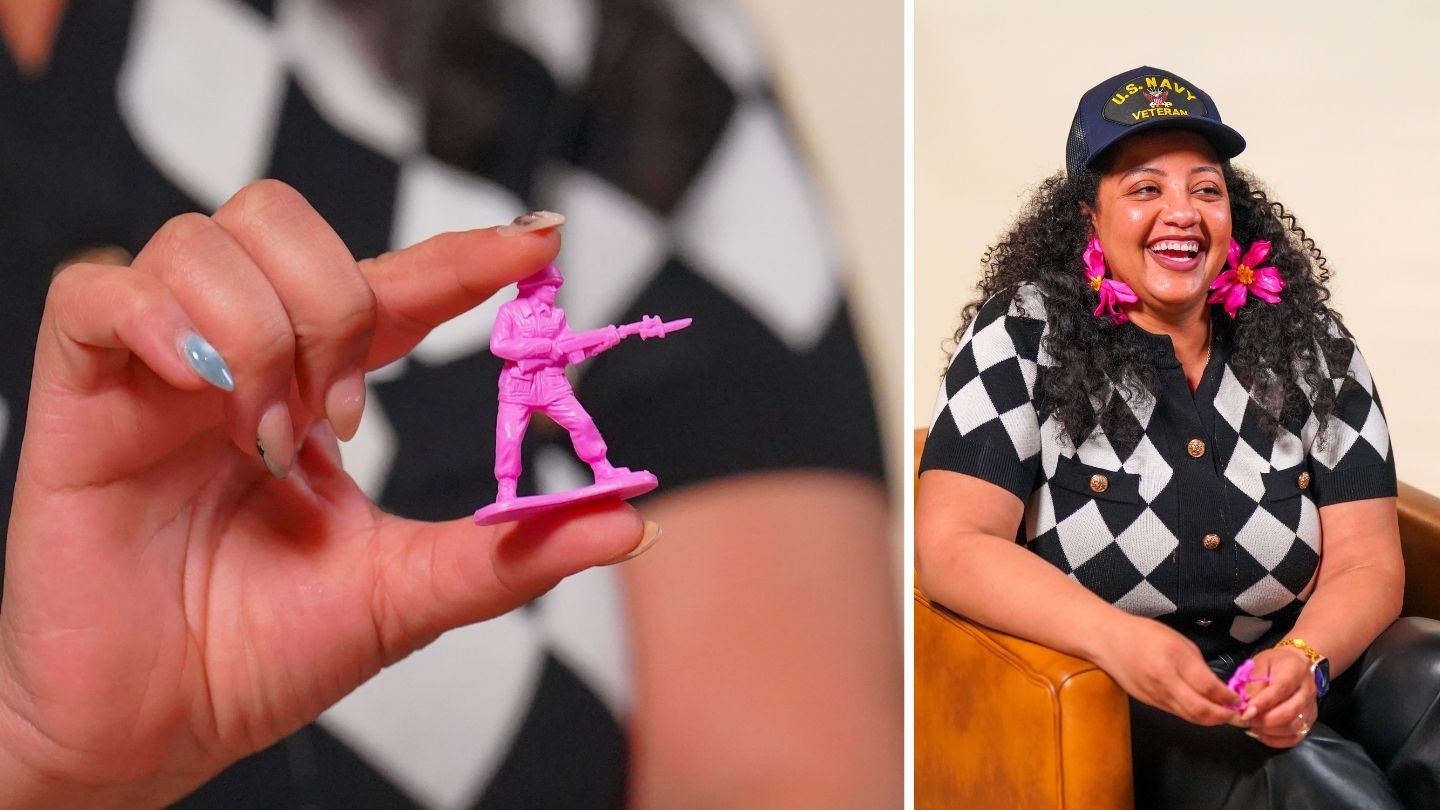
“Women veterans’ needs and contributions are too-often overlooked, especially veterans of color.”
Veatra Cruz, U.S. Navy
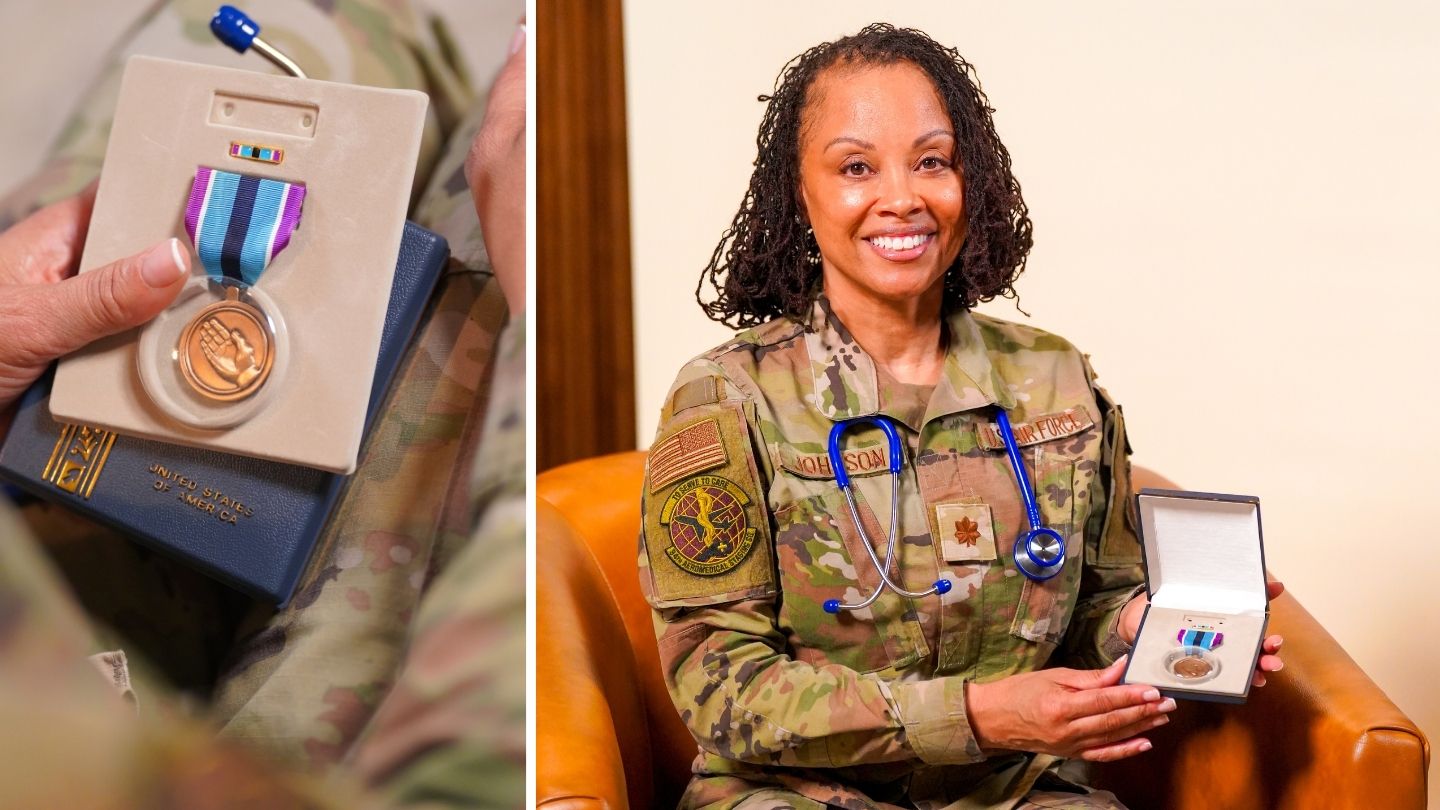
“This medal is one of the first of its kind. It’s a humanitarian medal specifically for working with our airmen during COVID-19.”
Major Dorothy Johnson, U.S. Air Force and VA Registered Nurse
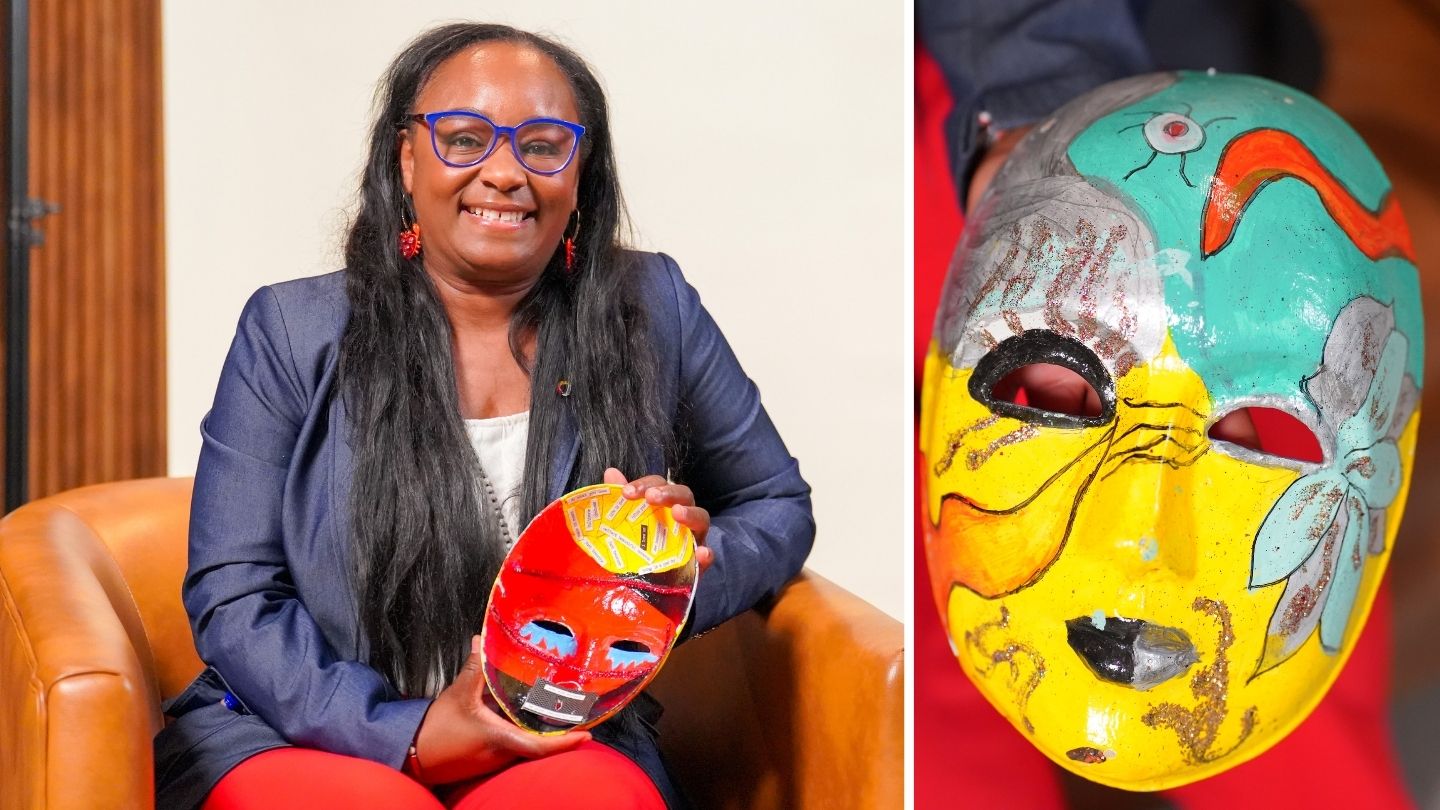
“This is my mask, because a lot of people will see the outside of you and say that you are put together and everything’s well, but the inside of you is getting sicker, destroying who you are from the inside out. They see this wonderful, sweet, loving person. But on the inside of me, I felt angry. I was angry all the time and I didn’t know why.”
Yanta Haynes, U.S. Army
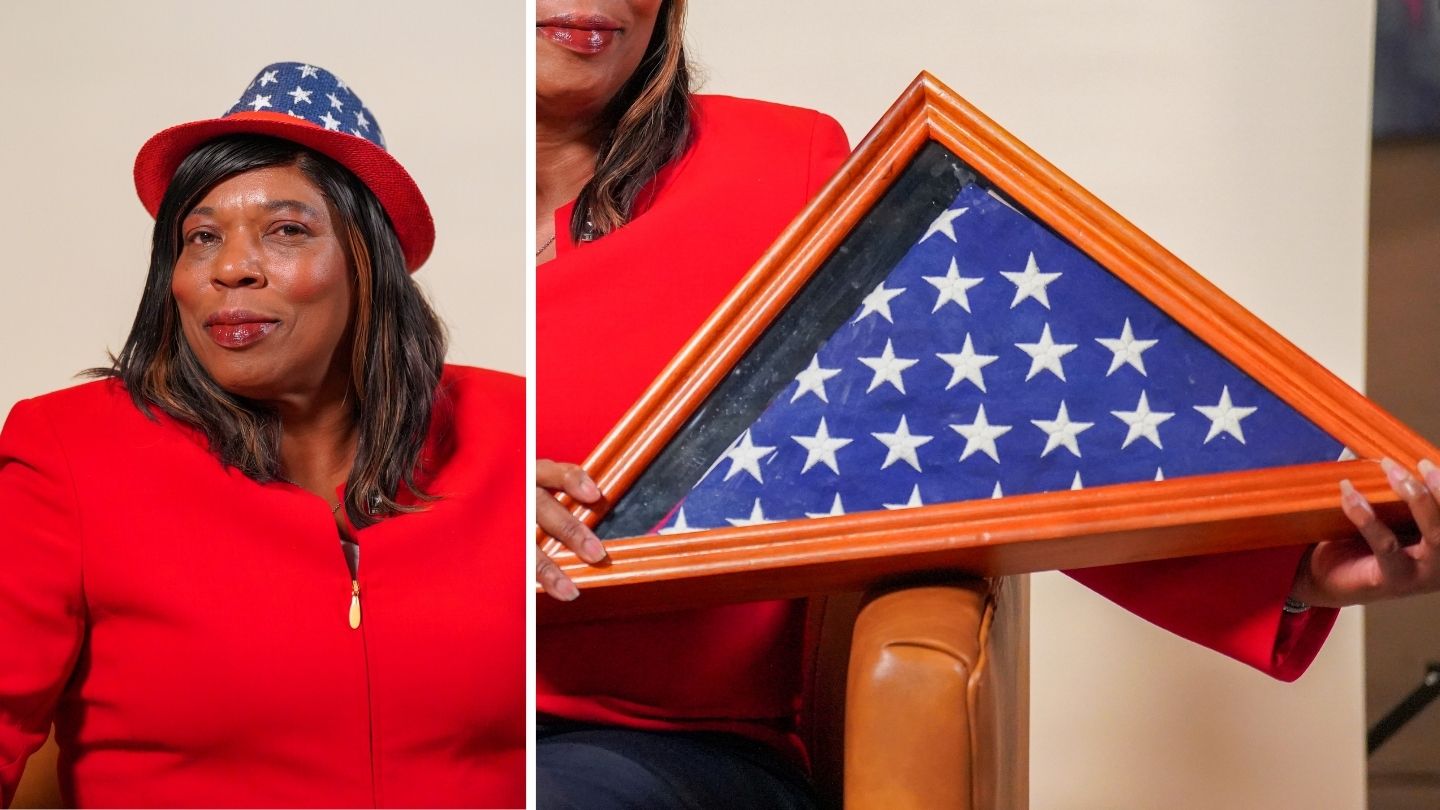
“This flag is very special to me. It’s a U.S. flag and this is the flag that they give all of us when we retire. It is very special to me.”
Vanessa Thomas, U.S. Army
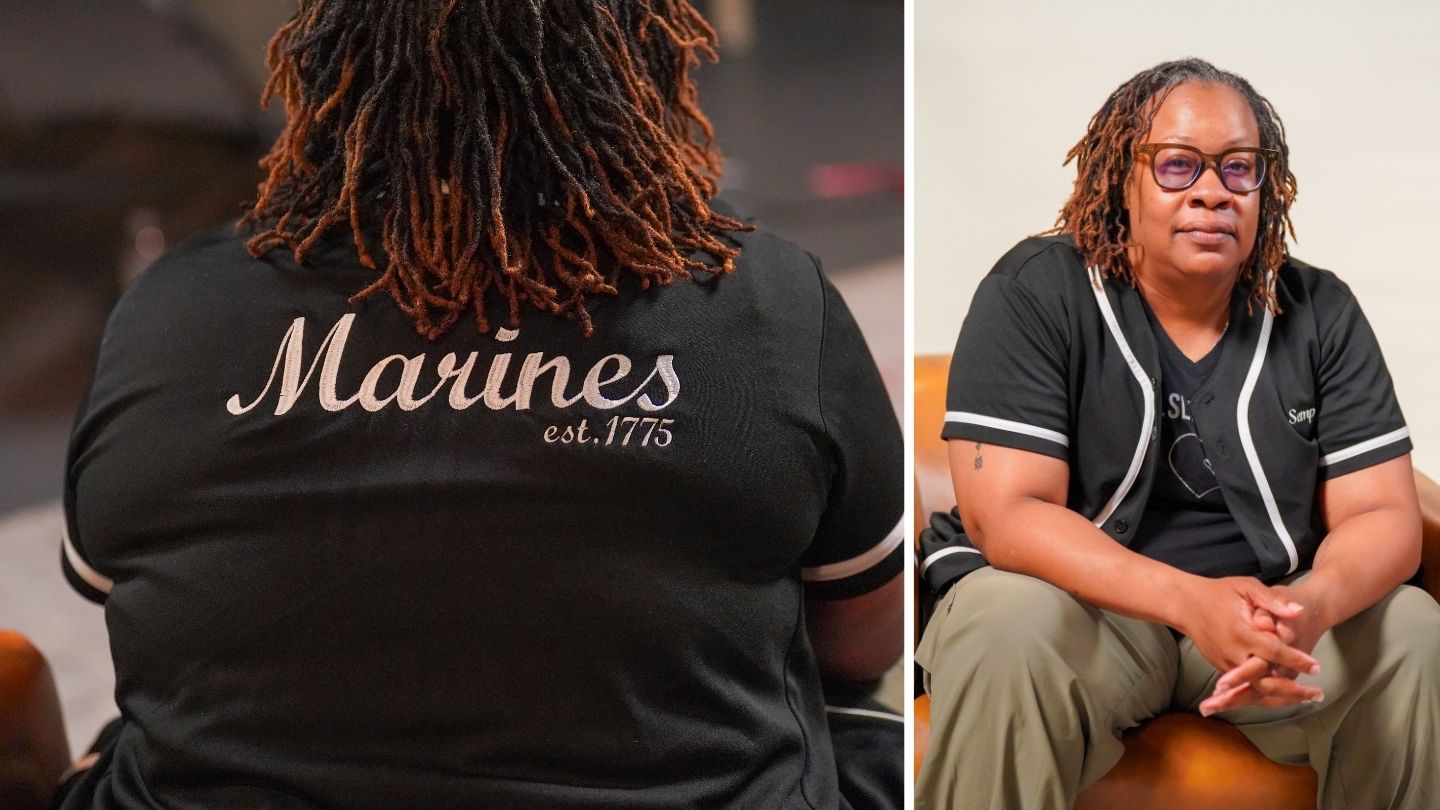
“Therapy is a good thing. I went through years of it. I went to music therapy, that helped me a lot. I think when we push [veterans] to the programs we went through to help them deal with survivors’ remorse, the PTSD, the anxiety, it is a plus for us to see that they actually stick with the program because we know what they’ve been through.”
Kimia Flournoy, U.S. Marine Corps
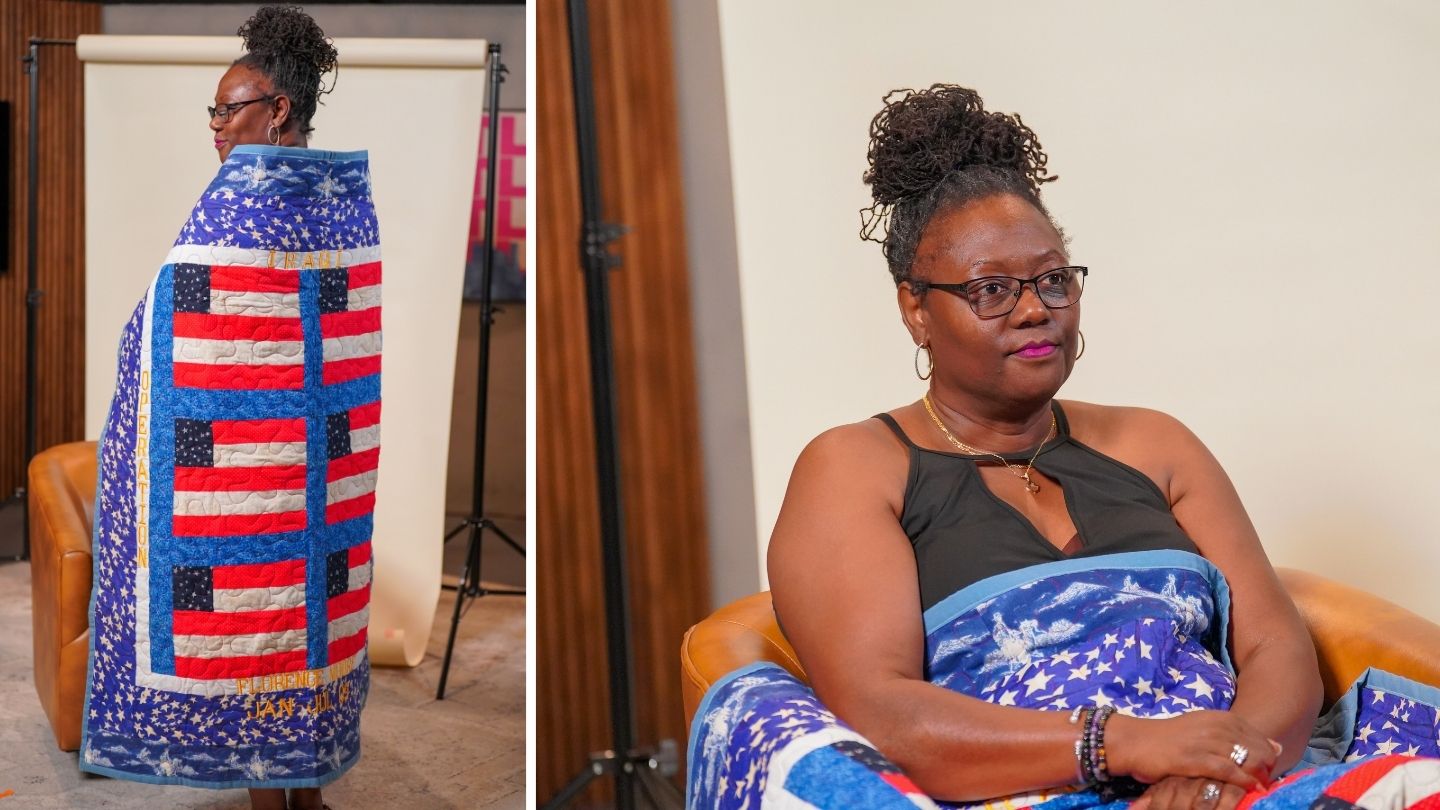
“I was deployed in Iraq. They had quilts out there that people made and sent them out to the soldiers or airmen. And I actually got it embroidered. So it has Operation Iraqi Freedom and then with my name at the bottom. This is something that makes me feel real good because I know that I was out there trying to help America.”
Terrian Moore, U.S. Air Force
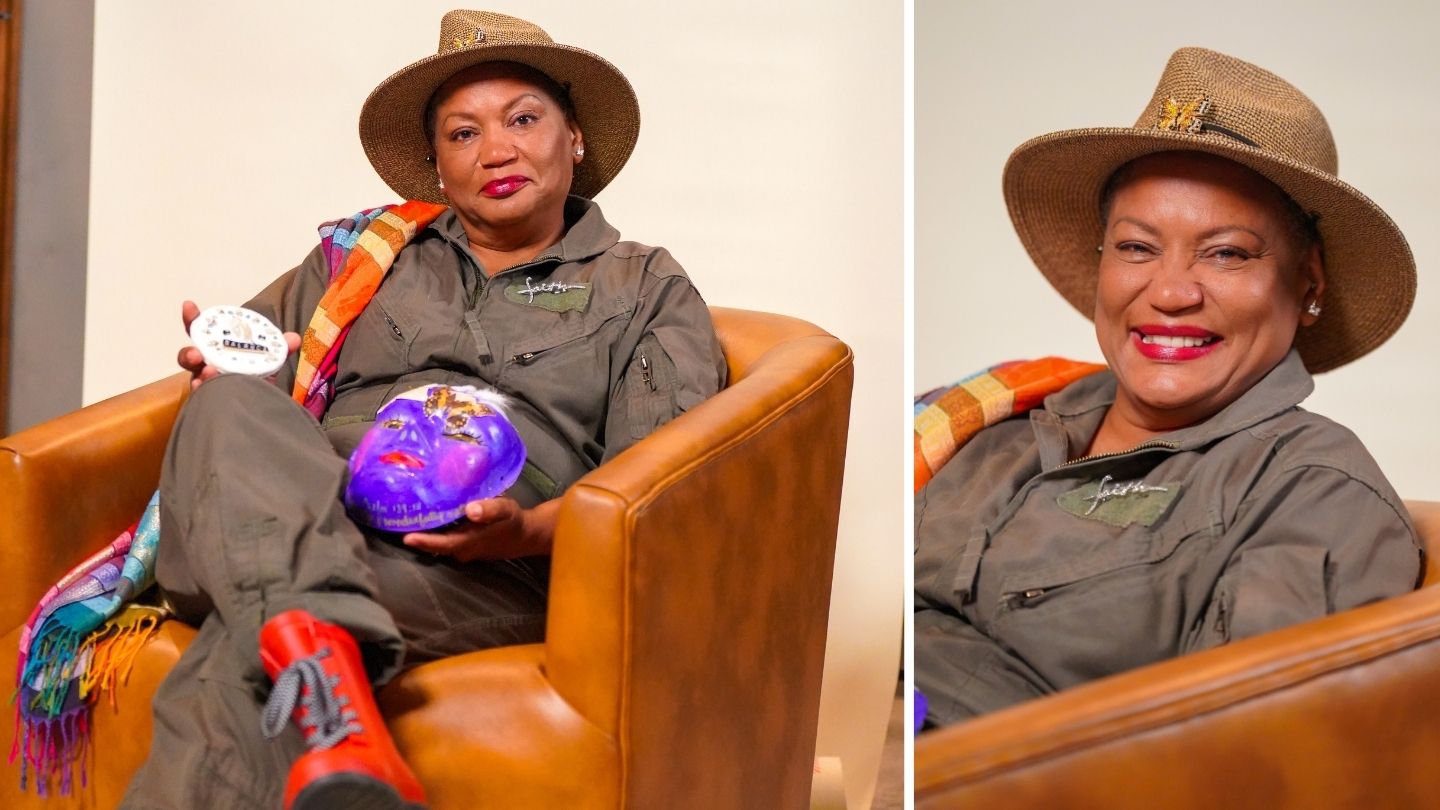
“Mental health is a tricky thing. Sometimes you don’t know that you have an issue until another veteran or mental health provider picks up on it. That’s what happened to me. I was just going through life because I had children. A mother has to show up. A wife has to shows up. I am so grateful for my mental health providers because they helped me.”
Lynda Lofton-Fitzhugh, U.S. Army
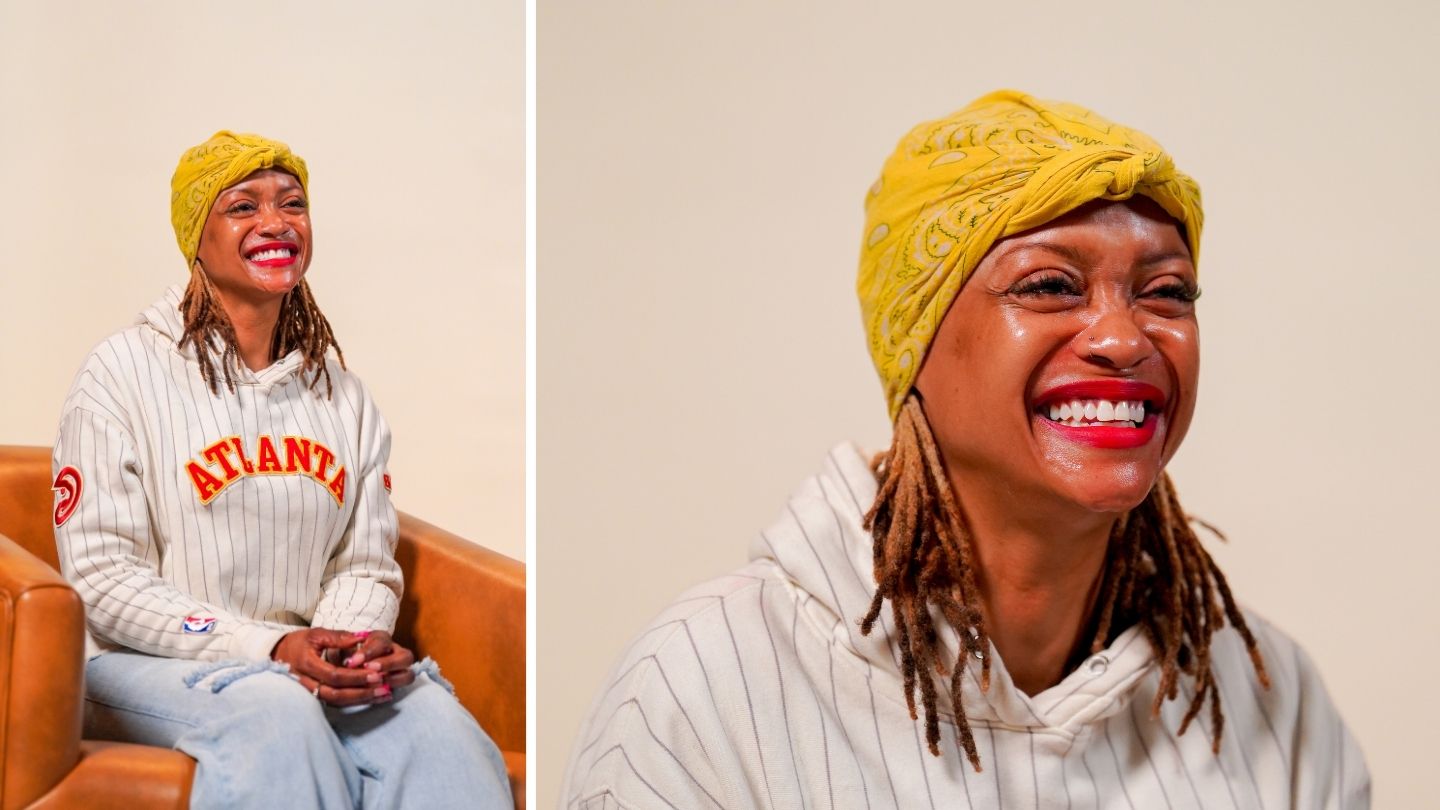
“I got deployed when my son was 6 months old. So we were separated by the time he was 6 months until a year and a half. So it took us a long time to get that mother-son bond. My grandma and great-grandma and my mom helped raise him while I was deployed.”
Tiffany Moore, U.S. Army
This project is supported by the Carter Center’s Mental Health Journalism Fellowship.
WABE’s 2026 Digital Intern, Karen Lopez, assisted with this photoshoot event.