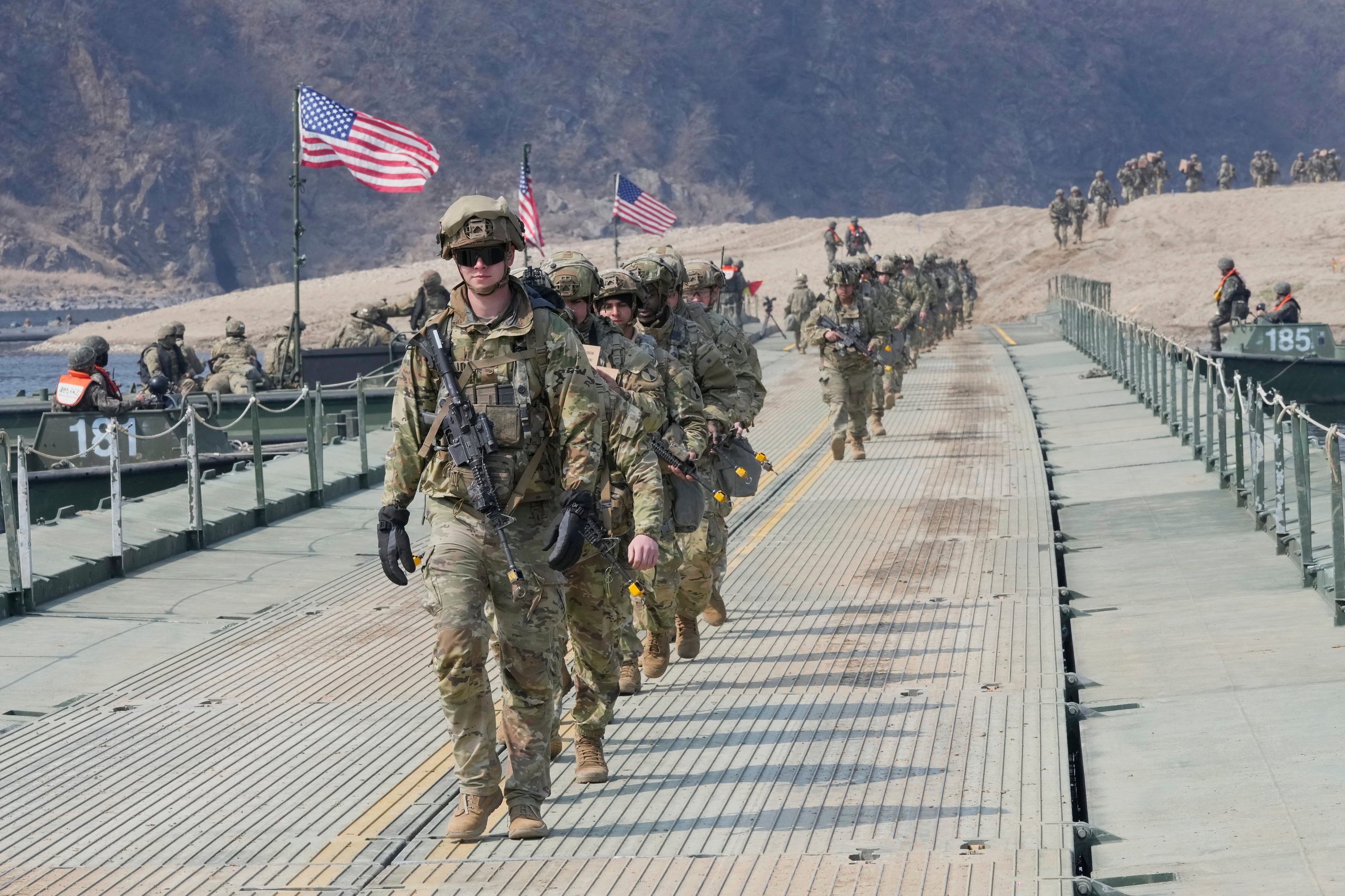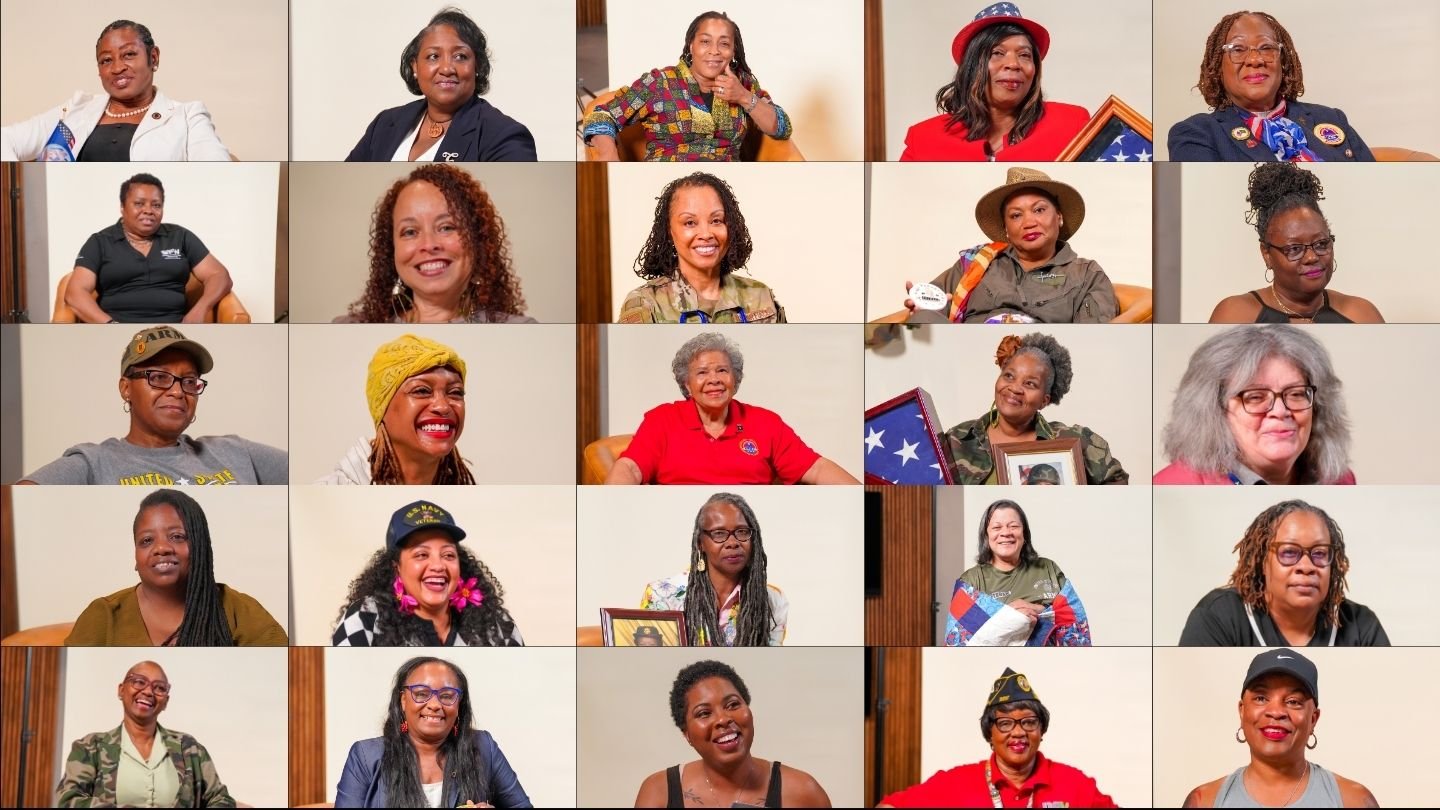
Georgia has one of the largest populations of women military veterans nationwide. Data show women veterans face higher risks for mental health conditions often associated with worse maternal health, including PTSD.
To combat this, the Atlanta VA is ramping up efforts to connect women veterans to health care and community support that considers their unique needs — even as national funding continues to be cut.
Connecting women veterans across generations
It’s a weekday morning at an American Legion Post east of Decatur. A banquet hall is decorated with bunches of red and blue balloons, military memorabilia and American flags.
“Alright, we’re going to go up. Slowly. Very good!” says a recreation therapist at the front of the hall.
She leads about three dozen women veterans through a few rotations of standing stretches. In unison, the women reach their arms overhead, down to the floor and back up.
“Now, this can be done between commercial breaks,” she calls out. “If you still work, you can do it at your desk.”
After the warm-up, the group moves on to practicing a line-dancing routine.
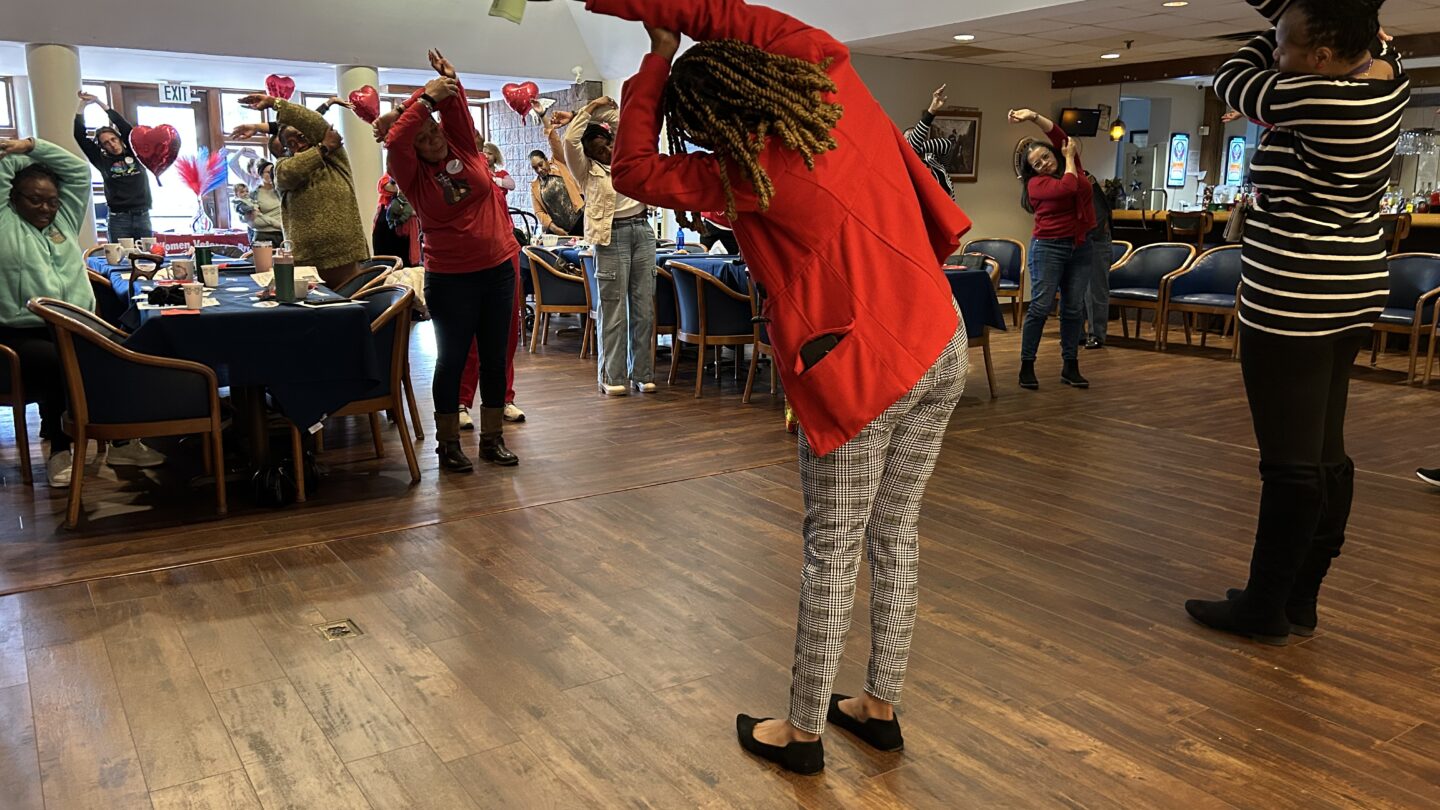
The exercises are part of a new initiative run by the Atlanta VA’s Perinatal Mental Health Program, an expansion of the VA’s Maternity Care Program for pregnant and prenatal veterans, which currently coordinates care for more than 500 women veterans.
And it’s expanding — even as the Trump administration has continued to cut the United States Department of Veterans Affairs over the last year.
Director Kathleen O’Loughlin says the monthly gatherings are meant to feel like an informal meetup.
“Our women veterans, some of them feel isolated. Some people, they don’t have support systems. They really enjoy the camaraderie and connection with one another and the amount of trust and similarities that they feel when they do engage and come across other women veterans. So we wanted to make it an easier opportunity for them to connect and get health information,” says O’Loughlin.
The meetings are open to any woman who’s served in any branch of the U.S. military. It’s a diverse group of 20-year-olds to 70-year-olds.
That’s by design.
The idea is to get veterans talking with each other about mental health and wellness across generations, O’Loughlin says.
“Some women that were older share some of the difficulties they had with their birth experiences or with postpartum depression or premature babies, or they have military sexual trauma,” O’Loughlin says, “women who had to simultaneously get help for their mental health issues while they were going through a pregnancy or postpartum period. Younger women are able to be like, well, you’re sitting here, and you survived it, and you said that the VA trauma program really helped. I might give it a try. So that they can support each other — that’s the benefit of these meetups.”
Social connection is an important factor that research suggests can help keep women safe during and after pregnancy.
“It is such a blessing that you’re getting help and I want to be part of the helping because I missed out on so much of that.”
Arthurine Williams Wright, Army combat engineer who had both of her children on active duty
More perinatal support for women veterans is likely to be needed.
Georgia has one of the largest populations of women veterans nationwide. Deployment increases their risk for military sexual trauma, depression, posttraumatic stress disorder or PTSD, and other conditions associated with increased chances for pregnancy and postpartum complications, according to the VA, including preeclampsia, gestational diabetes and preterm birth.
And the Atlanta VA is working to connect as many women veterans as possible to health care that considers their unique needs.
And to invite them to peer gatherings like the ones the VA is hosting at the American Legion Post.
VA ‘aunties’ encourage new moms to find their village
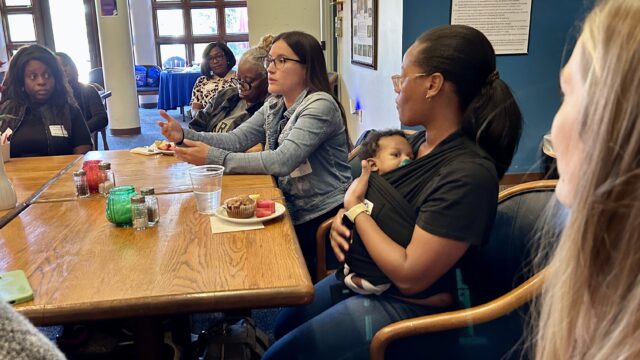
As a recent meeting winds down, a handful of women veterans sit at a folding table and chat over coffee, tea and snacks.
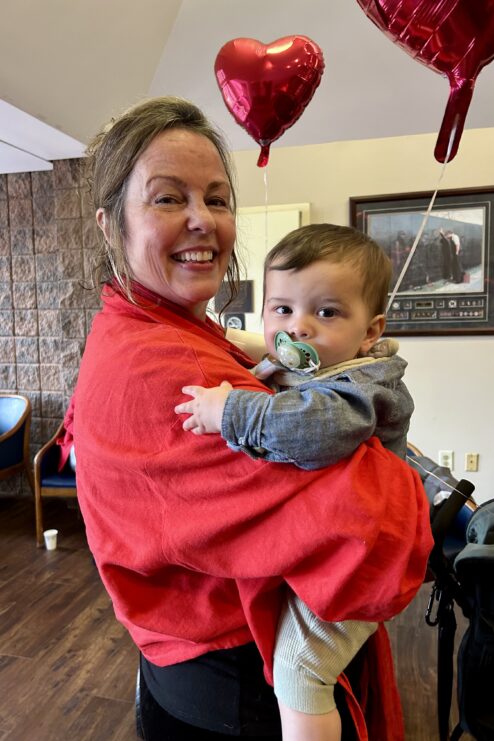
Some are pregnant, or holding new babies — like one younger Marine Corps veteran who tells the group she welcomes their parenting stories and guidance.
“Like, what you should do, or what you should expect kind of support. Having people that are at those different stages and going through those different things because, you know, I’m doing this by myself,” she says.
Some of the older women veterans at the table chime in.
“We’ll be the aunties or the great aunts while you’re here, holding the baby so you can participate in everything. But try and find that village and set up play dates,” one says. “And get busy.”
“And I will say, from a mom of adult children, if this group ever decides to have a Come Hold My Baby program, I want to volunteer,” says another, sparking laughter around the table.
“And since we’re the family now, I think we should incorporate that into what we’re doing so that we can support our new moms,” she says.
Every meeting also includes educational presentations by OB-GYNs, nurses, psychologists and other maternal health specialists.
The information is critical. Georgia has one of the worst rates of maternal mortality in the U.S. Mental health conditions are a leading cause.
‘You’re sitting here, and you survived it’
Women veterans often use civilian health care to have their babies and access prenatal care because the VA system typically doesn’t do that.
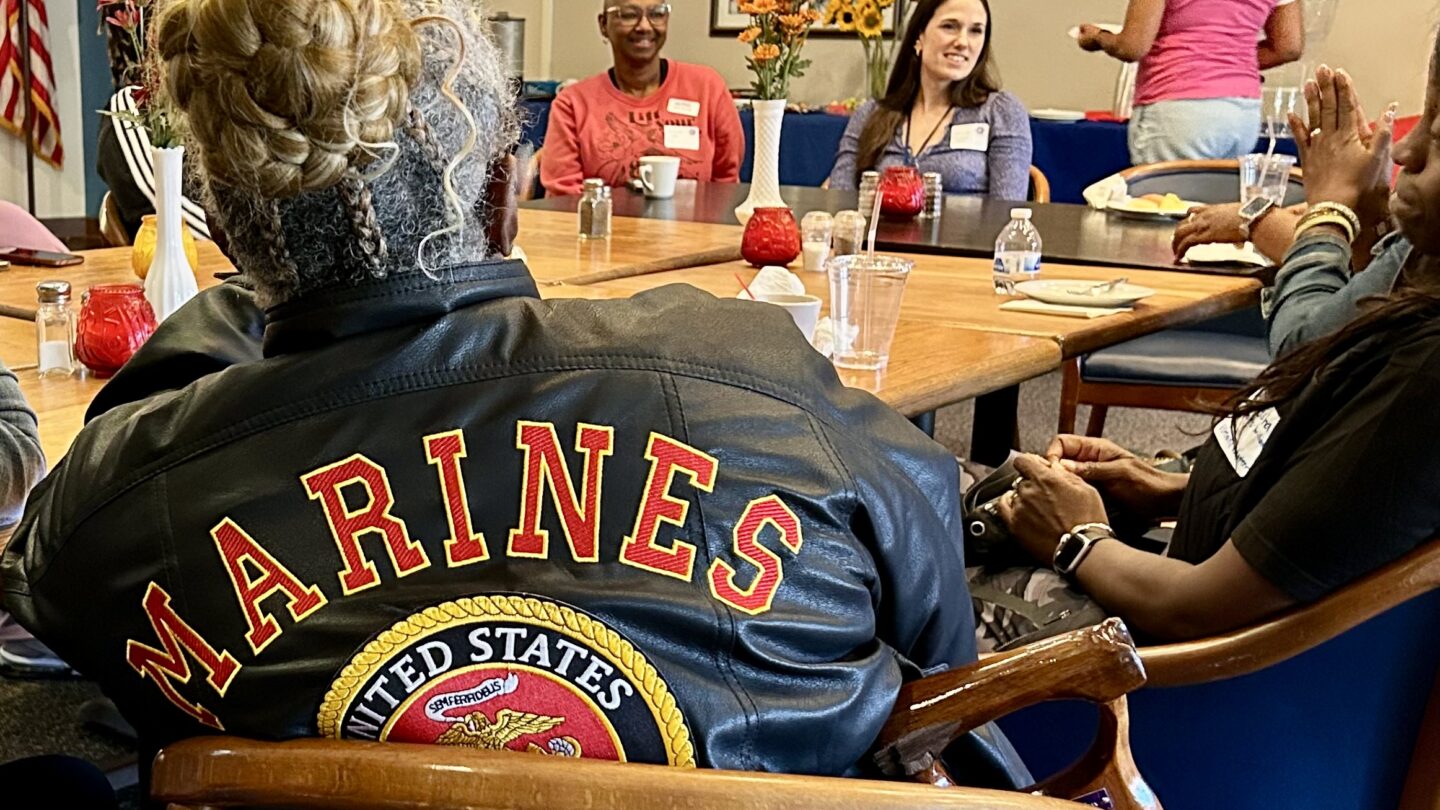
“I had both of my children on active duty. And both of them were born premature. “I went through much depression,” says veteran Arthurine Williams Wright. “I am a survivor of sexual trauma. I’m getting help now and I guess that’s why my husband, God bless him, says, I think you need to go to the meeting.”
She says she’s glad she came.
Williams Wright served in the Army as a combat engineer from 1978 to 1992 and deployed during the first Gulf War.
There were few, if any, programs specifically for women veterans when she was in the military and then reintegrating back into civilian life, she says.
“So I’m thankful that I get to sit here in front of you. It is such a blessing that you’re getting help and I want to be part of the helping because I missed out on so much of that. So, to come to the table and to hear that we are working together truly to be of help to one another in this community is healing to myself,” she says.
Navy veteran Jenile Jones came to the group with her infant son. It’s a welcome chance to leave the house and find support, she says, particularly as she has experienced symptoms of postpartum anxiety since her son’s birth.
“It gives me the chance to socialize and meet other women veterans like me with the same emotions and postpartum symptoms as me,” she says. “And connecting with older women veterans that have more experience, that can give me advice, connecting people with resources to help out with women veterans like myself and my kids.”
Since last fall, at least 100 women veterans have participated in the gatherings.
Williams Wright says she hopes more younger veterans will join in so they won’t have to go through the struggles she and many in her generation experienced.
WABE’s news series “Invisible Scars: Women veterans in Georgia search for healing” is part of the Rosalynn Carter Fellowships for Mental Health Journalism