Lisa Rayam
,
Kendall Murry
| WABE
June 9th, 2025
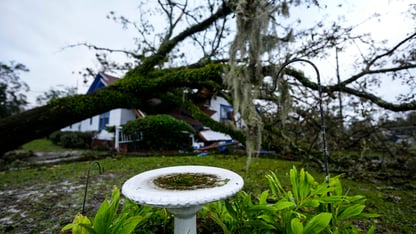
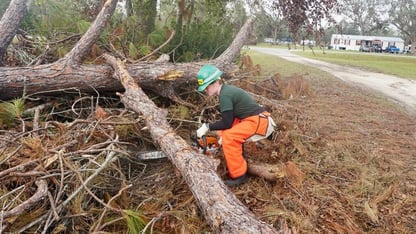
Hurricane Helene devastated parts of Georgia last year. Now it’s the topic of the NPR/PBS “Frontline” documentary, “Hurricane Helene’s Deadly Warning.”
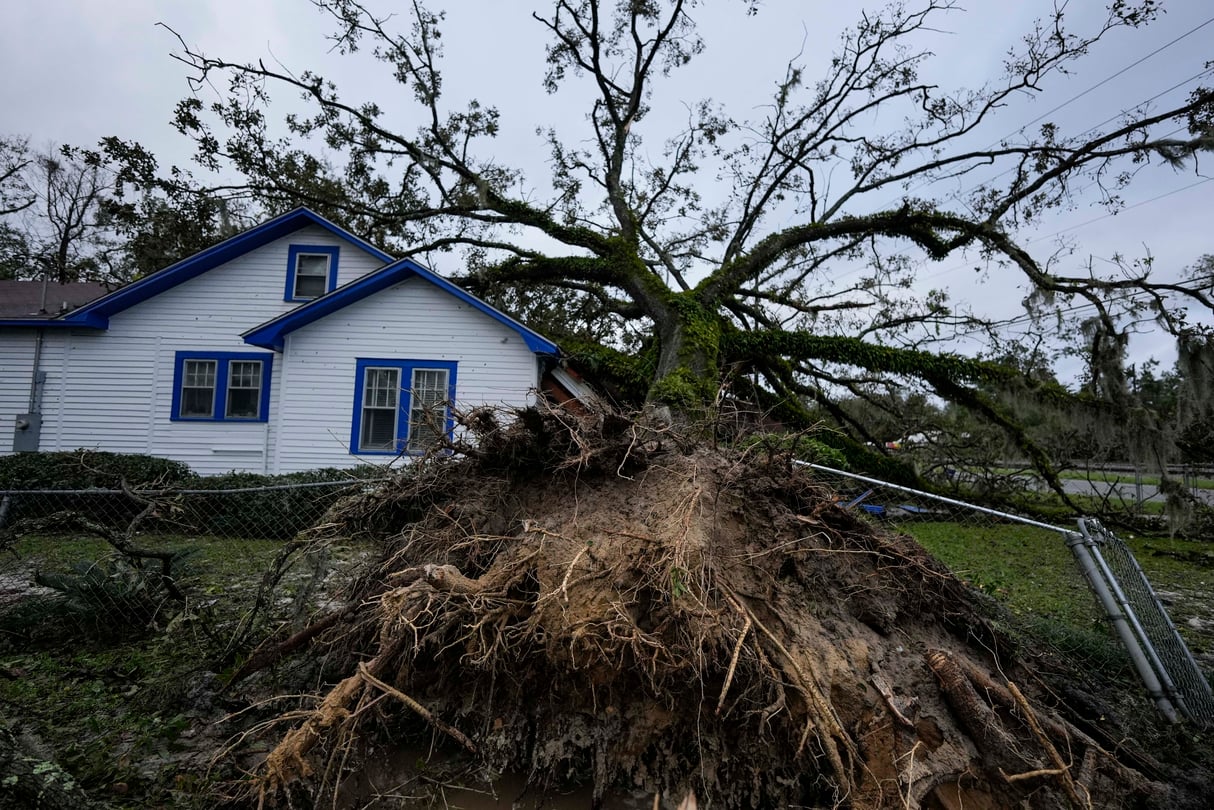
Helene made landfall in Florida in September 2024, then crossed into Georgia as a deadly Category 2.
“This was not a flood where the water came up and it flooded and then it went down and everybody was wet, but like their homes survived … this was the kind of disaster that turned homes into matchsticks,” said Laura Sullivan, NPR and “Frontline” correspondent.
Sullivan and her team focused their efforts on learning more about the aftermath of the hurricane in several towns and the preparedness among residents before the natural disaster. Or, in some cases, the lack thereof.
“One of the things that we found was this idea that most people, many people across the country have no idea of the risk that they actually face,” she noted.
“Helene is really speaking now that the severity of storms … are coming at a more frequent clip, and places that never expected to be hit in the way that they are being hit are facing these challenges.”
While researching for the documentary, Sullivan found that flood maps provided by agencies such as FEMA do not always consider all of the residents at risk. This can be attributed to the organization not mapping rainfall or precipitation when designing flood zones and safety warnings.
Another revelation emerged when determining whether Georgia would be prepared for another storm like Helene.
“Most of the people we talked to said not at all,” Sullivan said.
The correspondent noted that while the federal government’s response to natural disasters like Helene has shown progress in recent years, it may all soon come to a standstill.
“When I got down to Helene and I saw the debris trucks 24 hours later, you know, 36 hours later, I thought, ok, it’s been 20 years … there has been progress. People are getting their FEMA checks within 10 days. There was this sense of that,” she said.
“But … if FEMA had been making some progress over the past 20 years, a lot of that has now also stalled because it is facing significant cuts with the current administration that is also talking about shutting it down completely.”
The “Frontline” producer and correspondent said the Trump administration has removed grant programs and funding that would help communities rebuild.
“There’s very little that people can do to survive that kind of a storm except, as one person told us, ‘There are areas that maybe we just shouldn’t live.’ And now that we know where these storms can come, the question is, “Are we going to build in a different way?” and the [answer] so often that we found in the storms that we went back and visited … is no.”