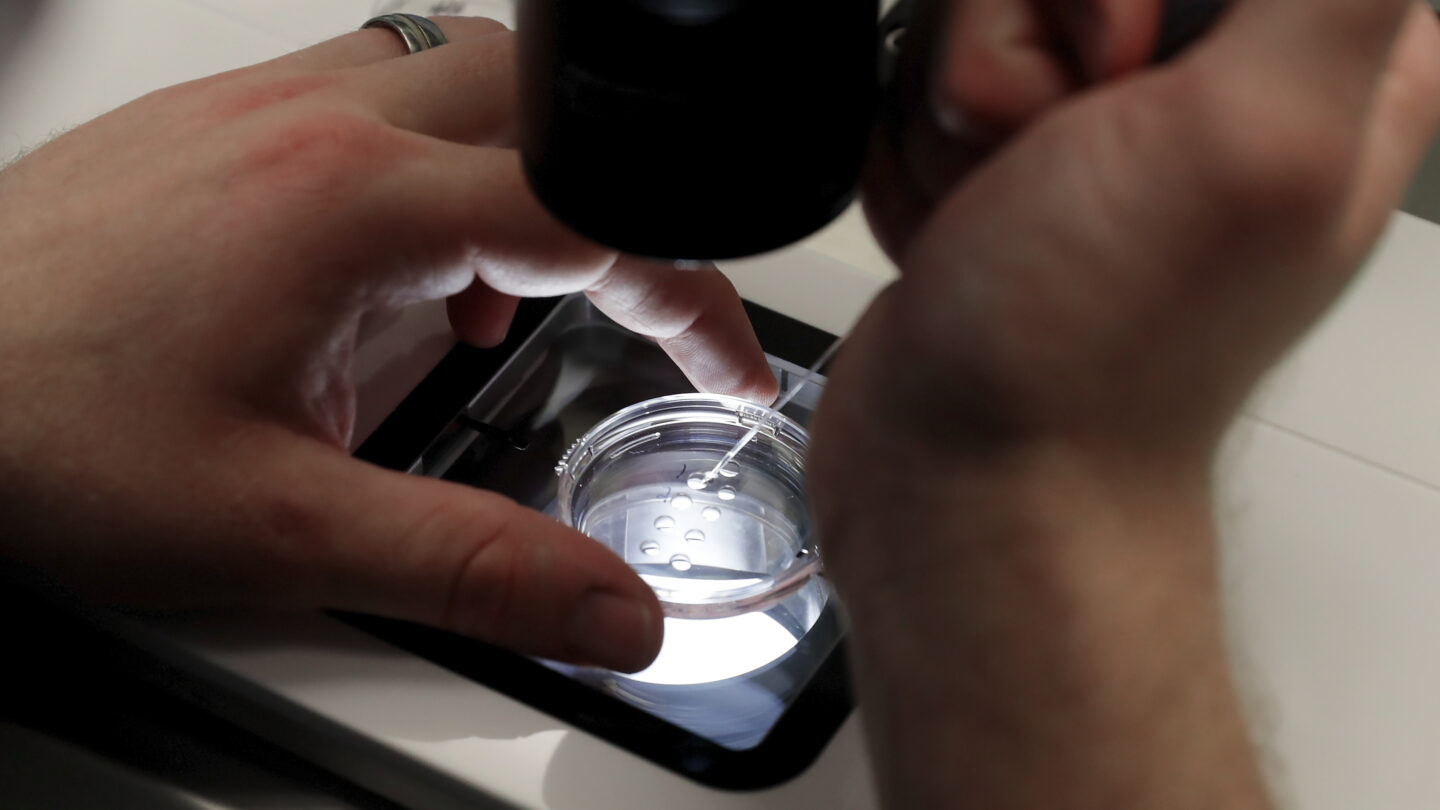
Alabama lawmakers and Gov. Kay Ivey agreed to protect in vitro fertilization providers from legal liability Wednesday, more than two weeks after the Alabama Supreme Court ruled that frozen embryos can be considered children under state law and touched off immediate backlash.
IVF quickly became a talking point for former President Donald Trump, who said he strongly supports its availability. The Biden administration sent the Health and Human Services secretary to Alabama after the ruling, and Virginia Democratic Sen. Tim Kaine is bringing as his guest to Thursday’s State of the Union the first person to be conceived via IVF.
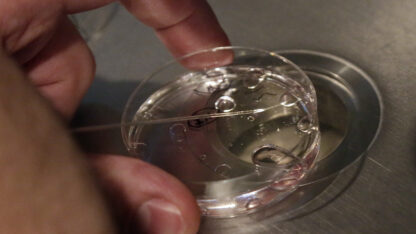
Three of the state’s major IVF providers had paused services after last month’s decision, which recognized embryos as “extrauterine children,” was issued in wrongful death cases brought by couples who had frozen embryos destroyed in an accident. Wednesday’s new law protects providers from lawsuits and criminal prosecution for the “damage or death of an embryo” during IVF services.
Read this story now for free
To continue reading, sign up for our newsletter and get unlimited access to WABE.org
You can select your preferences for news and local content. We will never share your email address. Learn how your newsletter sign-up will support WABE and Public Media