Justice-impacted businesswomen in Gwinnett find inspiration in Madam C.J. Walker

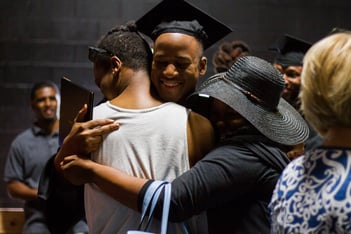
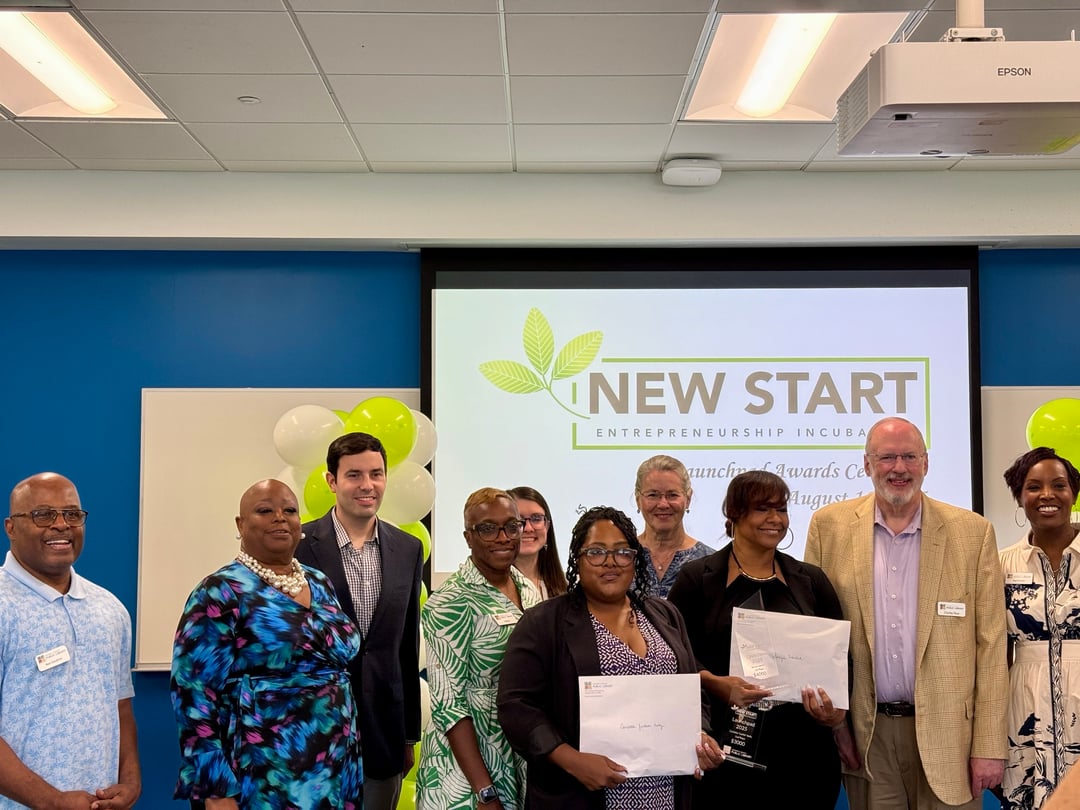
Two graduates in the latest cohort of the Gwinnett County Public Library's New Start Entrepreneurship Incubator program are awarded startup money during a ceremony at the Duluth branch on Aug. 16, 2025. (Chamian Cruz/WABE)

Amid a new wave of economic uncertainty, Georgians with a history of incarceration, who often face barriers to successfully reentering society, keep seizing on opportunities to start their own businesses.

Sonya Warlick and Carlotta Jackson-Kelly are two graduates in the most recent cohort of the Gwinnett County Public Library’s New Start Entrepreneurship Incubator program, who won a Shark Tank-style competition and were awarded a few thousand dollars each for their startups during a ceremony at the Duluth branch on Aug. 16.

Over the past couple of years, the six-month program has equipped dozens of formerly incarcerated people with business development skills and helped grow their ideas. Warlick and Jackson-Kelly hope that they’ll also see success despite potential challenges ahead.


“There’s nothing new under the sun, and even with our challenging times, we’ve been here before plenty of times in history.”

-Sonya Warlick, owner of Willow and Lavender skin care

According to the U.S. Department of the Treasury, higher levels of household wealth and renewed support for small businesses during the COVID-19 pandemic kick-started entrepreneurship. The agency estimates there have been over 19 million new business applications since the end of 2020.

While that pace has eased somewhat, it remains well above the steady pre-COVID rate. And for formerly incarcerated people, entrepreneurship is often the only choice they have to move forward with their lives.

Black women-run businesses are a sign of resilience

Like others in the early days of the COVID-19 pandemic, Warlick said her natural skin care business, Willow and Lavender, was born from experimenting in her kitchen and a desire to “look good and feel good.”

Sonya Warlick won first place in a Shark Tank-style competition for funding for her business, Willow and Lavender. (Chamian Cruz/WABE)

“Mentally, I might not be feeling my best, but I can whip this body butter up and get this glowing skin and get compliments and just feel like a goddess out here, because when you’re going through a lot in life, especially oppression, it does take a toll on your self-esteem,” Warlick said.

“It wears and tears you down, so this is like my way of self-empowerment for myself and others.”

Warlick’s brief incarceration in Ohio limited her job and housing opportunities once she was released, and therefore, her ability to support herself and her kids. But, she describes it as “divine” that one day, while sitting in a public library, she saw a flyer about the New Start program, which led her to this point.

“I understand a lot of people are not spending a lot when it comes to say makeup or entertainment, … but I’ll tell you what my inspiration is,” Warlick said. “Madam C.J. Walker. She’s an African American businesswoman who they say invented the hot comb to press women’s hair.”

Walker is considered to be the first female self-made millionaire in the U.S. Her daughter, A’Lelia Walker, took over after her death and managed to keep the company running through the Great Depression. However, its operations were reduced to a fraction of their original scale, according to the National Museum of African American History and Culture.

“I kind of look at history to inspire me for the present,” Warlick said, “because there’s nothing new under the sun, and even with our challenging times, we’ve been here before plenty of times in history.”

Already, Warlick has partnered with the nonprofit St. Vincent de Paul to provide “Willow kits” for women and men transitioning out of jail and homelessness. The kits include an affirmation card, a body butter and a body scrub.

Warlick said the most valuable lesson she learned from the New Start program was the importance of networking with like-minded people.

A lifeline is born after federal funding cuts

As for Jackson-Kelly, she said she was homeless just eight months ago, before she created the Vital Defense and Prevention Foundation. She was also incarcerated several times and is a survivor of domestic violence and addiction.

Carlotta Jackson-Kelly won second place in a Shark Tank-style competition for funding for her business, Vital Defense and Prevention Foundation. (Chamian Cruz/WABE)

“My sister, after many years of drug use, [died by] suicide, and that’s pretty much why I started my foundation,” Jackson-Kelly said. “What we do is we pass out fentanyl test strips and Narcan. We’re one of only three organizations in Georgia that do that, and we’re the only one that does it for free.”

Jackson-Kelly said she pivoted to a nonprofit model in November, so she’ll use the grant money she won from the library to purchase more kits and eventually, a van to offer mobile harm prevention services. That increases the public’s access to them, but it also leaves the foundation susceptible to the recent federal funding cuts.

“The work that we’re doing, while it’s incremental and it’s small right now, the need is so great,” Jackson-Kelly said.

“It’s uncomfortable to ask people for money sometimes, but [the cuts have] made me have to do that, because if I want to save lives, I’m going to have to open my mouth. So, it’s made me go for private grants and donations, Rotary club, things like that.”

She said fentanyl test strips are easy to use. They work by taking a pin-sized sample and placing it in water, followed by the application of the test strip.

“I would like fentanyl test strips and Narcan in every school, in every home, in every first-aid kit,” Jackson-Kelly said. “Let’s just get these conversations going and let’s get these things out to the people.”

The women’s advice for would-be business owners: No matter the obstacles, you can create your own lane.