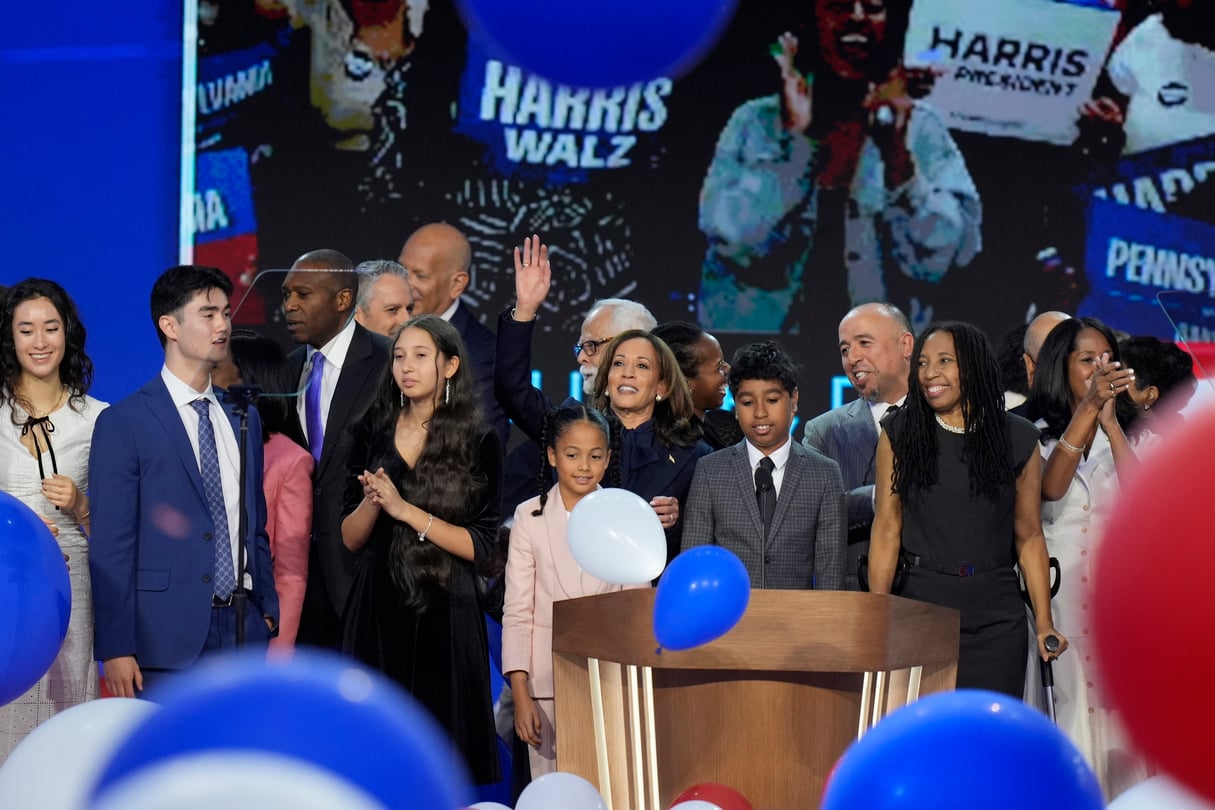
Vice President Kamala Harris, on the night she became the first woman of Black and South Asian heritage to be a major party’s presidential nominee, didn’t explicitly mention the racial and gender firsts she would set if elected to the White House.
Instead, she opted for direct mentions of her multiracial background and upbringing. She paid tribute to her roots as the daughter of a brown woman and Caribbean man. She honored the multicultural village of “aunties” and “uncles” in California’s Bay Area. And following her speech, the relatives who joined her onstage for the traditional balloon drop included people of different and often multiple, overlapping races, like Harris herself. Western attire and saris were worn side by side.
It was a way for Harris and others at the convention to display her personal story while offering a visual political message that could appeal to a broad swath of people who see themselves in families like hers. Around 12.5% of U.S. residents identified as two or more races in 2022, up from 3% a decade earlier, according to the U.S. Census Bureau’s most comprehensive survey of American life.
Read this story now for free
To continue reading, sign up for our newsletter and get unlimited access to WABE.org
You can select your preferences for news and local content. We will never share your email address. Learn how your newsletter sign-up will support WABE and Public Media