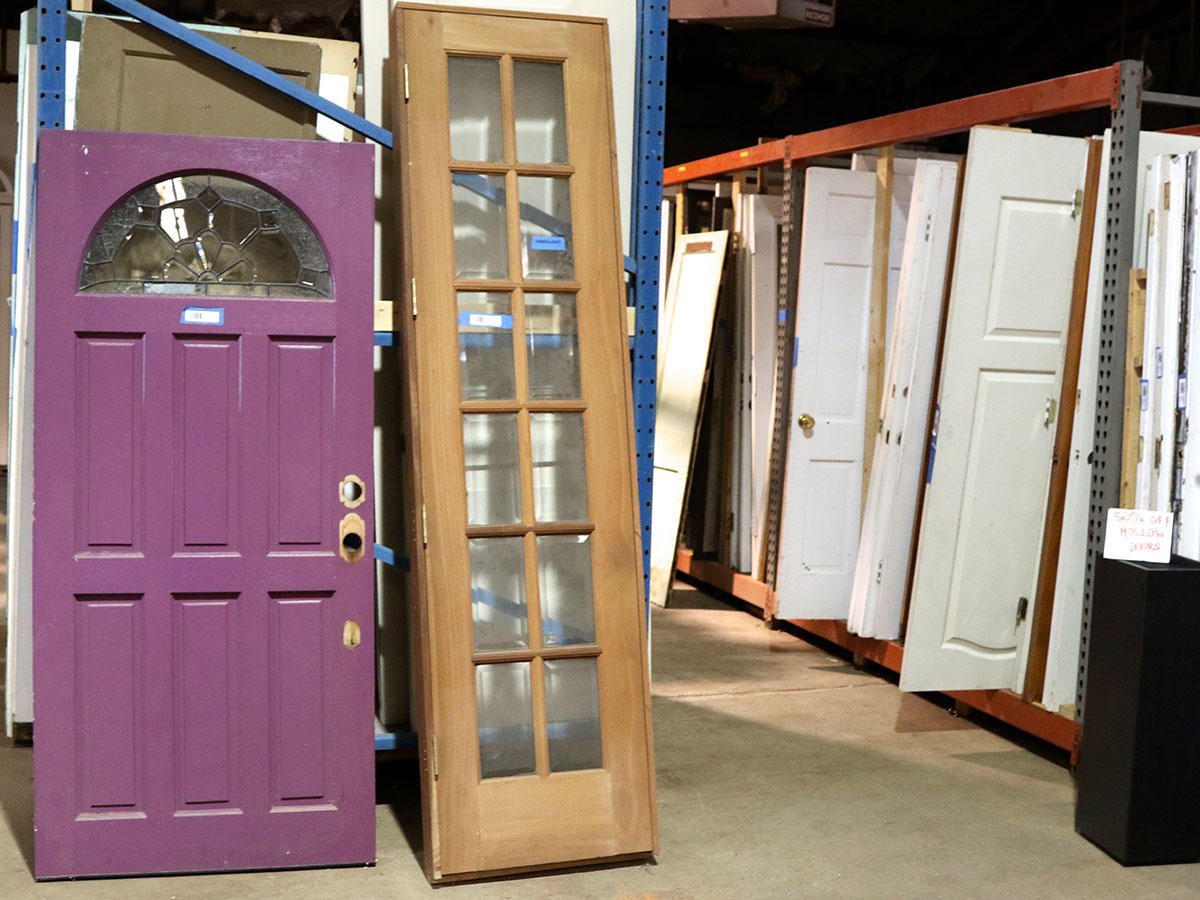
More and more doors to see in the door section at the Lifecycle Building Center of Greater Atlanta.
BRENNA BEECH / WABE
After a home is built or demolished, most building materials end up in landfills.
But at least 25 percent of materials – like tiles and kitchen cabinets – don’t belong there.
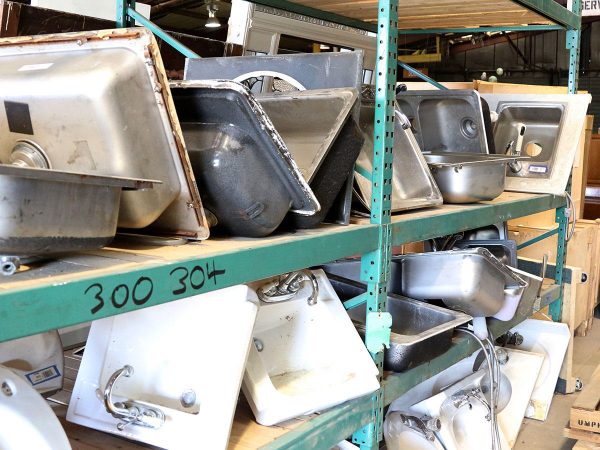
Recycled sinks for sale at the Lifecycle Building Center of Greater Atlanta. CREDIT BRENNA BEECH / WABE
A local nonprofit, the Lifecycle Building Center, has been helping to make the construction industry more sustainable.
At the 100-year-old warehouse on Murphy Avenue in Southwest Atlanta, operations director Adam Deck shows off a set of three high-quality windows.
They were sold to the Lifecycle Building Center after someone had remodeled a home.
Deck is the director of operations at the Lifecycle Building Center. The windows are next to rows of cabinet doors and kitchen faucets.
Maria Walker said she goes there when she renovates her rental properties.
“This is a much better deal than Home Depot,” Walker said. “This is usually stuff that may be recycled or sometimes reused, sometimes brand new. But the cost difference is huge.”
The center gets dump trucks full of materials donated from construction companies that it resells to people like Walker.
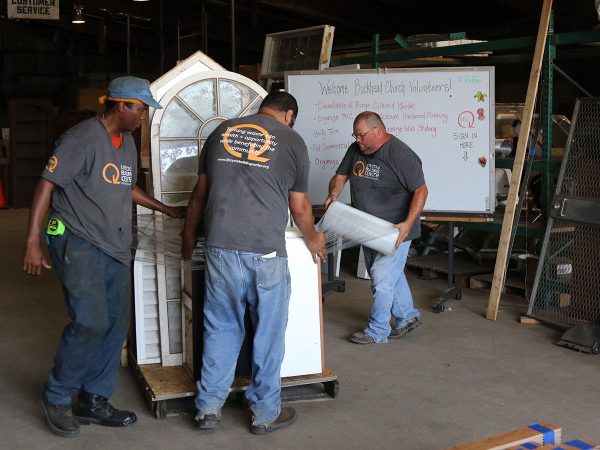
Raul Rivera, Bakaffa Schertz Agonafer and David Bedingfield pack up some items for auction at the Lifecycle Building Center. CREDIT BRENNA BEECH / WABE
One of the center’s partners has been Atlanta’s TV and film industry.
Deck said the center’s biggest customer is “The Walking Dead” TV show. And “The Hunger Games” donated $60,000 worth of plastic bins.
“They shipped them in from California and they used them in a backdrop behind one pan shot to block something,” Deck said.
Deck said most of his job is to play matchmaker … with local businesses and nonprofits.
Reed Thomas of local construction giant J.E. Dunn said it repurposes about two percent of its construction waste in Georgia.
“Building construction is not very sustainable when you look at it, but anything we can do to better that process, we try to do,” Thomas said.
Since opening in 2011, the center has passed on donations of building materials to other local nonprofits like Habitat for Humanity and Friends of Refugees in Clarkston.