Louisiana governor to pardon Plessy, of ‘separate but equal’ ruling
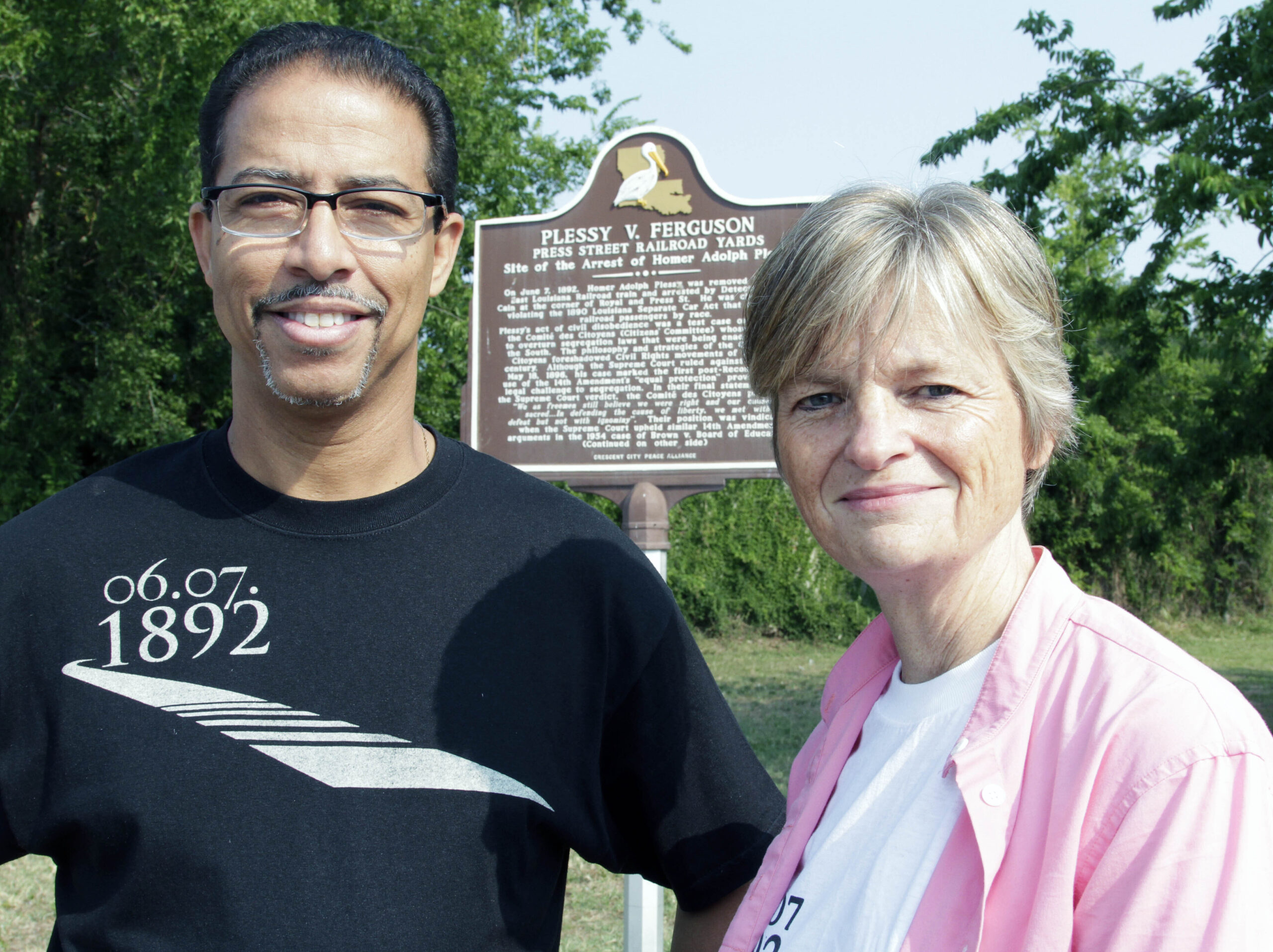
Keith Plessy and Phoebe Ferguson, descendants of the principals in the Plessy V. Ferguson court case, pose for a photograph in front of a historical marker in New Orleans, on Tuesday, June 7, 2011. Homer Plessy, the namesake of the U.S. Supreme Court’s 1896 “separate but equal” ruling, is being considered for a posthumous pardon. The Creole man of color died with a conviction still on his record for refusing to leave a whites-only train car in New Orleans in 1892. (AP Photo/Bill Haber, File)

Louisiana’s governor planned to posthumously pardon Homer Plessy on Wednesday, more than a century after the Black man was arrested in an unsuccessful attempt to overthrow a Jim Crow law creating “whites-only” train cars.

The Plessy v Ferguson case went to the U.S. Supreme Court, which ushered in a half-century of laws calling for “separate but equal” accommodations that kept Black people in segregated schools, housing, theaters and other venues.

Gov. John Bel Edwards scheduled the pardon ceremony for a spot near where Plessy was arrested in 1892 for breaking a Louisiana law requiring Black people to ride in cars that the law described as “equal but separate” from those for white customers. The date is close to the 125th anniversary of Plessy’s guilty plea in New Orleans.