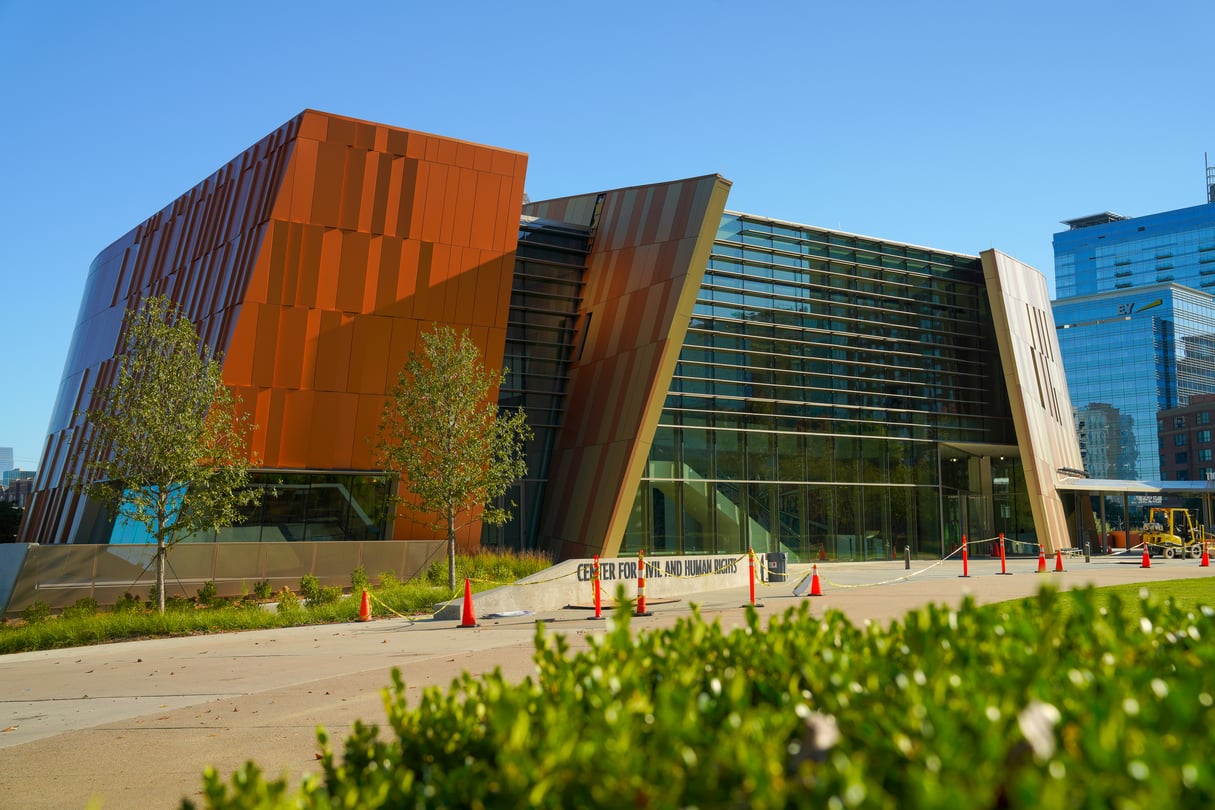
An exterior photo of the National Center for Civil and Human Rights. (Matthew Pearson/WABE)
The National Center for Civil and Human Rights saw its doors reopen on Saturday after a $57.9 million expansion added 24,000 square feet of new space, including several galleries, classrooms and interactive experiences.
Founded in 2014, the center has become well known for its dive into exploring the history of the U.S. Civil Rights Movement of the 1950s and ’60s, as well as global human rights issues affecting women, racial minorities and LGBTQ people.
The center was closed for over 10 months, beginning Janaury 2025, for the renovations. The development of new exhibitions were funded in part by the museum’s Fulfilling the Vision capital campaign, which raised over $52 million.
“Our reopening arrives at a pivotal moment,” said Jill Savitt, president and CEO of the National Center for Civil and Human Rights, in an October press release. “The Center exists to show how history speaks to the present. With these new galleries and spaces, we can offer not just stories of the past, but pathways for people to reflect, engage, and shape the future.”
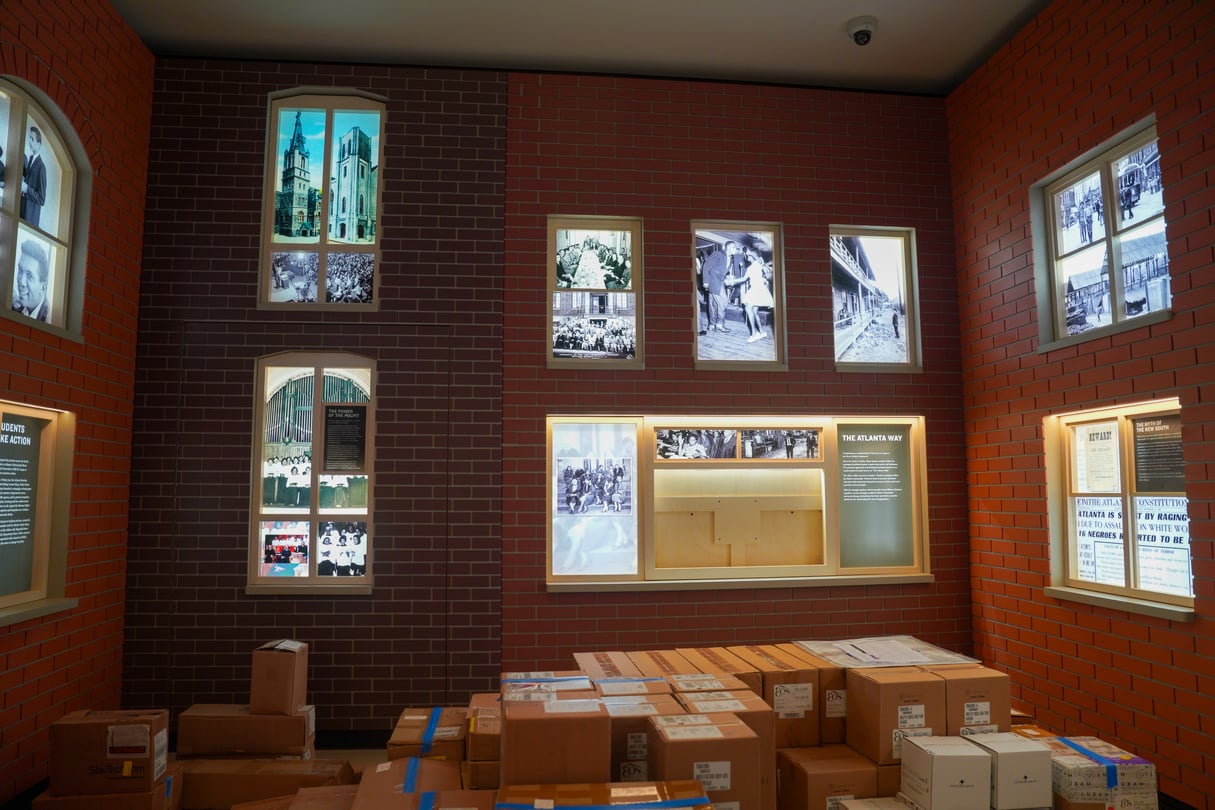
A new exhibit at the National Center for Civil and Human Rights tells the story of Black history in Atlanta. (Matthew Pearson/WABE)
According to the center, six new galleries have been introduced with the reopening, as well as updates to facility’s iconic gallery on the history of the Civil Rights Movement. They include:
A Committed Life: The Morehouse College Martin Luther King, Jr. Collection – A reimagined gallery devoted to Dr. King that will rotates artifacts twice a year, with a guest curator featured for each rotation.
Everyone. Everywhere: The Global Human Rights Movement – A new gallery featuring human rights issues and human rights defenders from around the world.
Action Lab – A space where visitors can create plans for their own civic engagement after visiting the center.
Change Agent Adventure – Opening in April 2026, “Change Agent” is a new gallery for children under 12 where they can act as change agents and engage in various interactive activities.
Broken Promises: The Legacy of the Reconstruction Era – Opening December 2025, the gallery will focus on Reconstruction, the pivotal period after the Civil War. It will feature the Without Sanctuary collection and a memorial by artist Lonnie Holley.
Special Exhibitions Gallery – This space will feature temporary and traveling exhibitions. The first presentation will be “Reclaiming History: Selections from the Tinwood Foundation,” featuring Black Southern artists who worked in the 1980s.
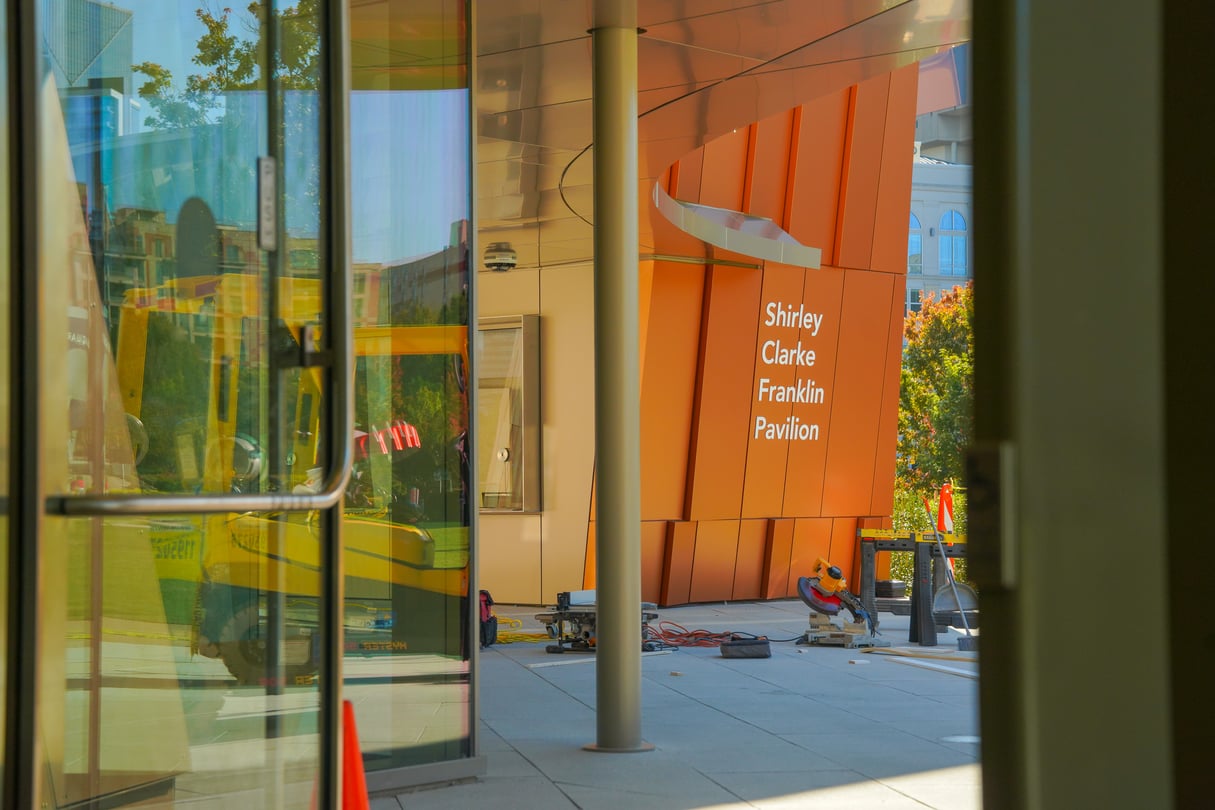
The renovated location also features two new wings named for two Atlantans — former Atlanta Mayor Shirley Clarke Franklin and business mogul Arthur M. Blank.
The Shirley Clarke Franklin Pavilion, on the east wing of the building, contains classrooms, meeting space and a rooftop terrace. In the west wing, Arthur M. Blank Inspiration Hall offers three of the premiering galleries, a store and a café.
Former Atlanta Mayor Shirley Clarke Franklin is one of the founders of the National Center for Civil and Human Rights. The museum’s new east wing is named after her. (Matthew Pearson/WABE)
Center officials say the reopening comes at a time of “heightened debate about how history is presented in museums and schools,” citing federal directives issued toward the Smithsonian Institution in recent months.
“American history has never been a straight road. It has always been a dialogue between progress and pushback, between our highest ideals and forces that resist them,” said Savitt. “This expansion gives us new ways to share those stories with integrity, and to remind people that all of us can help bend the arc toward justice.”