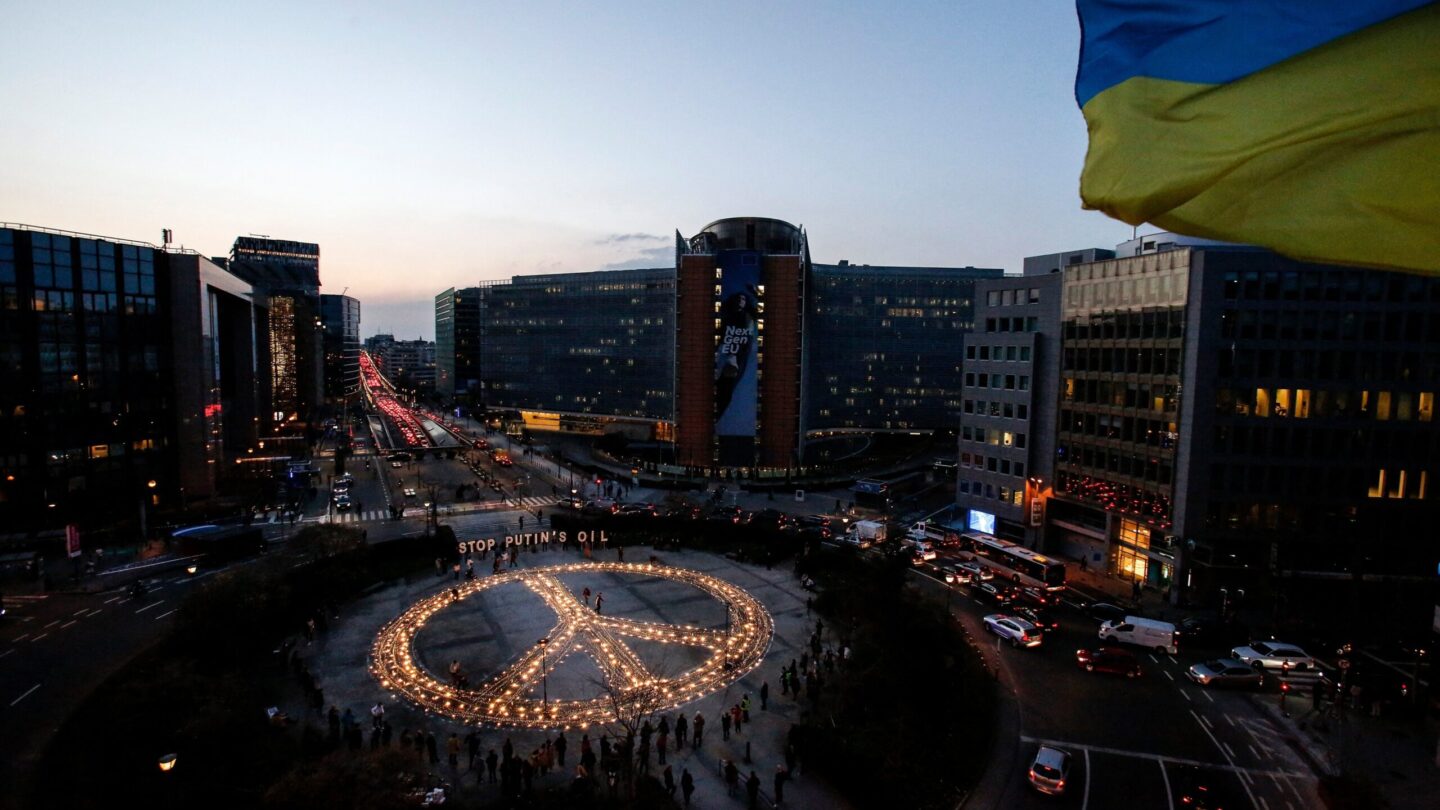
BRUSSELS — As the Russian invasion of Ukraine grinds through its fourth week, President Vladimir Putin’s greatest accomplishment so far may be one he never intended: a unified Europe.
This is a fractious continent, largely led by a bureaucratic institution, the European Union, where it can be difficult and slow to reach the consensus required to act. But the war has spurred the EU to unprecedented action and brought Europe together in ways not seen in decades.
“The level of unity and speed has been remarkable,” says Bruno Lete, a senior fellow at the German Marshall Fund of the United States, a think tank, over coffee near the EU headquarters. “I would say it’s the first time that we’ve seen the European Union moving so fast.”
Read this story now for free
To continue reading, sign up for our newsletter and get unlimited access to WABE.org
You can select your preferences for news and local content. We will never share your email address. Learn how your newsletter sign-up will support WABE and Public Media