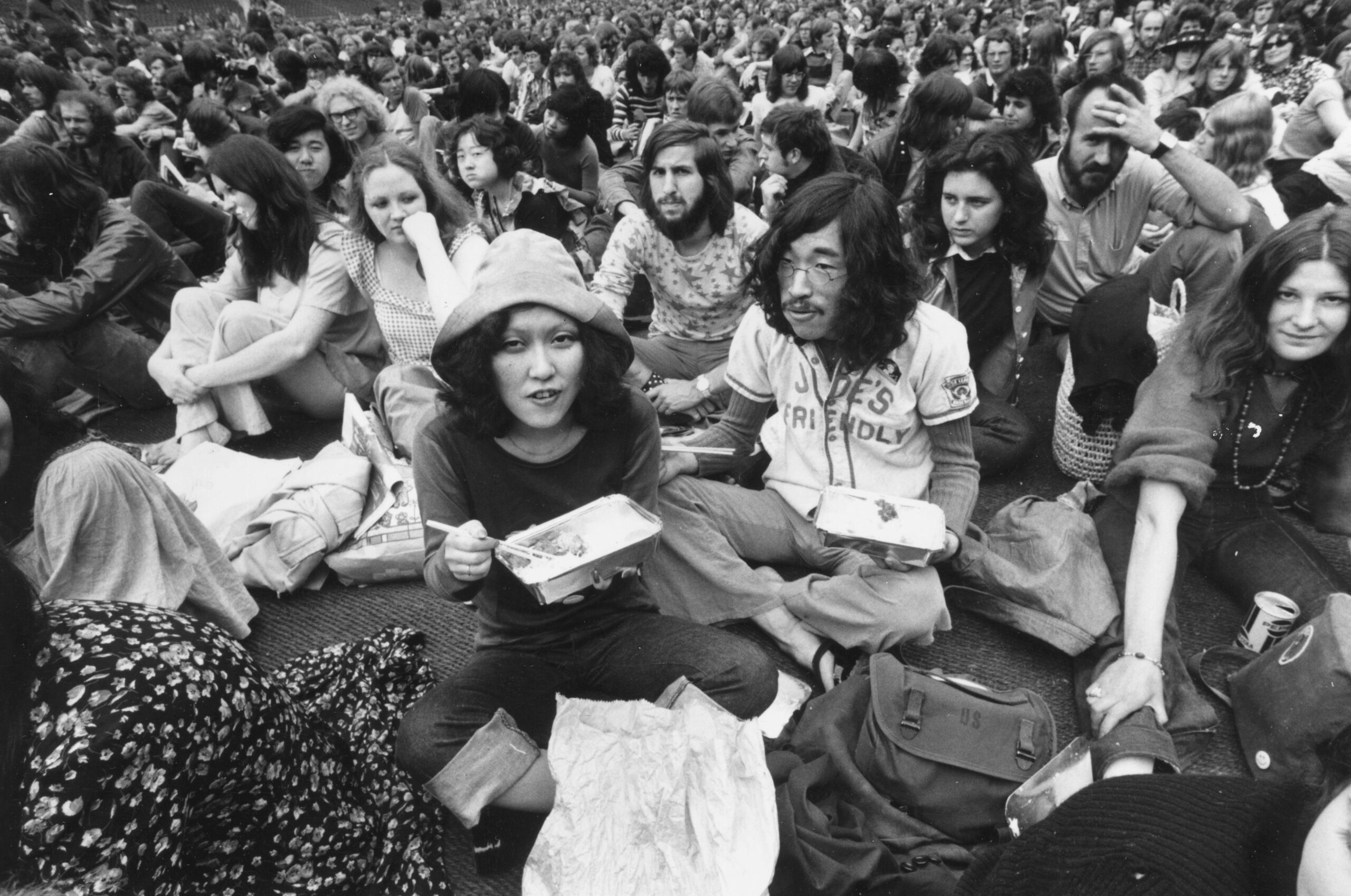
Frustrated with the Vietnam War, The Man, and the general state of the nation, hippies set out to do everything differently. They founded rural communes, dabbled in psychedelics and cultivated a laissez-faire approach to personal hygiene. But, like everyone else in the world, they had to eat.
Mainstream fare — Wonder Bread and frozen vegetables — clashed with their politics. So they explored and invented new foods, then enthusiastically shared their creations. And despite the disbanding of communes and the persistence of capitalism, many of those culinary contributions were long lasting. Jonathan Kauffman’s new book, Hippie Food: How Back-to-the-Landers, Longhairs and Revolutionaries Changed the Way We Eat, follows the people and places throughout the country that brought organic vegetables and whole wheat bread into the counterculture, and then, eventually, mainstream supermarkets.
Growing up in Indiana, Kauffman was raised on hippie food. Early exposure to carob didn’t turn him away from the cuisine; he still delights in the atmosphere of food co-ops. “There’s this smell that’s always the same, I’m not able to pinpoint what it is, but it’s a mix of bulk spices, essential oils, roast coffee,” he says. “It just makes me feel at home.”
Around a decade ago, Kauffman started to wonder where the roots of health food stores and vegetarianism led. So he took up this project alongside his day job as a food reporter at the San Francisco Chronicle. For the past five years, he’s rifled through old alternative newspapers, studied archives — including one dedicated to soy alone — and interviewed hippie organizers and cooks. His research left him with a fascinating picture of what longhairs ate and where they got it.
The earliest influences on counterculture cuisine cropped up before most hippies were even born. The Seventh Day Adventist Church pushed followers toward a vegetarian diet in the late 1800s, reaching pockets of people in the Midwest and Northeast. And on European communes in the early 1900s, naturmenschen, or natural men and women, eschewed meat and embraced free love.
One naturmensch, Arnold Ehret, brought his life-reform principles to Los Angeles in 1914. He espoused a “mucusless” diet, essentially fruits and vegetables with the occasional slice of toasted bread. And his approach took hold among an early cadre of people hoping to look young and beautiful forever: the Hollywood film industry. Southern California became the first hotbed of health food proselytizers, complete with specialized groceries and restaurants hawking juice, sprouts and avocados. While these foods laid the groundwork for a new approach to nutrition, they were a bit brighter than the meals that reached the first hippie plates.
The grub that initially fueled the hippie movement, macrobiotics, was similar to the grain bowls on offer today, but not as Instagram-ready. The founder of the macrobiotics movement, George Ohsawa, left Japan for America in 1960. He advocated a balance of dietary yin and yang, and plenty of brown rice, in his book, Zen Macrobiotics. Macrobiotics quickly took off in hippie circles in Boston and New York. “Counterculture kids picked it up in the late ’60s, so they were basically reinterpreting Japanese peasant food through the lens of 20-year-olds who didn’t know how to cook,” Kauffman says.
Culinary experimentation was widespread, and flavor wasn’t always the first consideration. In 1967, Joan Didion’s essay, Slouching Towards Bethlehem, followed young hippies in San Francisco. “Roots and things,” one woman told Didion, while someone else cooked up a batch of seaweed in the kitchen. “You can eat them.”
The prioritization of nutrition and vegetarian protein, coupled with a DIY ethos that prized self-sufficiency, also made it difficult to make truly delicious food, at first. Early organic carrots in Vermont came out of the ground blackened and small. Tennessee commune tables featured soybean tortillas and grayish tofu stir-fries. Other snacks were even worse. “The wonderfoods smoothies that they were concocting back then had molasses and skim milk and brewers yeast and wheat germ and, sometimes, raw eggs,” says Kauffman.
Understandably, many reactions to hippie food involved nose wrinkling, but that didn’t stop the hippies. They shared books, held lectures, published newspapers filled with writing and recipes. They started cooperative houses and businesses where they collectively decided to do things their own way. Kauffman encountered one grocery in Austin, Texas, that did its accounting by the phases of the moon. Most importantly, they hitchhiked around the country. Hippie travelers spread ideas far and wide, as fast as van wheels could roll.
Eventually, cooks in the ’70s brought a little more levity to the table. Incorporating international seasonings as well as more dairy, books like The Vegetarian Epicure and The Moosewood Cookbook began to feature tastier meatless food. Around that time, Mollie Katzen, who wrote The Moosewood Cookbook, invented The Enchanted Broccoli Forest, a cheesy brown rice casserole topped with broccoli spears standing upright in the pan to resemble trees. Tastier than the bare-bones macrobiotic fare of earlier years, The Enchanted Broccoli Forest was whimsical, and also heartier. In an effort to make more enticing food, dishes did sometimes feature gratuitous substitutions in place of meat. “Some of the world’s culinary glories were reduced to puddles of melted cheese,” Kauffman writes.
Fifty years later, the trial and error of the ’60s and ’70s can seem far away, but so many of these foods are still around. They’ve just wriggled free of their once-smelly reputations. Weightlifters wax poetic about brown rice, and Gwyneth Paltrow recommends cashew cream. In many ways, discerning eaters today reach for the same goals they did in the 1930s. “We’re still chasing after this mix of beauty and vitality and miracle transformation that just feels so American to me,” Kauffman says.
So next time you see a shopping cart that features gluten-free ingredients or organic vegetables for a Whole30 recipe, consider the hippies that first found their way to those foods. They didn’t succeed at rebuilding society or the economy. But, as they built and shared a cuisine that stretched beyond beige, mushy meals, they laid the foundation for the way we eat today.
Copyright 2018 NPR. To see more, visit http://www.npr.org/.
9(MDAxODM0MDY4MDEyMTY4NDA3MzI3YjkzMw004))