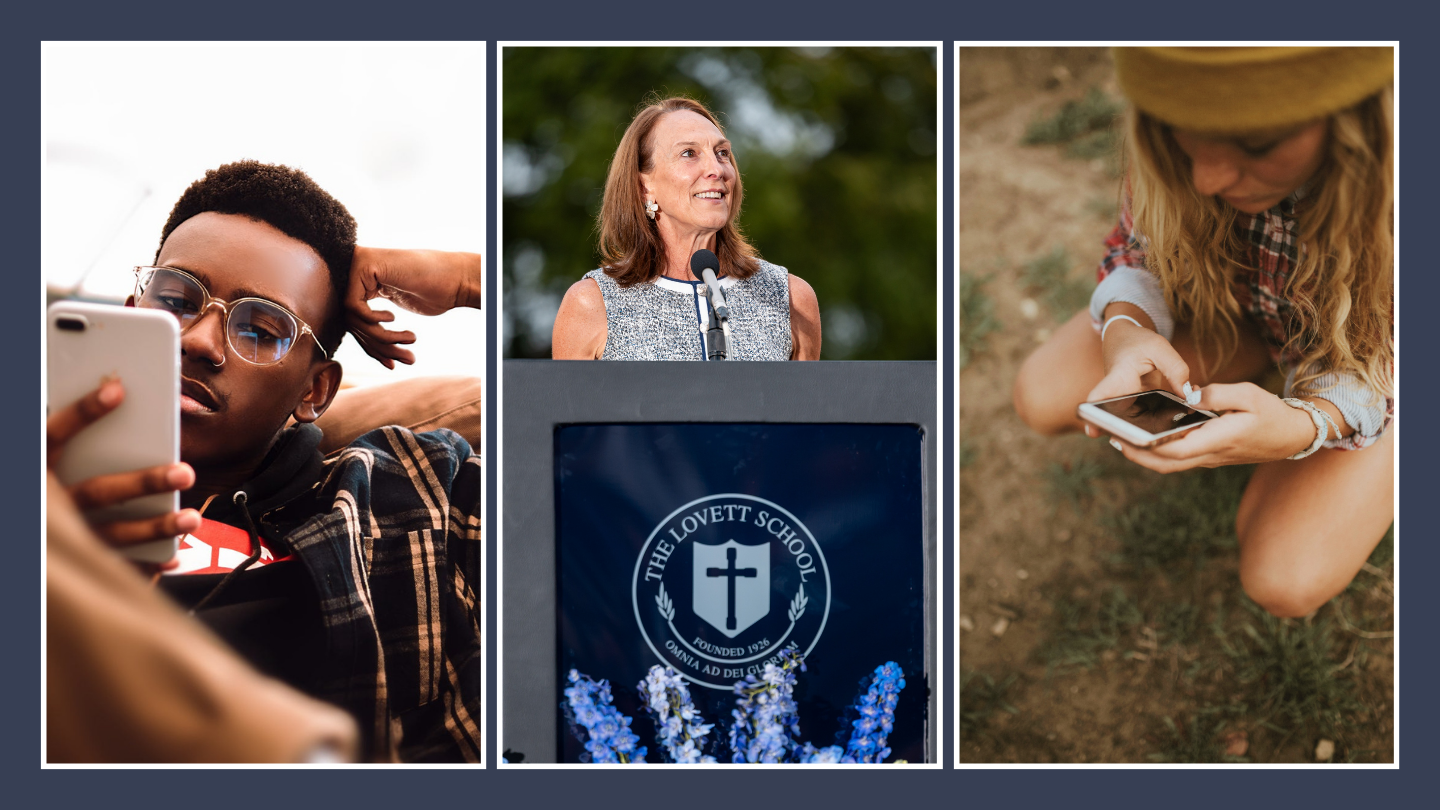
Lawmakers don’t agree on much, but a piece of legislation that passed the Georgia Senate unanimously this year is House Bill 1009. The so-called “bell-to-bell” rule bans cell phone use by students during the school day, with exceptions for students with special needs.
The measure Gov. Brian Kemp signed this year expands the restriction from kindergarten through 8th grade to now include high school students by the 2027 – 2028 school year.
“The improved outcomes following last year’s bill have been incredible, and this commonsense step will help both students and faculty learn in safer, distraction-free environments,” said Kemp during a bill signing ceremony earlier this year.
While some lawmakers say HB 1009 has received mostly positive feedback from the public, some worry about what could happen during an emergency. For example, during the September 2024 deadly shooting at Apalachee High School in Barrow County, many of the calls parents and 911 dispatchers received were from students on their phones inside the school.
On Tuesday’s “Closer Look with Rose Scott,” we spoke with the head of The Lovett School in Atlanta, which got a head start on Georgia’s cell phone ban in schools.
The school is home to 1,640 students in kindergarten through 12th grade. In 2024, The Lovett School implemented its phone restriction for students of every grade level a year before Georgia’s law for kindergarten through 8th grade took effect.
Head of School Meredyth Cole says it was a mission-driven decision to limit students’ cell phone access during the school day.
“First and foremost, the health and wellness of our kids and the amount of sleep they were getting and their ability to pay attention in classes and the emotional distress that social media plays in their lives,” said Cole. “I was thinking about faculty members who were trying to navigate and having to deal with making sure the kids were putting their phones away during class time.”
Cole said she also heard from parents who wanted help setting boundaries for when to introduce cell phones to their children, when to expose them to social media, and how to teach them how to use it as a tool.
While Cole says The Lovett School has experienced little pushback about the ban, the most frequent objection parents raise is what to do if there’s an emergency and parents need to reach their child. Cole emphasized that school safety experts have said that students are safer without access to a phone during a crisis, saying it’s not helpful in managing the emergency at hand.
“We have emergency alert capacity throughout our school. Every adult in the building has the capacity to alert the school that there is a crisis at hand, be it a medical crisis or something more severe,” said Cole.
She added that they make exceptions for cell phone access when students have medical issues and require connection with data on their smartphones. She also stresses that there are several phones available across the school campus if a parent needs to reach a child, or vice versa.
“They just don’t have to be cell phones,” Cole said.
Cole said she’s also seen a positive impact from students limiting their cell phone use at school, such as kids socializing more and making friends.