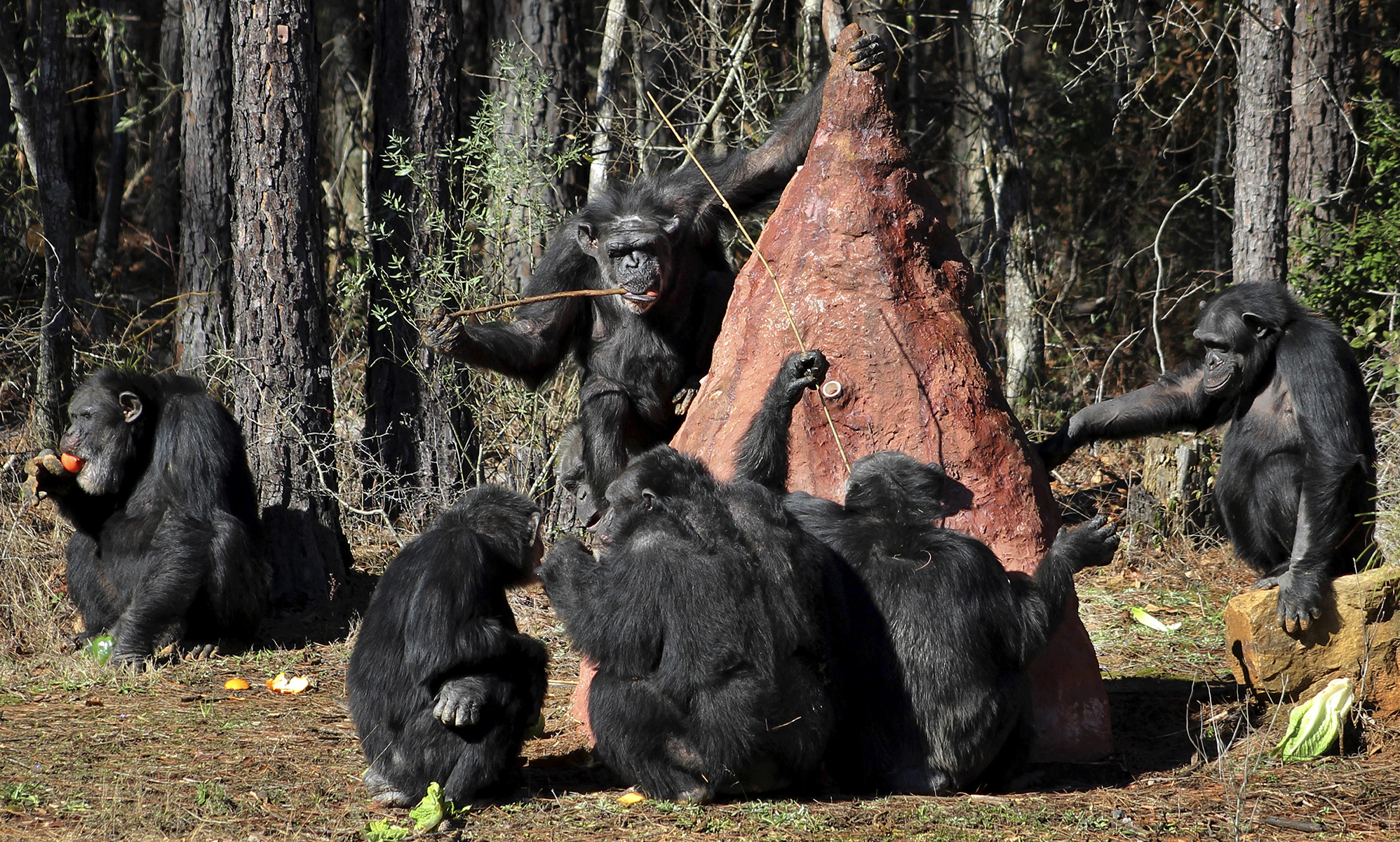
Sarah Anne, a 59-year-old chimpanzee, is famous enough to have her own Wikipedia page. That’s because she was captured from the wild as an infant and raised in the home of a language researcher who taught her to use symbols for words. These days, she lives at Chimp Haven, a wooded sanctuary for former research chimps in Louisiana, along with a new pal named Marie.
“And Marie loves to groom with Sarah, and follows her around and gives her lots of attention. And we’re seeing Sarah play with her and just being much more sociable,” says Amy Fultz, who studies animal behavior and co-founded Chimp Haven in 1995. “At 59, that’s a really cool thing to be able to see and watch.”
Their friendship shows that even very old chimps can grow and change. But it’s more than just a big deal for Sarah Anne. The arrival of Marie, along with some other chimps from a research facility in New Mexico, tipped the scales in terms of where most chimps live in this country.
Read this story now for free
To continue reading, sign up for our newsletter and get unlimited access to WABE.org
You can select your preferences for news and local content. We will never share your email address. Learn how your newsletter sign-up will support WABE and Public Media