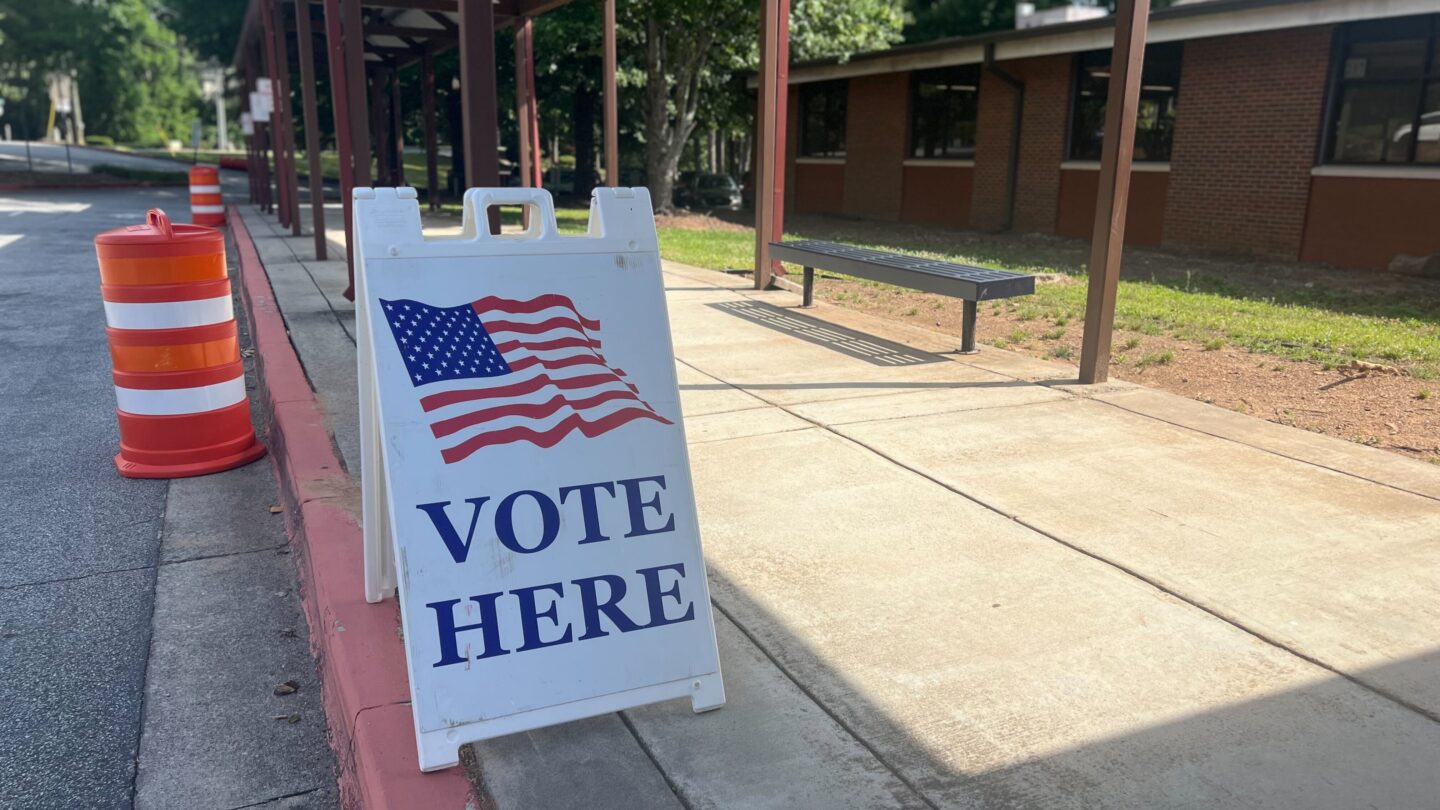
It’s Election Day in Georgia, the final day of voting in one of the more uncertain primary seasons in recent memory.
There are consequential races up and down the ballot this year, including for U.S. Senate, governor and other statewide offices, all 14 U.S. House seats, every seat in the state legislature, and many local seats.
But the sheer volume of candidates and lack of clear frontrunners means that, in many races, Tuesday could be just a dress rehearsal for June 16 runoffs. If no candidate receives more than 50% of the vote, the top two vote-getters advance to a runoff.
Polls will close statewide at 7 p.m. Counties will then release results from mail and early in-person votes shortly after that. Results will continue rolling in throughout the night.
Here are seven things to watch.
Who will win the $100 million GOP primary for governor?
You might have seen an ad or two (hundred) about this race.
Lt. Gov. Burt Jones, who comes from a wealthy Georgia family, has given his campaign $19 million. But billionaire Rick Jackson, a health care tycoon, has put more than $83 million of his fortune into the race.
President Donald Trump backs Jones, but his endorsement power has rarely been tested against that level of lopsided spending.
The Jones-Jackson slugfest has largely relegated Secretary of State Brad Raffensperger and Attorney General Chris Carr to a second tier in the race. But could one of them break through to the top two?
Four other candidates are fighting for the remaining oxygen in the race.
Will Keisha Lance Bottoms win the Democratic primary for governor outright tonight?
The polling has shown the former Atlanta mayor as the clear frontrunner, but not one that’s strong enough to get over 50% of the vote and avoid a runoff. But if the pollsters are underestimating Bottoms’ support, she could pull it off.
The other candidates appear to be fighting for a spot in a potential runoff against Bottoms.
They include former Atlanta School Board chair and former state Sen. Jason Esteves, former Republican Lt. Gov. Geoff Duncan, and former state labor commissioner and former DeKalb CEO Mike Thurmond.
Three other candidates are also in the race.
Which Republican will face U.S. Sen. Jon Ossoff in November?
It’s yet another race with no dominant frontrunner and a fight for the two spots in a likely runoff.
The three leading candidates are U.S. Reps. Buddy Carter and Mike Collins, as well as former University of Tennessee football coach Derek Dooley, who has Kemp’s endorsement. President Trump has stayed out of this race.
Carter has outraised and outspent the rest of the GOP field, but he, Collins and Dooley began the month on roughly equal financial footing with campaign war chests of about $1.7 million each.
An Ossoff reelection victory in November is critical to Democratic hopes of retaking the chamber.
Will Democrats continue their strong voter turnout advantage, and will the state break another turnout record?
Over 1 million Georgia voters turned out during early voting, breaking a record for early voting in a primary election.
But the larger story was Democrats flipping the script on Republicans, going from a 15 percentage point turnout disadvantage during early voting in the last midterm primary in 2022, to a 15 percentage point advantage over Republicans this year.
That 30-point red-to-blue swing could affect the nonpartisan judicial races on Tuesday, especially the two contested state Supreme Court races. Will Democrats continue dominating in turnout on Tuesday, or will Republicans catch up with an Election Day surge?
Speaking of the state Supreme Court races, will all the controversy lead to the incumbents falling, or the status quo?
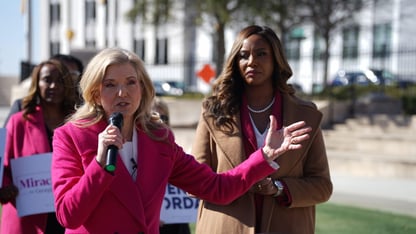
Miracle Rankin and Jen Jordan are challenging incumbents Charlie Bethel and Sarah Hawkins Warren, respectively. Eight of the nine justices on the court — including Bethel and Warren — were appointed by Republican governors.
Judicial elections in Georgia are officially nonpartisan, but endorsements, party involvement and issues-based campaign messaging have made the races increasingly partisan in recent years — perhaps none moreso than this year.
Bethel and Warren have criticized Rankin and Jordan for campaigning in part on their policy positions. Georgia’s Judicial Qualifications Commission weighed in the day before the election, saying Rankin and Jordan violated its rules of conduct by endorsing one another and running on the issue of restoring abortion rights in Georgia.
Prominent national and local figures from both parties have waded into the races, including Gov. Brian Kemp stumping for Bethel and Warren.
Incumbent judges rarely ever lose elections in Georgia. Will that change on Tuesday, leading to a shakeup in the makeup of the court?
Who will the new Georgia members of the U.S. House be?
Georgia’s U.S. House delegation will look a lot different come January. Two members (Carter in the 1st District in Coastal Georgia and Collins in the 10th District in East-Central Georgia) ran for U.S. Senate instead; one (Barry Loudermilk in the 11th District in Northwest Georgia) is not running for reelection; and one (David Scott in the 13th District in metro Atlanta) died last month during his reelection bid.
That’s not to mention former U.S. Rep. Marjorie Taylor Greene’s 14th Congressional District seat in Northwest Georgia. She resigned earlier this year, and former district attorney Clay Fuller won a special election against Democrat Shawn Harris last month to fill the remainder of Greene’s term.
Fuller and nine others are running in Tuesday’s Republican primary. He is a heavy favorite to come out of the primary and face Harris in a rematch in November to see who will serve the full two-year term.
How many races will go to June runoffs?
The short answer? Likely a lot.
Starting at the top of the ballot, we are likely to see June 16 runoffs in the Republican primary for U.S. Senate and both primaries for Georgia governor. Ossoff is running unopposed in the Democratic primary for U.S. Senate.
There are three candidates in the GOP primary for U.S. Senate, seven in the Democratic primary for governor, and nine in the Republican primary for governor.
Several races for U.S. House, statewide office, state legislature and local office also appear likely to go to a runoff, which historically has lower turnout than other elections.