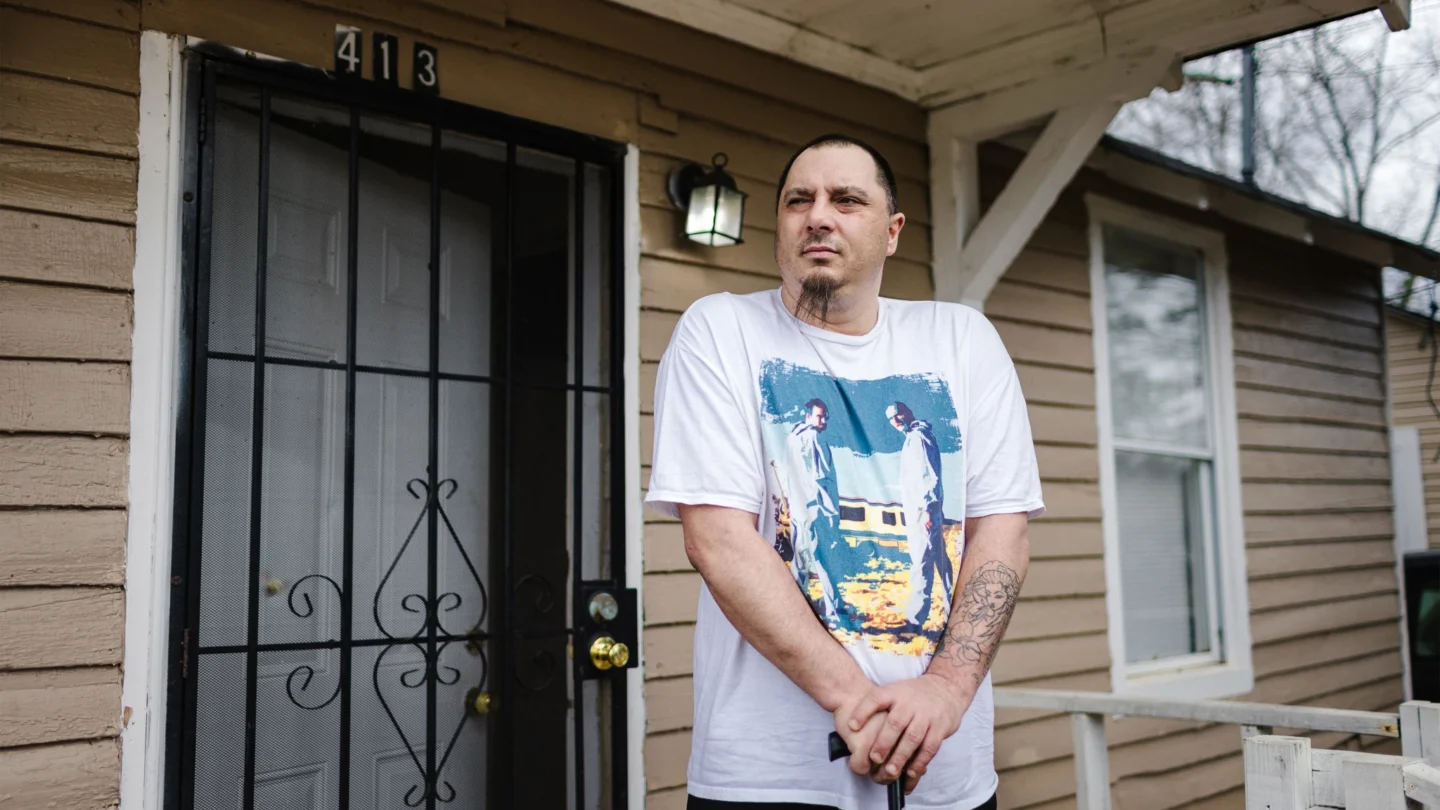
When Matthew Boyd was released from a Georgia state prison in December 2020, officials sent him home without medicines he uses to manage chronic heart and lung conditions and high blood pressure, he said.
Less than a month later, he spent eight days in an intensive care unit, the first of more than 40 hospital stays since. These days, he can barely get out of bed in his home south of Atlanta.
“It makes my life so miserable,” said Boyd, 44, who has chronic obstructive pulmonary disease. He told his story to KHN over email and text because he sometimes has trouble talking without losing his breath.
Read this story now for free
To continue reading, sign up for our newsletter and get unlimited access to WABE.org
You can select your preferences for news and local content. We will never share your email address. Learn how your newsletter sign-up will support WABE and Public Media