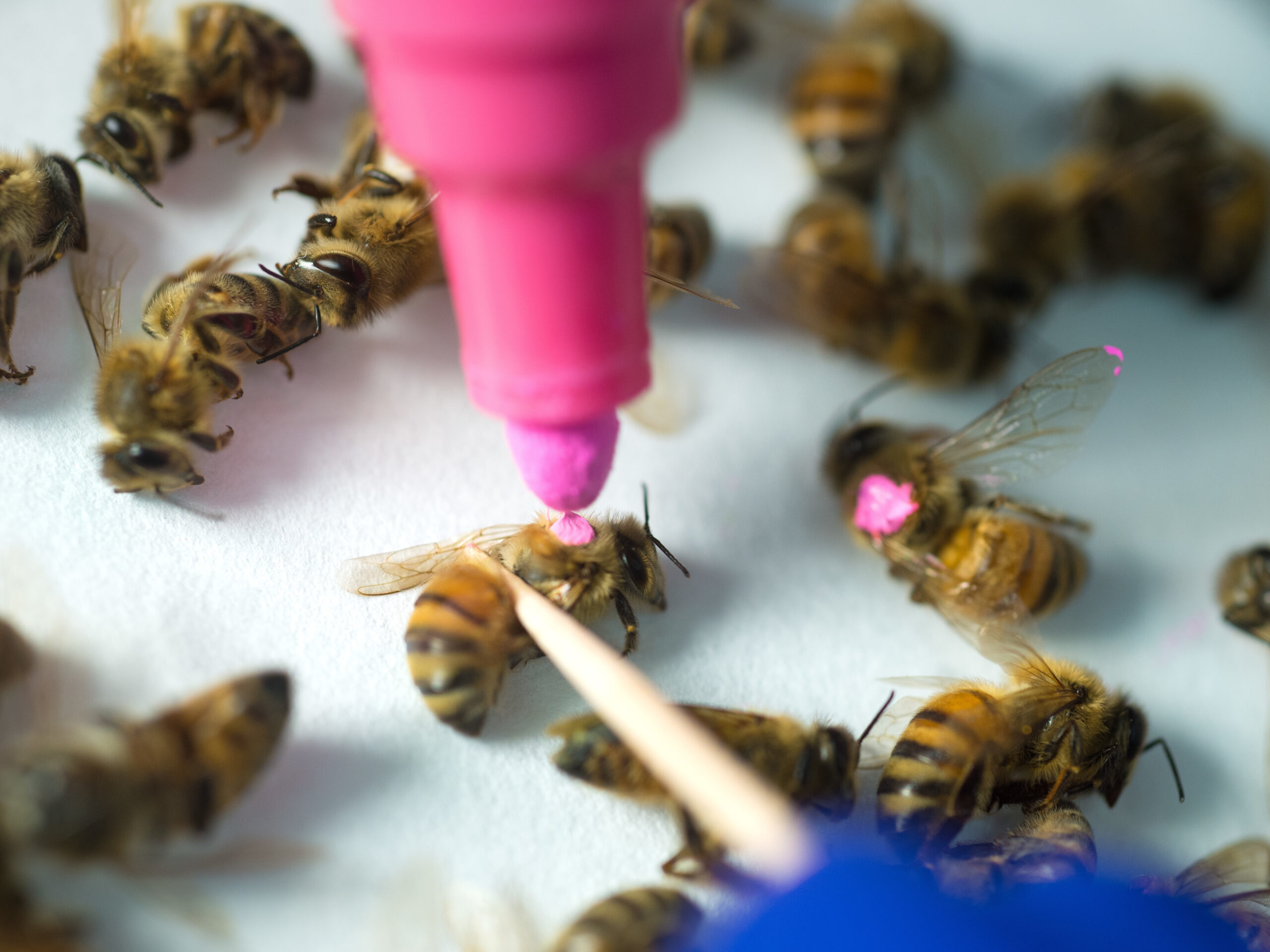
The controversial herbicide Roundup has been accused of causing cancer in humans and now scientists in Texas argue that the world’s most popular weed killer could be partly responsible for killing off bee populations around the world.
A new study by scientists at the University of Texas at Austin posit that glyphosate — the active ingredient in the herbicide — destroys specialized gut bacteria in bees, leaving them more susceptible to infection and death from harmful bacteria.
Researchers Nancy Moran, Erick Motta and Kasie Raymann suggest their findings are evidence that glyphosate might be contributing to colony collapse disorder, a phenomenon that has been wreaking havoc on honey bees and native bees for more than a decade.
Read this story now for free
To continue reading, sign up for our newsletter and get unlimited access to WABE.org
You can select your preferences for news and local content. We will never share your email address. Learn how your newsletter sign-up will support WABE and Public Media