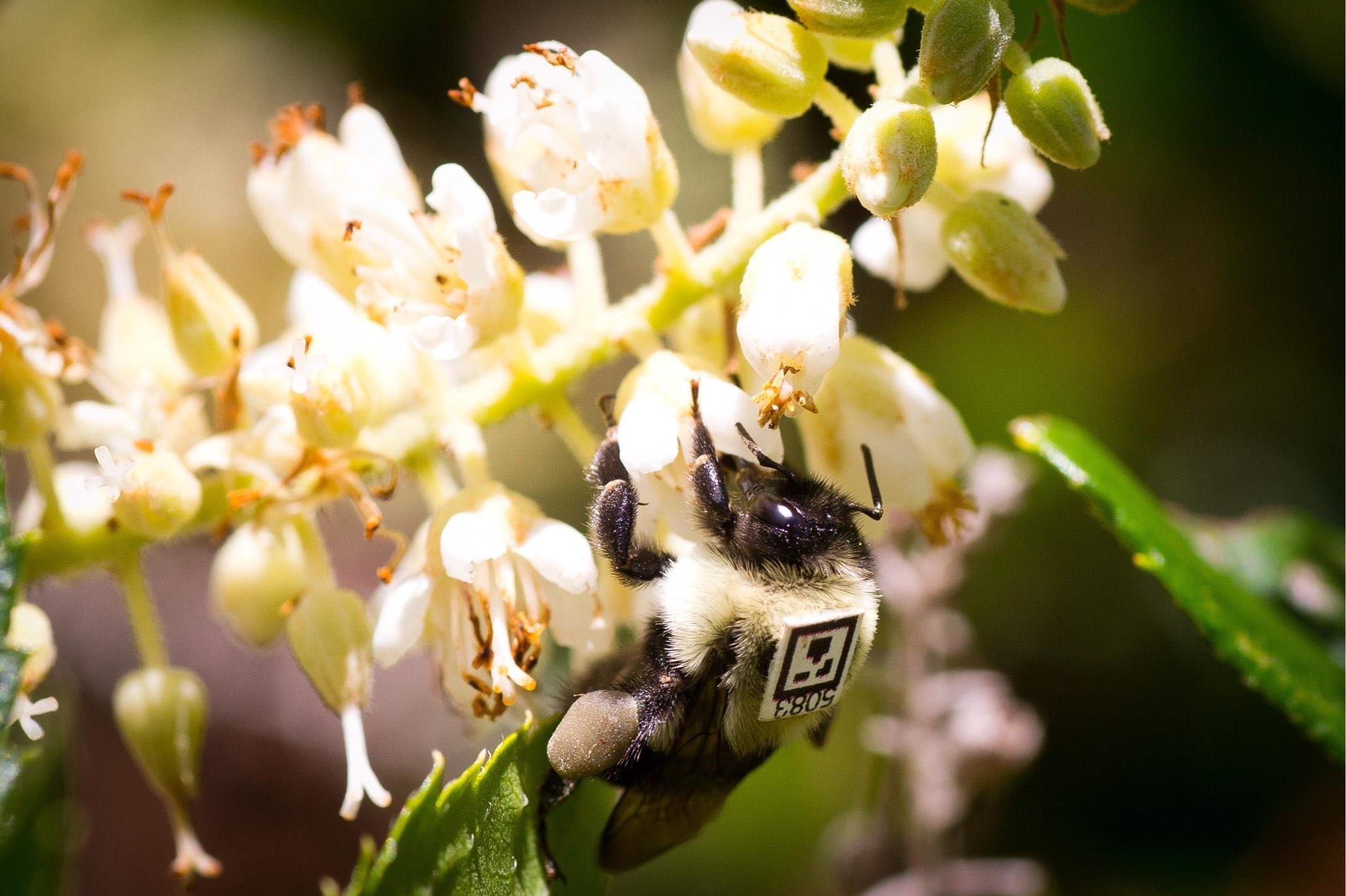
A team of researchers peered inside bumblebee colonies and spied on insects individually labelled with a tiny tag to figure out exactly how exposure to a common insecticide changes their behavior in the nest.
They found that the insecticide — from a controversial group called neonicotinoids — made the bees more sluggish and antisocial, spending more time on the periphery of the nest. It also made them less-attentive parents, according to research published Thursday in the journal Science.
Neonicotinoids, commonly known as “neonics,” are near-ubiquitous in farming in many countries. They’re commonly applied to the seeds of crops such as corn or soy before planting. The plant then carries traces of the insecticide as it grows, even showing up in the pollen, which scientists believe is one way bees are exposed. As NPR’s Dan Charles has reported, “neonicotinoid residues also have been found in the pollen of wildflowers growing near fields and in nearby streams.”
Read this story now for free
To continue reading, sign up for our newsletter and get unlimited access to WABE.org
You can select your preferences for news and local content. We will never share your email address. Learn how your newsletter sign-up will support WABE and Public Media