It’s an early, crisp morning as the hustle and bustle of downtown Atlanta gradually gains momentum.
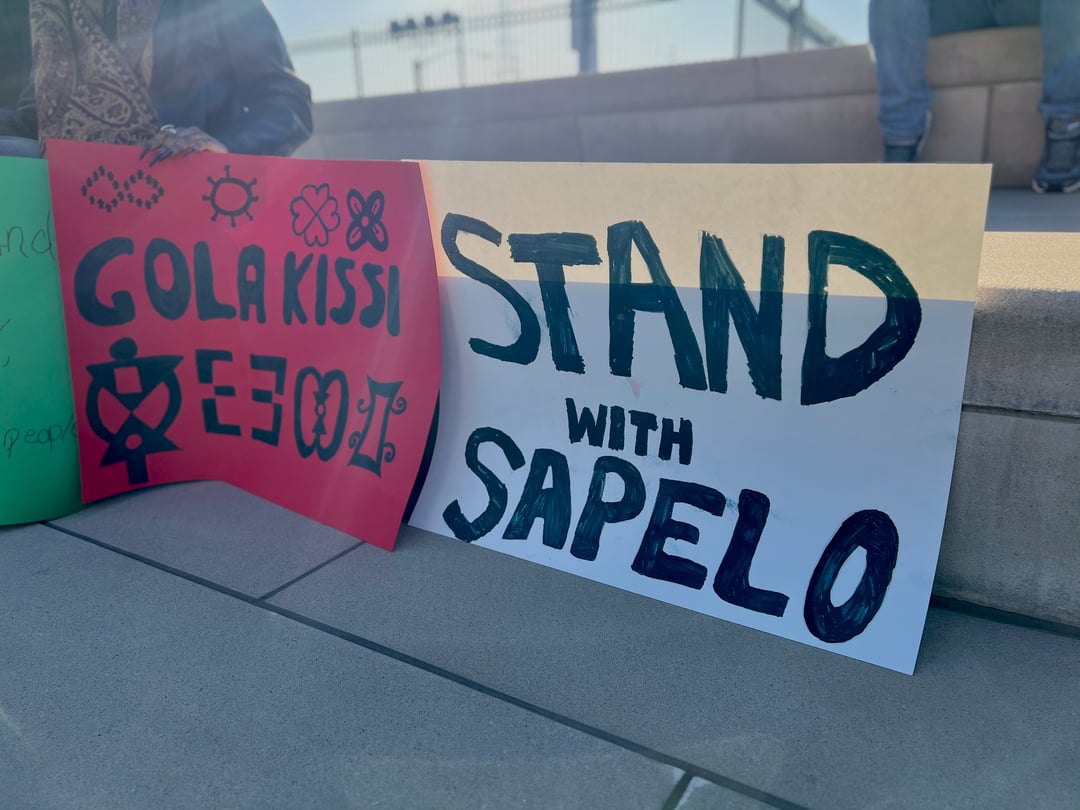
The cool breeze blows into Liberty Plaza, just beside the state capitol, as people trickle in with brightly colored signs.
One reads “Protect Sapelo Island.”
Folks gathered here are advocates and residents of Sapelo Island, home to one of the South’s last Gullah-Geechee communities.
The small rally is just a short walk from the Georgia Supreme Court, where supporters will hear oral arguments on the long-running grievances from 2023.
“To the Supreme Court … if there’s justice in your halls, then there must be justice for Sapelo,” said Georgia House Rep. Sandra Scott, who attended the rally.
About 60 miles south of Savannah, the Sapelo community has been in litigation over McIntosh County zoning concerns they fear could force residents out of the historic area.
In 2023, the county’s Board of Commissioners adopted a zoning ordinance that doubled the size of homes allowed in the landmark neighborhood called Hogg Hummock, or Hog Hammock.
Some residents say that the rezoning decision will lead to higher or unaffordable taxes, essentially pushing out legacy Gullah-Geechee families.
Daniel Udebor is 16 years old and says he’s a descendant of Sapelo Island.
“Sapelo isn’t just a place, it’s who we are. Our ancestors fought hard to preserve this land, and now it’s our turn to stand up and protect it,” Udebor said. “We deserve to live and grow in a community that respects our roots and lets us decide what happens to our home.”
The Gullah-Geechee people and culture on the island dates back to the era of slavery, specifically in the South. They are descendants of ensalved African people from Angola and Sierra Leone.
Ancestors of the Gullah-Geechee heritage worked on coastal rice, sea island cotton, or indigo plantations, spanning from the coasts of North Carolina down to Florida.
Today, fewer than 50 Black residents live within Hogg Hummock — and advocates say rezoning will weaken land protections on the sparsely populated island.
Sapelo’s back and forth with the county intensified last fall when seven people, known as the Sapelo Seven, died as the island’s ferry gangway collapsed on its annual celebration of Hogg Hummock Cultural Day.
Since the move by the McIntosh County commissioners, members of the Gullah-Geechee and others petitioned to reverse the act through “Home Rule,” a provision of the Georgia Constitution that grants local governments a certain amount of autonomy.
With over 2,000 signatures from county voters, the petition was verified last year by McIntosh County Probate Judge Harold Webster. The effort was meant to force a referendum, or general vote, on whether to repeal the rezoning.
The referendum was later approved by Webster, but the McIntosh commissioners wanted to block the general vote, and Superior Court Judge Gary McCorvey sided with the county.
“[The] County’s counsel advised the trial court that he ‘believed [the proposed] referendum is illegal’ [and that] McIntosh County should not fund it,” case documents stated.
According to them, the Home Rule doesn’t apply to zoning decisions.
But just before the verdict, voting had already begun. McCorvey halted the active voting, though nearly 800 people had cast ballots on repealing the zoning changes.
Months later, McCorvey put a pause on the county enforcing the rezoning while residents took their appeal to the Georgia Supreme Court.
Currently, three appeals await decisions related to the Sapelo Island rezoning case.
And on Wednesday, April 16, counsel for the island residents, Phillip Thompson, presented his argument to the dais.
“Respectfully, the resolution of these issues under Georgia law is clear,” Thompson said. “The county has no standing to interfere with the referendum process because it has no legal right at issue in this case.”
Advocates hope to reverse the zoning decision and pursue a county-wide special election if the Supreme Court rules in their favor.
A verdict on the appeals could come before the end of the year.