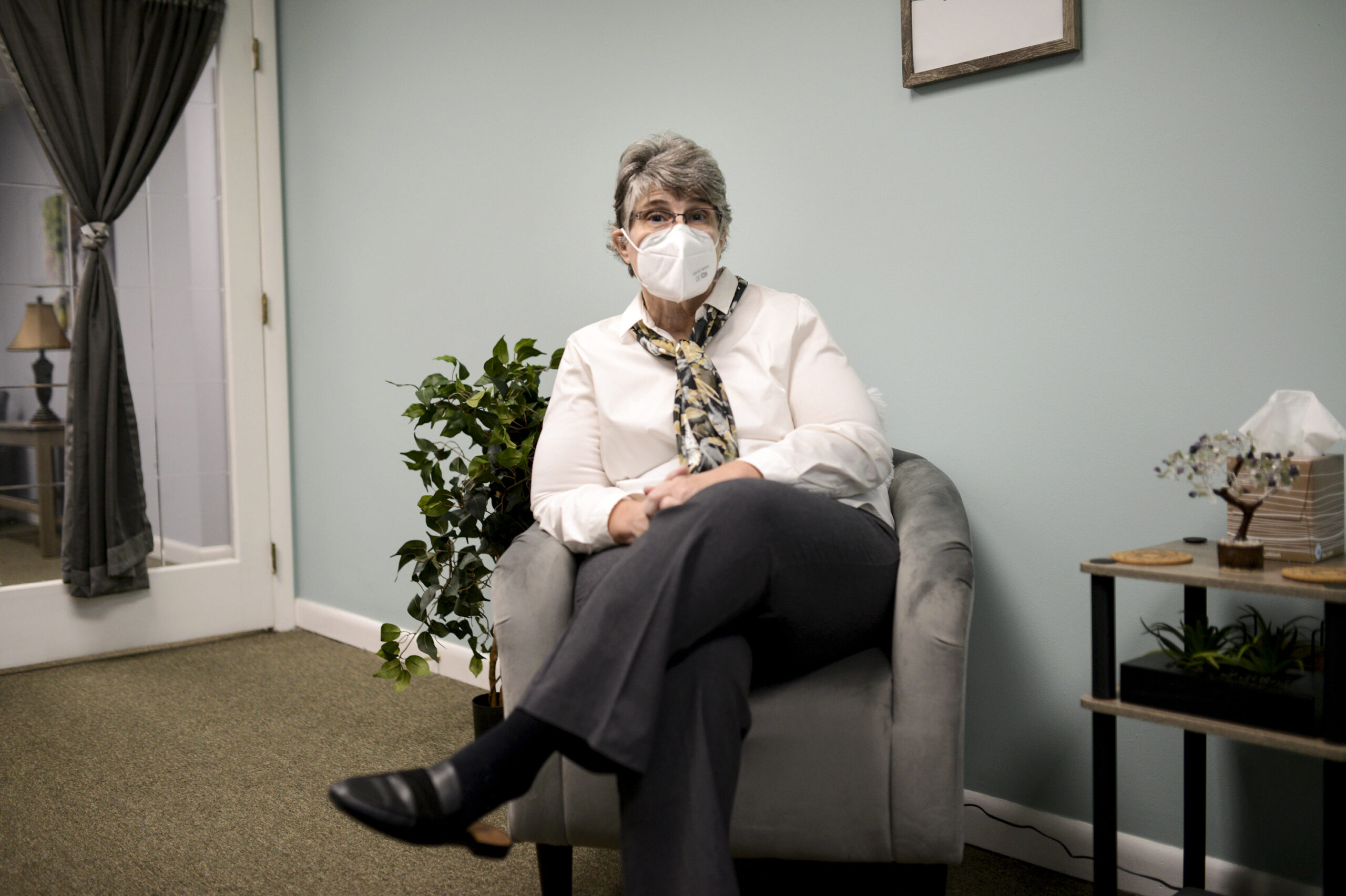
When COVID-19 first arrived in the U.S., Jodee Pineau-Chaisson was working as the director of social services for a nursing home in western Massachusetts called Center for Extended Care in Amherst. By the middle of April, residents were getting sick.
In early May, Pineau-Chaisson was tapped for a particular duty: “I was asked to go on to the COVID-19 units to do FaceTime calls, so they could say goodbye to their family members,” she recalls. “I was very scared.”
She was worried about contracting the virus, but also felt like she owed it to her residents. So, at 55 years old and with no pre-existing conditions, Pineau-Chaisson put on an N95 mask, a white jumpsuit, and she entered the units to help. Three days later, she had COVID-19.
Read this story now for free
To continue reading, sign up for our newsletter and get unlimited access to WABE.org
You can select your preferences for news and local content. We will never share your email address. Learn how your newsletter sign-up will support WABE and Public Media