As Kwanzaa approaches, the African Diaspora Art Museum of Atlanta is positioning the seven-day cultural observance not as a standalone holiday program, but as a lens through which visitors can understand the museum’s mission, exhibitions and long-term vision.
At ADAMA, Kwanzaa’s principles — particularly Kujichagulia, or self-determination — inform how the institution presents African diaspora art and how it imagines its future in Atlanta’s cultural landscape.
Art as self-definition
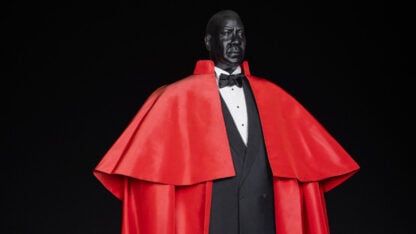
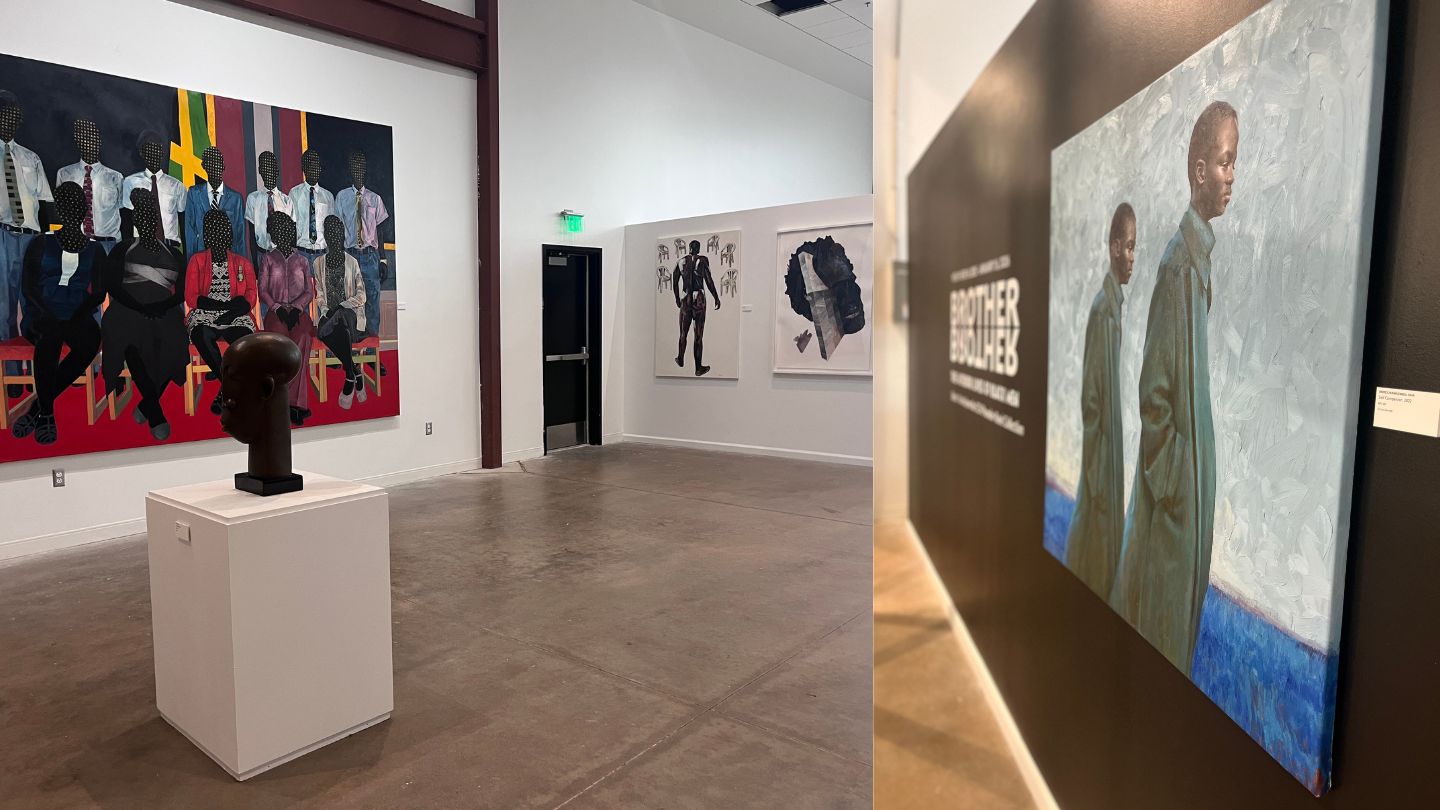
That framework is visible throughout “Brother, Brother: The Interior Lives of Black Men,” a 30-work exhibition curated by Fahamu Pecou, ADAMA’s director. The show draws exclusively from the personal collection of actor CCH Pounder, whose decades-long commitment to collecting African diaspora art has resulted in holdings expansive enough to support multiple thematic exhibitions. Pieces range from monumental paintings that confront viewers head-on to intimate works rendered in fiber, drum surfaces and small-scale formats. Together, they challenge inherited assumptions about how Black men are expected to appear, behave or be read.
Read this story now for free
To continue reading, sign up for our newsletter and get unlimited access to WABE.org
You can select your preferences for news and local content. We will never share your email address. Learn how your newsletter sign-up will support WABE and Public Media