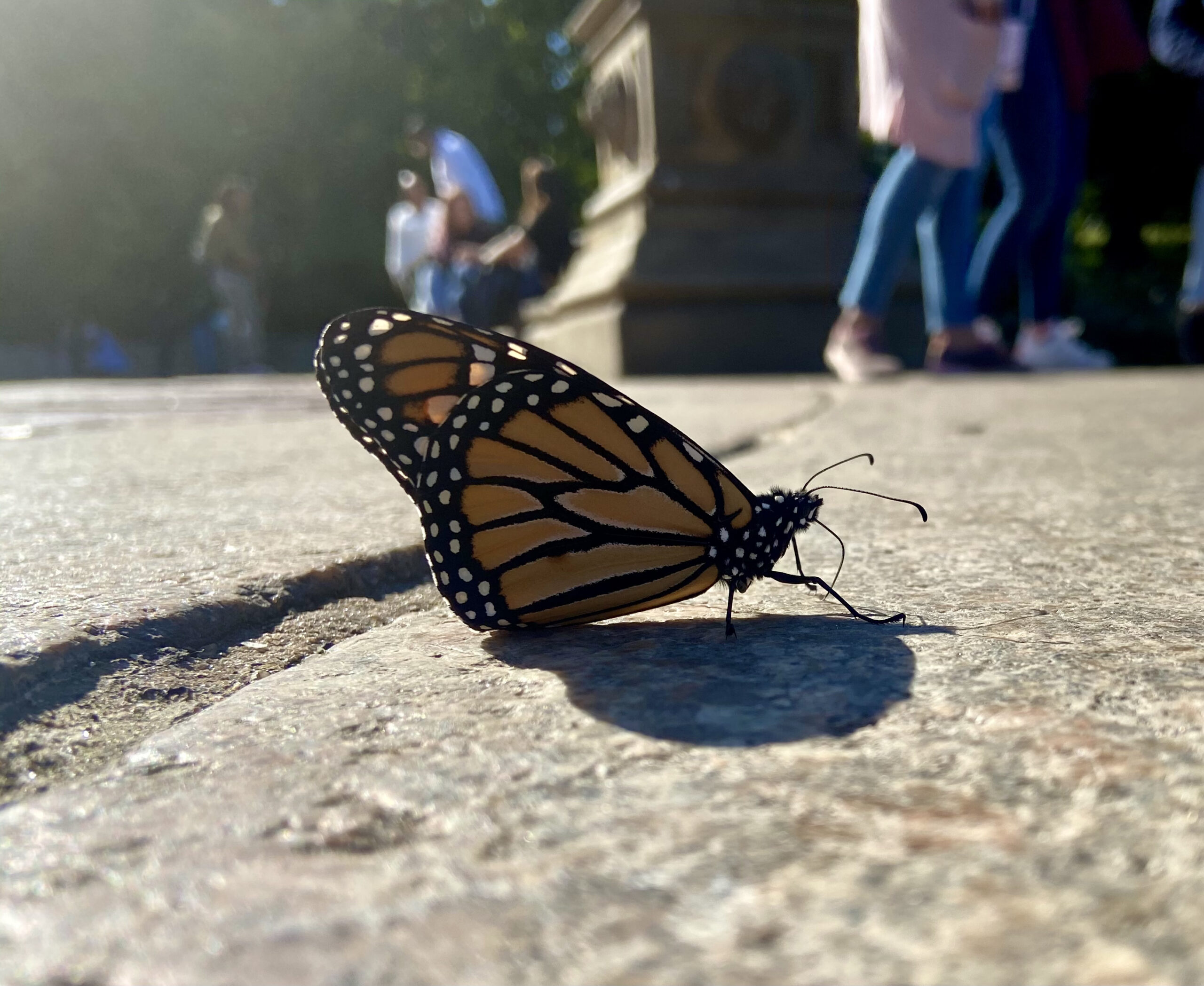
Georgia residents can expect to see monarch butterflies two times during the year: in the spring, when the orange and black insects lay their eggs all over the state, and in the fall, when adult butterflies make a pitstop during their 3,000-mile journey back to their overwintering grounds in Mexico.
But starting in the mid-’90s, researchers noticed that monarchs were struggling. Elise Zipkin, a quantitative ecologist at Michigan State University, says glyphosate weed killers like Roundup were killing the milkweed plants the butterflies needed to lay their eggs.
“But since the mid-2000s, the amount of glyphosate application rate has stayed pretty steady,” she says. “And the monarchs have still declined.”
Read this story now for free
To continue reading, sign up for our newsletter and get unlimited access to WABE.org
You can select your preferences for news and local content. We will never share your email address. Learn how your newsletter sign-up will support WABE and Public Media