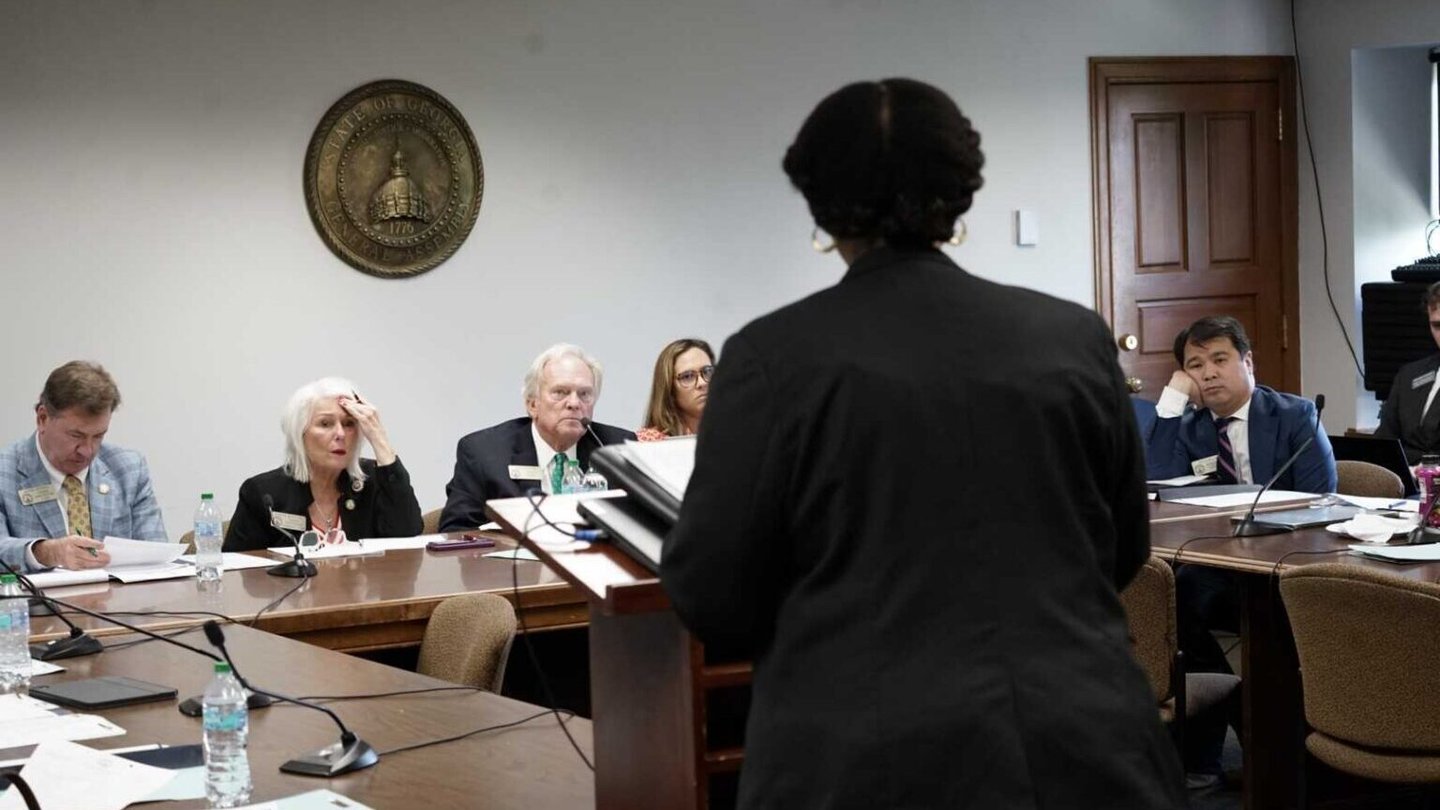
A showdown between nurses and those representing physicians boiled over in a Georgia House Health committee hearing over a medical board’s guidance that nurses warned could lead to shuttered clinics and diminished healthcare access in rural parts of Georgia.
The Georgia Composite Medical Board issued a “position statement” in early May that tightened the board’s interpretation of a state law passed in 2006 that prohibits physicians from being an employee at a clinic owned by an advanced practice registered nurse under their supervision.
Under the new guidance, if a physician receives any compensation for overseeing a clinic owned or run by advanced practice registered nurses, they are considered an employee of that clinic.
The new interpretation is already causing doctors to back out agreements with nurses that are essential for them to work in Georgia.
“The consistent message from the APRNs has been that delegating physicians have either terminated or are considering terminating their protocol agreement due to uncertainty surrounding the position statement. Without a protocol agreement, APRNs cannot practice legally, and this could leave a lot of their current patients without access to healthcare,” said Tara Taylor, executive director of the Georgia Board of Nursing.
Taylor also said that financial compensation is the “foundation” of these agreements and without it, there is little incentive for physicians to supervise clinics run by advanced practice registered nurses. She added that although the medical board’s new guidance seemed to focus on nurses operating IV hydration or med spas, the nursing board is concerned the guidance could also be applied to clinics providing healthcare in rural areas where there might be a shortage of physicians.
“Many of these concerns are coming from nurse practitioners who provide primary care and psychiatric services throughout Georgia,” she said. “Their concern is for the clinics serving rural and underserved communities where physicians are already in short supply. In many of these areas, APRNs are a critical source of access to healthcare.”
Representatives for physicians and the medical board pushed back against claims that the new guidance could worsen access to healthcare services, noting a rise in the number of board-approved collaboration agreements. And they say the new guidance is aimed at preventing shady online businesses from brokering these agreements.
Brent Walker, a lawyer representing the Medical Association of Georgia, said that the guidance isn’t aimed at legitimate agreements between physicians and nurses but “rubber-stamp relationships” stemming from unscrupulous websites facilitating them.
“We just want to make sure that you’re focused on patient safety, and that the collaborating and supervising relationships are meaningful, and not just the sham that you bought online for $500 or $1,000 a month, that you really are engaged in keeping the patients first when it comes to practice and the expansion of access to care,” Walker said.
Jeremy T. Bonfini, the state medical association’s CEO and executive director, said the “guidance isn’t about a prohibition on compensation for serving in a supervisory role” and that the group is working with the nursing community to clarify the new guidance. He did not address questions about what incentives physicians would have to enter these agreements without compensation.
“The prohibition reflects a fundamental policy concern: physicians who are subordinate employees of the APRNs they supervise cannot exercise the independent clinical judgment that Georgia law requires,” Bonfini said.
Jason Jones, executive director of the Georgia Composite Medical Board, pointed to physicians providing oversight from out-of-state and having ghost offices “where no genuine medical practice occurs,” as well as physicians entering agreements to oversee care that falls outside of their specialty.
“We’ve learned that the laws and rules sometimes are not looked at, so they do what people do and follow what somebody else is doing,” Jones said. “We’ve got to make sure we educate, make sure they’re doing right instead of following the wrong way,” Jones said.
Lawmakers on the committee instructed the nurses and physicians to work together on an agreement to prevent a legislative fix.
“I just would like to say that I hope that from here on out that you and the other boards will work together, and come to us with a solution, because you don’t want us to fix it,” said Dublin Republican state Rep. Matt Hatchett.