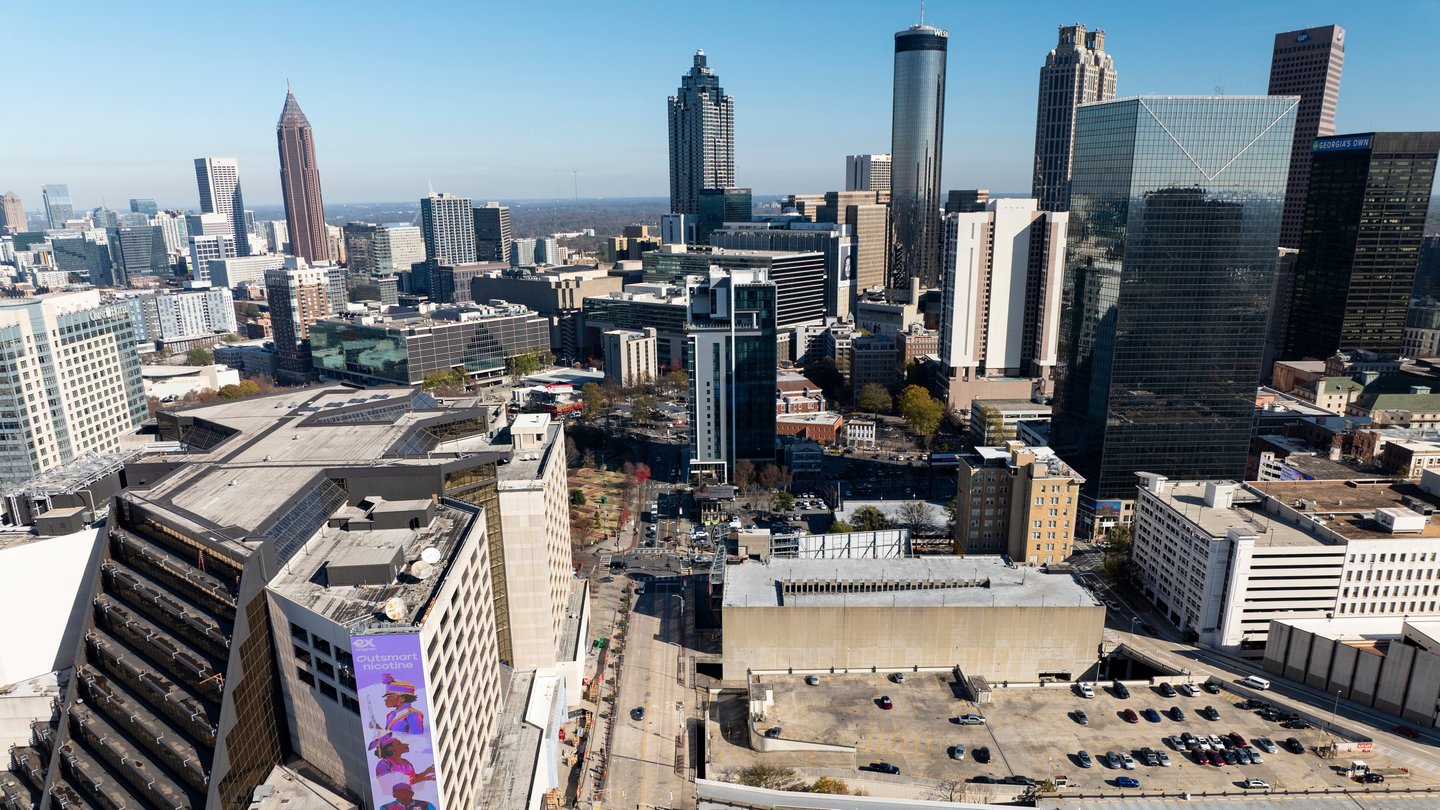
Atlanta and a huge swath of the state are under a heat advisory on Monday, with heat index values expected to hit up to 110 degrees.
The National Weather Service (NWS) in Peachtree City issued the advisory to go into effect through 8 p.m. Monday. The advisory covers an area of Georgia from Rome and Gainesville in the north, down into Athens, Atlanta, Newnan, Columbus, Macon, Dublin and stretching to Coastal Georgia.
NWS forecasts heat index values between 105 and 110 degrees, with the hot temperatures and high humidity potentially causing heat illnesses.
NWS advises those in the advisory area to stay hydrated, stay in air-conditioned rooms, stay out of the sun, and to check up on relatives and neighbors. If going outside, wear lightweight and loose-fitting clothing, limit strenuous activities to early morning or evening, and take action when you see symptoms of heat exhaustion and heat stroke.
The heat in Atlanta won’t relent after Monday, with temperatures ranging from 94 to 97 degrees and heat index values of at least 100 expected through the July 4th weekend.
Heat wave scorching large sections of the U.S. this week
It’s part of a long and dangerous heat wave that will blast a large swath of the central and eastern United States this week.
Parts of the U.S., especially Phoenix and central Texas, and much of the Southwest were experiencing temperatures around 100 F (38 C) on Sunday, while the weather service warned of severe wildfire conditions developing across much of the West as new fires popped up across the region.
On Sunday, well over 130 million Americans across southern and Great Plains states were under moderate to severe heat risk conditions, according to weather service maps, with that area forecast to expand and temperatures to intensify as the week drags on.
Forecasters say several days of high temperatures — some above 100 degrees F — will settle in across the lower Great Lakes, the mid-Atlantic and the Mississippi and Ohio River valleys. Some record highs could be set in areas from the lower Great Lakes to the mid-Atlantic and New England later in the week, said weather service meteorologist Bryan Putnam.
A number of big cities could see their highest temperatures of the year so far as they host World Cup matches and celebrations for America’s 250th anniversary. Atlanta hosts a World Cup match on Wednesday at noon.
Feeling the heat will be the East Coast cities of New York, Philadelphia, Washington and Baltimore, and Midwestern and Great Lakes cities including Chicago, Indianapolis, St. Louis and Detroit. Southern cities including Dallas, Little Rock, Arkansas, and Memphis, Tennessee, will also see high temperatures.
High heat will last into next weekend across the Great Plains, the Southeast and the mid-Atlantic, the weather service said.
Temperatures will reach well into the 90s and low 100 degrees Fahrenheit (mid to high 30s Celsius), the weather service said. High humidity will lead to heat indexes of 100 to 110 degrees F (40 C to 43 C), and as high as 115 F (46 C).
“That’s heat that’s impactful to anyone,” Putnam said. “It’s not just older adults or younger children or people who are spending a ton of time outdoors, maybe straining themselves a little more than normal. This is heat that really could impact everyone, especially with people outdoors going into the holiday weekend.”
The heat index, which factors in humidity and is included on many weather forecasts, provides a sense of how hot it really feels — and what’s dangerous for prolonged exposure or strenuous activity.
AccuWeather meteorologist Tyler Roys said temperatures will be significantly above normal. For instance, in Washington, highs around July Fourth average around 89 degrees F (32 C), while Indianapolis averages around 85 degrees F (29 C). But this week, both cities will be hotter by 10 or 11 degrees F, Roys said.
The high pressure system — an area of dry, sinking air — creating the heat will act like a “rock” that will force storms to go around it and limit rainfall across the East, Roys said. That’s sometimes called a “heat dome.”
Nightly lows in the 70s F (21 to 26 C) or even high 80s won’t provide much relief, meteorologists said.
For those who don’t have air conditioning, especially in Eastern Seaboard cities like New York where lows may not dip below 80 F (27 C), it’s going to be miserable to sleep, Roys said.