The Trump administration is making a big change to the federal Endangered Species Act that will change how Georgia protects rare plants and animals.
The federal government is changing its interpretation of one word in the ESA: “harm.”
The U.S. Fish and Wildlife Service defined harm as anything that injures or kills a protected species, including anything that harms or degrades their habitat.
“This would mean that developers, oil and gas miners, timber harvesters, farmers and individuals will not need to consider or explain the impacts to endangered species habitat of their actions,” said Mindy Goldstein, a clinical professor of law at Emory University School of Law. She directs the Turner Environmental Law Clinic and our Environmental Law Program.
Goldstein said those groups also do not need to consider how to reduce habitat impacts or alternatives to their actions that could protect that habitat.
How does the federal Endangered Species Act work in Georgia?
Catherine Wannamaker, a senior attorney with the Southern Environmental Law Center, said the ESA has protected several species in Georgia.
“For example, some of the wood storks and pelicans were at one point on the Endangered Species Act, and now they’ve come off because they’ve recovered,” Wannamaker said.
She said it’s a tool that people managing animal and plant populations, like the Georgia Department of Natural Resources, can use with the goal of making sure populations bounce back.
“I think there’s a common understanding that the Endangered Species Act stops projects — that is a very, very rare mechanism,” Wanamaker said.
She said usually, the ESA requires consultation with the federal government to allow a project to proceed with appropriate protective measures for the endangered species.
“The notion that it stops lots of projects is actually incorrect,” she said.
Wanamaker said habitat protection is a huge part of the implementation of this act.
She said in roughly 85% of cases, a species that’s added to the federal endangered species list is added because of threats and loss of their habitat.
Without this protection, those species’ populations will struggle to survive or recover. Wannamaker said in Georgia, the state-level endangered species regulations don’t specifically cover habitats.
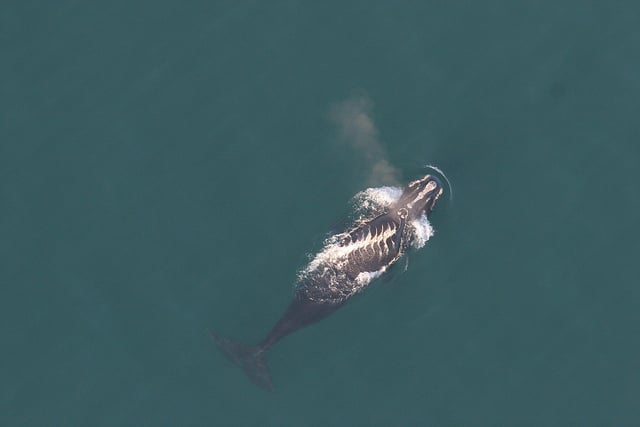
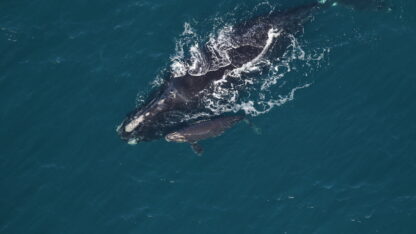
For example, with this rule change Wannamaker said someone could cut down acres of longleaf pine forest the endangered red-cockaded woodpecker live in, or harm the habitat of the critically endangered North Atlantic Right Whales whose calving grounds are off the coast of Georgia.
And the loss of habitat can impact a host of other species too, Wannamaker said.
“So even if you don’t care about, you know, red-cockaded woodpeckers, bobwhite quail are using those same forest — and so losing all of that forest is going to be hugely detrimental to listed species, but also to a lot of game and non-listed species,” Wannamaker said.
The SELC, on behalf of several groups, are suing the federal government over the rule change. The organization has submitted its 60-day notice to the U.S. Fish and Wildlife Service and the National Marine Fisheries Service. They’re representing the National Wildlife Federation, South Carolina Wildlife Federation, North Carolina Wildlife Federation, Florida Wildlife Federation, Louisiana National Wildlife Federation, Association of Northwest Steelheaders, and Conservation Council for Hawaii.
And they’re not alone. Earthjustice has filed a notice as well, representing The Center for Biological Diversity, Columbia Riverkeeper, Conservation Law Foundation, Conservation Northwest, Friends of the Wild Swan, Oregon Wild, Sierra Club, Swan View Coalition, and WildEarth Guardians.
Wannamaker said the U.S. Supreme Court took up this question of what the Endangered Species Act regulates in the late 1990s, and it found that the act covered habitat protections.
“So we think there’s a good argument that you know the administration can’t do this,” she said.
How is this rule change possible?
Goldstein with Emory said the change is happening by re-interpreting a specific section of the act: Section Nine. That section says the groups referenced in the act can’t harm endangered species, but the interpretation of that word is further defined by the U.S. Fish and Wildlife Service and National Marine Fisheries Service.
Those groups interpreted the term harm to include directly killing or injuring a species and modifying or degrading their habitat in a way that interferes with their ability to breed, find food, or shelter.
Goldstein said the reason the federal government can change this rule, despite its longevity and support from science, goes back to a recent U.S. Supreme Court decision in 2024.
The case, Loper Bright Enterprises v. Raimondo, rolled back the Chevron doctrine, which said courts will uphold agencies’ regulations as long as they’re reasonable.
She said instead, the highest court is saying the regulation has to be the “best” interpretation of the statute. Ultimately, this means the courts have more power to interpret laws than federal agencies. Goldstein said the Trump administration has used this to challenge and roll back many federal regulations.
Protections remaining in place
Goldstein said there are still other important parts of the Endangered Species Act that this change doesn’t affect — such as Section 7, which applies to the federal government. Plus, even with the rule change, nobody is allowed to directly harm or kill an endangered species still.
She said Section 7 says the federal government, and actions supported by it — like anything requiring a federal permit or using federal funding — still must consider endangered species’ habitat protections.
“Think about development that requires maybe a Clean Air Act permit, or supported by a federal grant, and those additional restrictions are required to ensure that the activity doesn’t jeopardize a species or destroy its critical habitat,” Goldstein said.
Even so, Goldstein said this rule change is happening in a broader moment of environmental deregulation by the Trump administration.
“This rule will not exist in isolation — the administration has proposed several other rollbacks to the Endangered Species Act, including protections for threatened species and narrowing the definition of critical habitat, and allowing economic considerations and certain decision-making to occur,” Goldstein said.