Nearly two years after Hurricane Helene unleashed flooding and fierce winds across the South, some Georgia farmers say they still haven’t received compensation for damages, despite efforts from both sides of the political aisle.
Newman Pryor remembers the night the storm hit. He runs Pryor farms, growing pecans and row crops across four east Georgia counties: Screven, Effingham, Bulloch and Jenkins.
“It was much scarier than we anticipated it to be because they predicted it to go more to the west,” he said. “They were saying it was going to go to Atlanta, which would be well to the west of us, and it wasn’t going to be all that bad. I knew we were going to get some wind from it, but I didn’t think it was going to be nearly what we ended up with.”
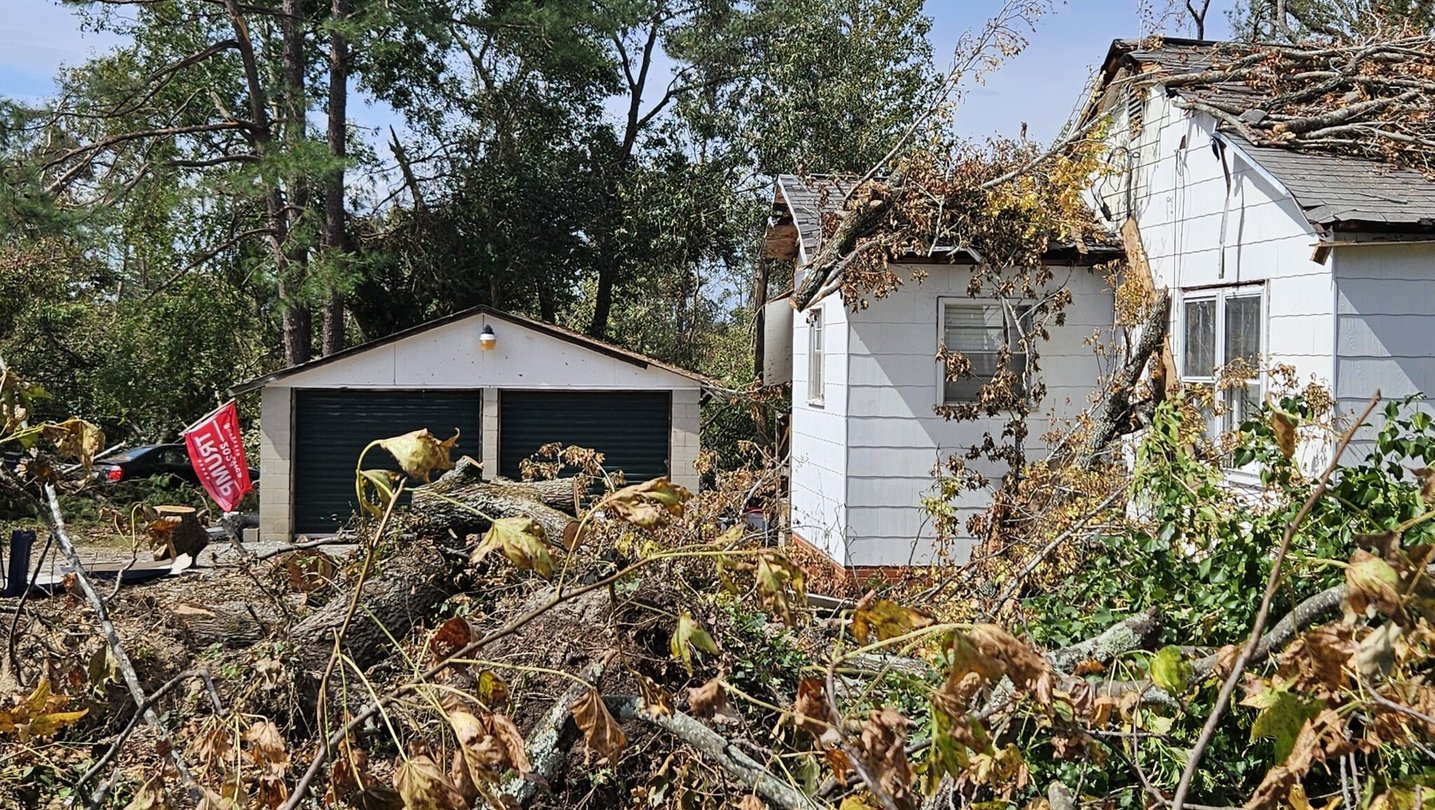
Pryor said his operation, particularly his pecan trees, took heavy wind damage.
“It just destroyed the trees, tore them up, put a bunch of limbs on the ground, knocked down power lines and stuff like that,” he said. “We were not even able to process our pecans that year because it destroyed our electric infrastructure, so we couldn’t even process the pecans.We had to outsource that.”
Pryor Farms wasn’t unique. The hurricane created at least $5.5 billion in agricultural and timber losses, according to the University of Georgia.
But Pryor said he expected help from a type of federal hurricane insurance for wind damage to crops. It’s available for farmers to purchase from the U.S. Department of Agriculture on top of their underlying crop insurance policy. Farmers can get it in regions that experience hurricanes, including all of Georgia.
It’s supposed to be paid out if a farm’s county or an adjacent county is within the area of sustained hurricane-force winds – and not just wind gusts – from a named hurricane, based on data published by the National Hurricane Center.
“Our agent said, ‘Don’t worry, it’s coming.Your claim is good,’” Pryor said. “It never did.”
U.S. Sen. Jon Ossoff’s office estimates up to 85 farmers could have missed out on indemnity payments they should have been eligible for.
Taylor Sills, executive director of the Georgia Cotton Commission, said the total unpaid amount could be as high as $10 million.
“There’s a lot of these rural communities and farms that are a long way from getting back, especially in some of these communities where that insurance product did not trigger a payment. We have been working on this issue from a lot of different angles and have unfortunately not been able to fix that quite yet,” he said.
‘We continue to work’ helping farmers
Speaking to reporters at a recent event on a North Georgia farm, U.S. Agriculture Secretary Brooke Rollins said her agency is working on helping the farmers, but amending the program will ultimately require an act of Congress.
“I myself have been in probably half a dozen meetings on this trying to figure out how to, at least in the short term, make some changes, not to go against the current law, but is there anything we can do to help those farmers that were not able to access that particular program?” she said.
Rollins estimates up to two dozen Georgia farmers are facing this problem. She said she’s met with leaders from the National Ocean and Atmospheric Administration, which oversees the National Hurricane Center, and with Commerce Secretary Howard Lutnick, who oversees NOAA.
“We continue to work on it,” she said.
Bipartisan trio of Georgia lawmakers seek to change data source
Congressman Buddy Carter, a Pooler Republican, has introduced a resolution he hopes will protect farmers after future storms, but time is running short for the measure to move forward this year.
Co-sponsored by Georgia Congressmen Rick Allen, an Augusta Republican, and Sanford Bishop, an Albany Democrat, it seeks to allow the agriculture secretary to create an alternate dataset for insurance determinations if the standard one is incomplete.
Citing reports that Helene damaged some of NOAA’s systems, Carter said he blames damage from the storm for causing inaccurate wind data and leaving farmers in the lurch.
One NOAA document indicated that “widespread power outages caused nearly all automated observation sites to stop reporting so it is quite likely that the strongest winds that occurred were not recorded by any observation platforms.”
“The equipment was damaged during the storm, and that is still the information that came from that equipment that they have to use,” Carter said in an interview last week. “It shows the path of the hurricane going up through middle Georgia when we know it was more toward east Georgia. Those counties were impacted more, and they didn’t get the relief that they needed.”
The resolution has been referred to committee but it hasn’t seen any further action. Carter is not running for re-election following an unsuccessful bid for the U.S. Senate. His term ends Jan. 3, and so does the congressional term. The House is in recess until the end of August, and is scheduled to be out for much of the rest of the year.
Despite the short runway, Carter expressed confidence his bill would take off.
“It needs to get through,” he said. “We’re going to do everything we can. We’re going to sprint to the finish line, work as hard as we can to get it passed, and I’m very optimistic we’ve still got a good opportunity to get it passed.”
Ossoff, a Democrat who is up for re-election this year in a nationally watched race, has sought to pressure the USDA to re-examine the eligibility of farmers in 11 counties.
In a June letter to the agency, Ossoff cited a National Hurricane Center report describing wind gusts above the hurricane force threshold of 74 miles per hour in at least three counties – Towns, Chatham and Echols – and asked the agency to take another look at the data.
“Ensuring that our farmers receive the support they planned for and invested in is the very least USDA can do,” Ossoff wrote.
But in a July 20 response, USDA Under Secretary Richard Fordyce told Ossoff there was nothing the agency could do.
Fordyce wrote that the agency “acknowledges that gusts can be just as damaging as sustained winds,” but added that hurricanes, and the insurance policy, are defined by sustained winds and not gusts.
At the time, wind was considered “sustained” if it lasted for two minutes.
“I appreciate and understand the concerns of you and your constituents,” Fordyce added. “(The agency) went to great lengths to ensure all available data was incorporated into our review of the counties listed in your letter. Based on our review, producers in all counties eligible for payment under the HIP-WI endorsement have been paid.”
Last week, Ossoff followed up with the National Ocean and Atmospheric Administration and requested confirmation that all weather data was ultimately recovered and if there was data loss, how it was accounted for in determining wind speeds.
‘Just one more kick’
But until Congress changes the rules or a flaw in the data is revealed, the farmers will remain in limbo, and Pryor said people are beyond frustrated.
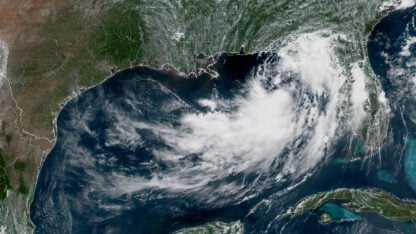
“It is an insurance policy that we bought and paid for, and then we’re denied for some bogus reason,” he said. “And there’s no reason why any person couldn’t see exactly where the hurricane went. You can see pictures from space where it took out the lighting, and it’s right on us. It’s obvious as anything that we got the hurricane.”
Pryor said it feels impossible to generate profit in the current economy, and the lack of hurricane payments feels like being kicked when you’re already down.
“We’re all slowly selling our farms right now. The farm economy is the worst I’ve ever seen,” he said. “This is just one more kick. It would really help if we could get it because of all the other things that we have going against us.”
This story was provided by WABE media partner the Georgia Recorder.