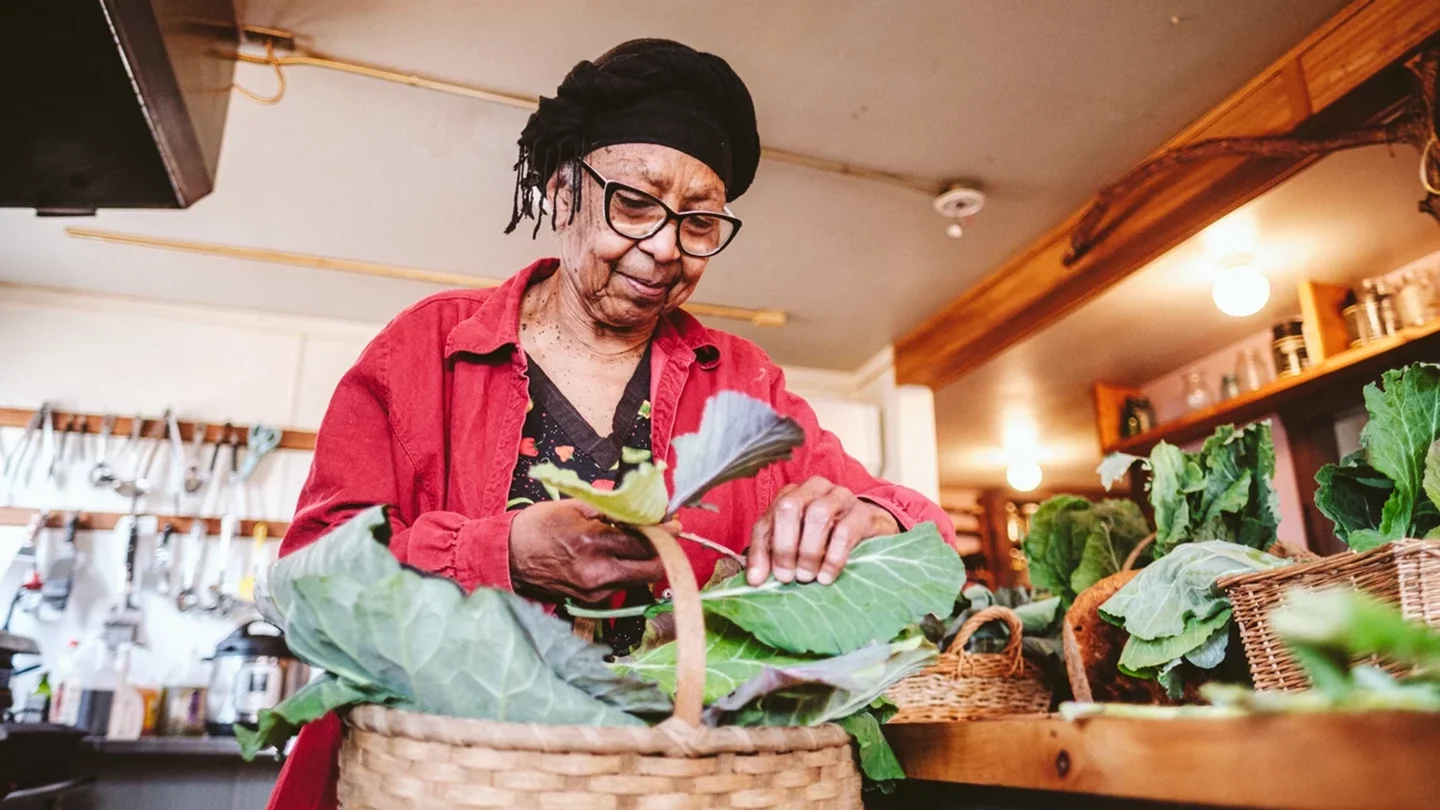
Ira Wallace ambles around the butcher block countertop in the kitchen she shares with a community of farmers in central Virginia. She has separated a single leaf from the large baskets of unusual, parti-colored collard greens she got from a friend’s farm. Its creamy-white veins stretch upward across the green leaf, narrowing as they reach purple-tinged tips.
“Purple is a color that develops in the winter much more strongly,” Wallace explains, as she probes the frost-damaged leaf. “But look at that color! And that’s anthocyanins. They’re supposed to make you healthier.”
These aren’t commercially produced collard greens typically sold in supermarkets or restaurants. Many of the heirloom varieties Wallace and her friends grow are rare, some once teetering on extinction. Other types can likely be found in backroad gardens of aging stewards, but countless varieties have vanished in the U.S.
Read this story now for free
To continue reading, sign up for our newsletter and get unlimited access to WABE.org
You can select your preferences for news and local content. We will never share your email address. Learn how your newsletter sign-up will support WABE and Public Media