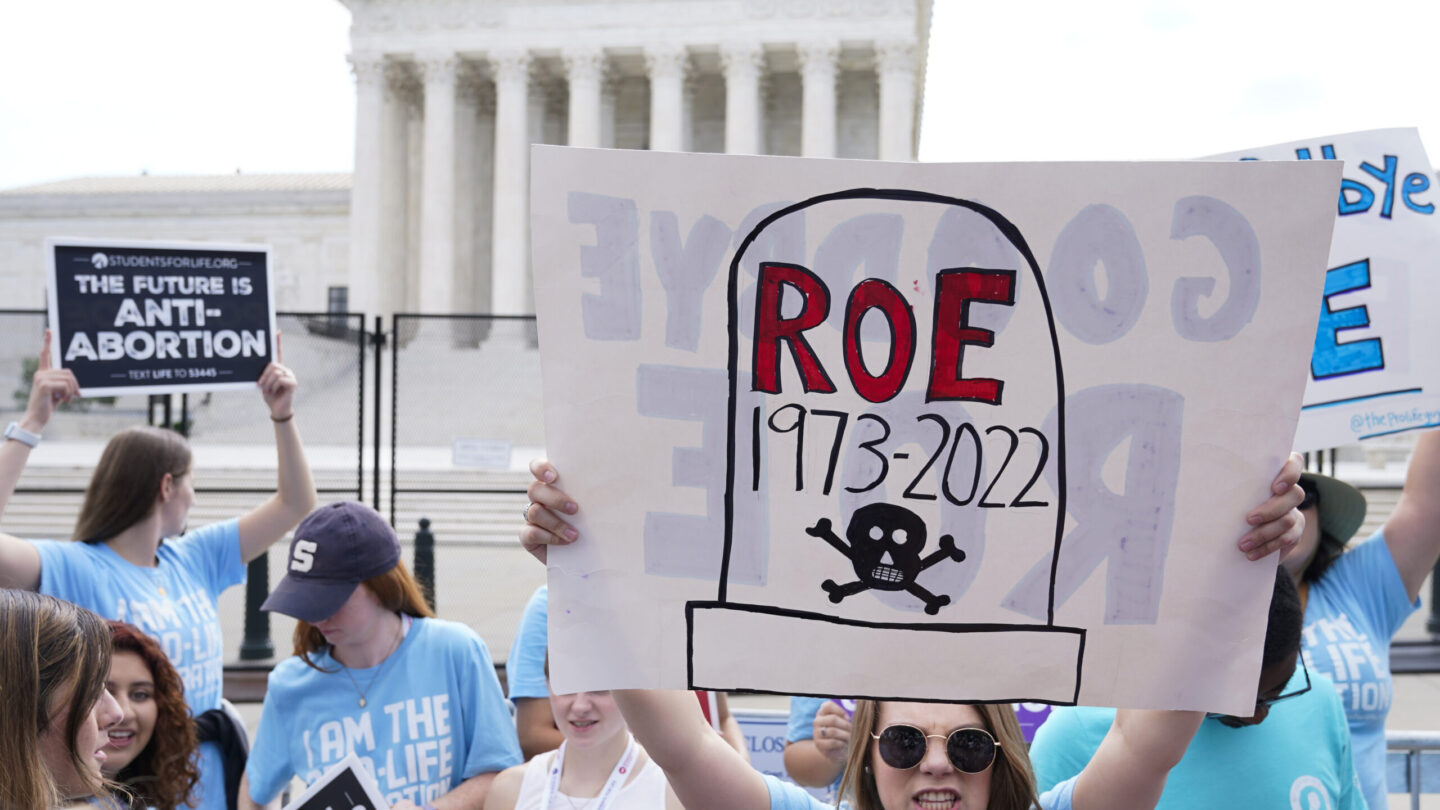
One year after the Supreme Court overturned Roe v. Wade, putting an end to the constitutionally protected right to access abortion, the health care landscape has become increasingly fragmented and complex to navigate, spawning widespread confusion.
So far, more than a dozen states have enacted extremely restrictive abortion bans, with the majority making no exceptions for rape or incest. And many more are waiting on legal challenges to make their way through the courts. In Texas, private citizens can sue abortion providers and those who assist patients seeking an abortion after about six weeks of pregnancy.
That has left approximately 22 million women, girls and other people of reproductive age now living in states where abortion access is heavily restricted or totally inaccessible. In the nine months following the Supreme Court’s decision in Dobbs v. Jackson Women’s Health Organization, abortions with providers fell by a monthly average of 2,849 compared to April 2022, new data collected by the Society of Family Planning shows.
Read this story now for free
To continue reading, sign up for our newsletter and get unlimited access to WABE.org
You can select your preferences for news and local content. We will never share your email address. Learn how your newsletter sign-up will support WABE and Public Media