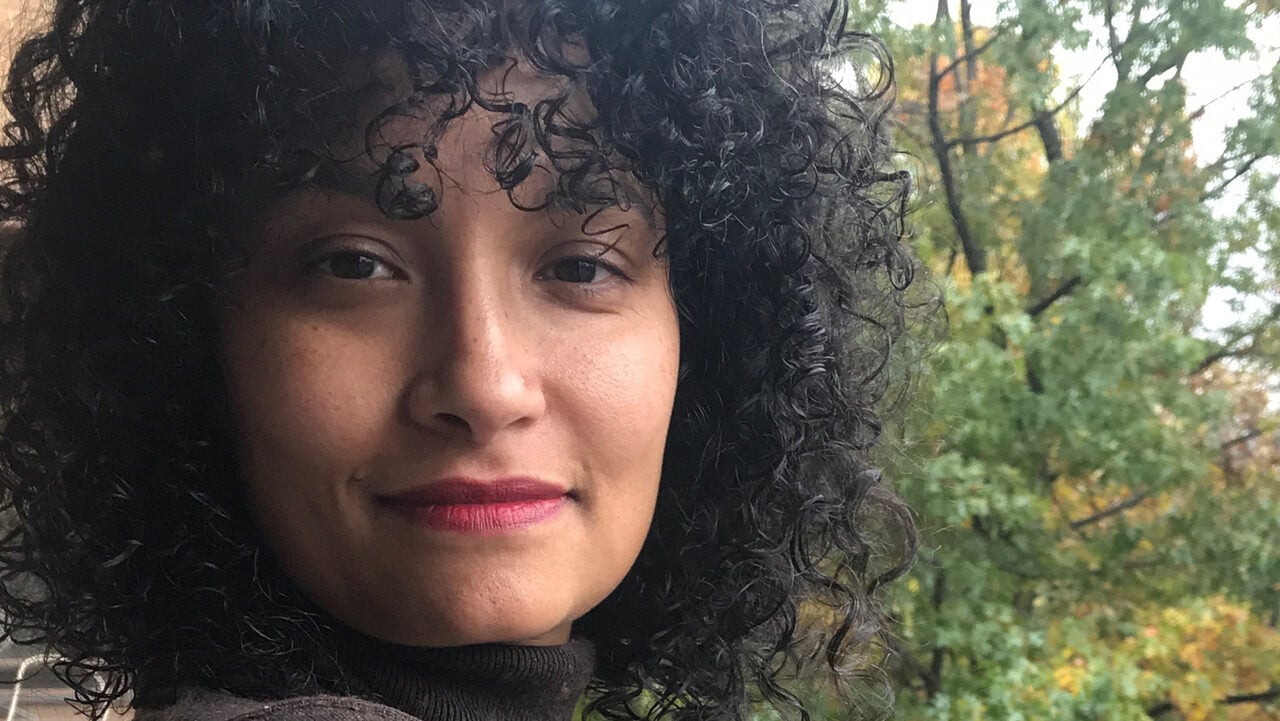
Director Jamila Wignot brings “AILEY” to Serenbe as part of Art Farm’s February 2026 Film Showcase Weekend, reflecting on the choreographer’s life, vulnerability and enduring influence. (Courtesy of Jamila Wignot)
The documentary ‘AILEY’ returns to metro Atlanta next month as the centerpiece of Art Farm at Serenbe’s Film Showcase Weekend — a two-night program pairing film, conversation and community around the life and legacy of choreographer Alvin Ailey.
The Feb. 6–7 events bring director Jamila Wignot and Ailey educator and former company member Nasha Thomas to Serenbe for a wine dinner, film screening and post-screening discussion. In a conversation with WABE Arts, Wignot and Thomas described a film that centers Ailey not as a symbol, but as a human being and as an artist whose influence continues through dancers, educators and audiences today.

Nasha Thomas, National Director of Ailey Camp and a master teacher with the Alvin Ailey Dance Foundation, joins the Serenbe conversations as both a former company member and a steward of Ailey’s legacy. (Courtesy of Nasha Thomas)
‘Reconnecting the man to the legacy’
When Wignot began work on ‘AILEY,’ she was already longtime fan of the Alvin Ailey Dance Company, but hadn’t spent much time thinking about its founder.
“So when I started, it really was a question of like, ‘Who was this person who had built it?’” Wignot explained.
She framed her approach to the film around questions that go beyond biography: how an artist finds a voice, what shaped Ailey’s creative philosophy and how those forces helped define the company’s identity.
“Really it was trying… to reconnect the man to the legacy,” she said.
One of the film’s most striking elements is Alvin Ailey’s own voice, drawn from conversations recorded privately in the last years of his life for a biography, alongside public interviews.
For Wignot, those recordings create an intimacy that can’t be replicated through explanation alone.
“Getting that sort of firsthand testimony from the subject themselves is so important because it’s their own words,” she said.
She also noted the complexity of archival voice: the difference between public performance and private reflection and what becomes possible when a subject is willing to “explore some of the darker aspects” of their life, including insecurities and flaws.
For Wignot, that closeness is especially consequential in a documentary about dance. She described wanting viewers “as close as they can [get] to being inside the body of the person,” and said that aim takes on added meaning in an art form grounded in “embodiment.”
What audiences might learn
For Thomas, who worked with Ailey before his death and is now national director of Ailey Camp and master teacher for arts and education and community programs at the Alvin Ailey Dance Foundation, hearing Ailey’s voice in the film brings back a specific kind of memory.
“It’s a warm nostalgic feeling when I hear his voice,” she said, describing Ailey as “very present” and deliberate in rehearsal: “When he said something, he had something meaningful to say.”
As an educator, Thomas said one value she tries to name plainly for students is what she sees as the foundation of Ailey’s work. “He started from a place of love with everybody,” she said.
For Thomas, that love is not abstract. It’s a practice of connection, openness and exchange that audiences feel, even when they can’t quite explain what makes the work so powerful.
“If you really tried to break it down and put your finger on it,” she said, “it’s love.”
Wignot made a deliberate choice to include contemporary rehearsals and new work alongside archival material, allowing viewers to see Ailey’s influence moving through dancers today.
Part of that decision came from timing — the company’s 60th anniversary and the creation of new work — but Wignot said the process revealed something deeper about Ailey’s world: how significant the rehearsal room was.
“The real work, the experimentation, the failure, the trust, the imagination is all happening in that rehearsal room,” she said.
Wignot described learning that rehearsal space might have been Ailey’s “favorite place to be.” Late in the choreographer’s life, even as his illness was advancing, he continued coming to the studio. “In some ways,” Wignot said, “maybe the process is the point.”
Atlanta’s long relationship with Ailey
Both Wignot and Thomas described Atlanta as a city with an unusually deep, reciprocal relationship to Ailey’s work, one shaped by history and sustained community presence.
Thomas has been coming to Atlanta with the company since 1986 and called the city’s audiences “unmatched,” particularly in their connection to “Revelations.” Performances in Atlanta, she said, carry a distinct energy, with audiences responding vocally and emotionally in ways that reflect shared cultural memory. “They get it,” she said, noting that Atlanta audiences don’t just watch the work, they actively participate in the experience.
Wignot echoed that observation, pointing to archival footage of Ailey performances in Atlanta from the early 1980s and to the way Southern Black history is embedded in the work itself. She said there is something especially powerful about seeing “Revelations” performed in the South, where its spirituals, imagery and emotional arc resonate with lived experience. Over time, Wignot added, the relationship between the work and the audience deepens, allowing different sections of the piece to take on new meaning as viewers grow and change.
Beyond performances, Thomas pointed to the company’s broader footprint in the region through arts education initiatives and Ailey Camp, describing Atlanta as a place where the company is not just visiting, but embedded.
“I don’t think we’re immersed in any other community in the country like we are here in Atlanta,” she said.
That long-standing relationship also shapes how audiences approach moments like Serenbe’s Film Showcase Weekend, which draws from the same Atlanta tradition that has made Ailey performances a Valentine’s season ritual for generations of theatergoers.
Promotional poster for the documentary “AILEY,” featuring a dancer in mid-movement against a dark background. (Courtesy of Jamila Wignot)
Film Showcase Weekend at Serenbe takes place Feb. 6–7, opening Friday with a wine dinner at The Inn at Serenbe featuring a conversation with Jamila Wignot and Nasha Thomas. The weekend continues Saturday at Gainey Hall with a Neighbor’s Social at 5:30 p.m., followed by a 6:30 p.m. screening of AILEY and a panel discussion featuring Wignot and Thomas moderated by author Rebecca Walker.